



الصفحة 1
الصفحة 1

Modeling of metal forming and machining processes : By finite element and soft computing methods
The physics of metal forming and metal removing is normally expressed using non-linear partial differential equations which can be solved using the finite element method (FEM). However, when the process parameters are uncertain and/or the physics of the process is not well understood, soft computing techniques can be used with FEM or alone to model the process.
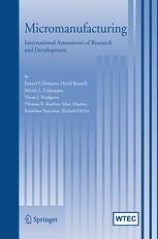
Micromanufacturing : International Research and Development
We have come to know that our ability to survive and grow as a nation to a very large degree depends upon our sci- tific progress. Moreover, it is not enough simply to keep abreast of the rest of the world in scientific matters. We 1 must maintain our leadership. President Harry Truman spoke those words in 1950, in the aftermath of World War II and in the midst of the Cold War. Indeed, the scientific and engineering leadership of the United States and its allies in the twentieth century played key roles in the successful outcomes of both World War II and the Cold War, sparing the world the twin horrors of fascism and tota- tarian communism, and fueling the economic prosperity that followed.

Micro and Nanomanufacturing
Engineers seeking more knowledge of how nano and micro devices are designed and fabricated will learn: Manufacturing and fabrication at the micro and nanoscales Using bulk and surface micromachining techniques, LiGA and deep x-ray lithography to manufacture semiconductors Producing master molds with micromachining The deposition of thin films, pulsed water drop machining, and nanomachining Mark J. Jackson is an Associate Professor in the Department of Mechanical Engineering Technology at Purdue University. His current research focuses on understanding the properties of materials in the field of micro scale metal cutting, micro and nano abrasive machining, and laser micro machining.

MEMS/NEMS : (1) Handbook Techniques and Applications Design Methods, (2) Fabrication Techniques, (3) Manufacturing Methods, (4) Sensors and Actuators, (5) Medical Applications and MOEMS
Micro-Electro Mechanical Systems (MEMS) is the integration of mechanical elements, sensors, actuators, and electronics on a common silicon substrate. While the electronics are fabricated using integrated circuit (IC) process sequences (e.g., CMOS, Bipolar, or BICMOS processes),the micromechanical components are fabricated using compatible micromachining processes that selectively etch away parts of the silicon wafer or add new structural layers to form the mechanical and electromechanical devices. MEMS promises to revolutionize nearly every product category by bringing together silicon-based microelectronics with micromachining technology, thereby, making possible the realization of complete systems-on-a-chip.

Innovative Superhard Materials and Sustainable Coatings for Advanced Manufacturing ; Proceedings of the NATO Advanced Research Workshop on Innovative Superhard Materials and Sustainable Coating, Kiev, Ukraine,12 - 15 May 2004.
Modern industry imposes ever increasing requirements upon tools and tool materials as to the provision for performance under the conditions of high cutting speeds and dynamic loads as well as under intensive thermal and chemical interactions with workpiece materials. The industry demands a higher productivity in combination with the accuracy of geometry and dimensions of workpieces and quality of working surfaces of the machined pieces. These requirements are best met by the tool superhard materials (diamond and diamond-like cubic boron nitride). Ceramics based on silicon carbide, aluminum and boron oxides as well as on titanium, silicon and aluminum nitrides offer promise as tool materials. Tungsten-containing cemented carbides are still considered as suitable tool materials. Hi- hardness and high strength composites based on the above materials fit all the requirements imposed by machining jobs when manufacturing elements of machinery, in particular those operating under the extreme conditions of high temperatures and loads.

High Power Diode Lasers : Technology and Applications
In a very comprehensive way this book covers all aspects of high power diode laser technology for materials processing. Basics as well as new application oriented results obtained in a government funded national German research project are described in detail.

Geometric Modeling and Processing - GMP 2006 ; 4th International Conference, GMP 2006, Pittsburgh, PA, USA, July 26-28, 2006, Proceedings
This book constitutes the refereed proceedings of the 4th International Conference on Geometric Modeling and Processing, GMP 2006, held in Pittsburgh, PA, USA in July 2006. The 36 revised full papers and 21 revised short papers presented were carefully reviewed and selected from a total of 84 submissions. All current issues in the area of geometric modeling and processing are addressed and the impact in such areas as computer graphics, computer vision, machining, robotics, and scientific visualization is shown. The papers are organized in topical sections on shape reconstruction, curves and surfaces, geometric processing, shape deformation, shape description, shape recognition, geometric modeling, subdivision surfaces, and engineering applications.
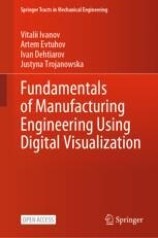
Fundamentals of manufacturing engineering using digital visualization
Offers a guide to core principles and practices of manufacturing engineering. It covers the design of, together with technological and measurement issues for, technical systems. Locating charts and setup schemes describing different machining processes are included. Concepts of product quality, with a focus on accuracy indicators, machining accuracy, roughness, and the impact of surface quality on exploitation properties are also explained. Furthermore, key machining methods, including turning, milling, hole machining, grinding, and gear machining, are analyzed in depth, covering their principles, applications, and techniques. The book is enriched by QR codes, linking to a mobile application presenting additional information about the content, for an interactive and extended learning experience. It also uses illustrations visualized with digital tools to promote a better understanding of the concepts.

Evolution of Thin Film Morphology : Modeling and Simulations
Thin film deposition is the most ubiquitous and critical of the processes used to manufacture high tech devices. Morphology and microstructure of thin films directly controls their optical, magnetic, and electrical properties. This book focuses on modeling and simulations used in research on the morphological evolution during film growth. The authors emphasize the detailed mathematical formulation of the problem both through numerical calculations based on Langevin continuum equations, and through Monte Carlo simulations based on discrete surface growth models when an analytical formulism is not convenient. Evolution of Thin-Film Morphology will be of benefit to university researchers and industrial scientists working in the areas of semiconductor processing, optical coating, plasma etching, patterning, micro-machining, polishing, tribology, and any discipline that requires an understanding of thin film growth processes.

Cutting Tool Technology : Industrial Handbook
Cutting Tool Technology provides a comprehensive guide to the latest developments in the use of cutting tool technology. The book covers new machining and tooling topics such as high-speed and hard-part machining, near-dry and dry-machining strategies, multi-functional tooling, ‘diamond-like’ and ‘atomically-modified’ coatings, plus many others.

Machining: Fundamentals and Recent Advances
Machining is one of the most important manufacturing processes. Parts manufactured by others processes often require further operations before the product is ready for application. Machining is the broad term used to describe the removal of material from a work-piece. Machining processes can be applied to work metallic and non-metallic materials such as polymers, wood, ceramics and composites.
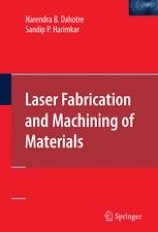
Laser Fabrication and Machining of Materials
Laser Fabrication and Machining of Materials introduces readers to the fundamental properties and physical phenomena of laser machining and its applications on the macro, micro, and nano scales. Examples of existing, emerging, and potential techniques are discussed, giving students and practicing engineers alike the opportunity to expand their use of lasers in such disciplines as mechanical processes, electronics, materials, and manufacturing.

Bonding in Microsystem Technology
Bonding in Microsystem Technology starts with descriptions of terminology, kinds of microsystems and market analysis. Followed by the presentation of mechanisms of wet etching, set of process parameters, description of micromachining methods, examples of procedures, process flow-charts and applications of basic micromechanical structures in microsystems are shown. Next, high-temperature, low temperature and room-temperature bonding and their applications in microsystem technology are presented. The following part of the book contains the detailed description of anodic bonding, starting from analysis of properties of glasses suitable for anodic bonding, and discussion of the nature of the process. Next all types of anodic bonding and sealing procedures used in microsystem technology are presented.

Blast Cleaning Technology
Blast cleaning is one of the most frequently utilised surface treatment-method in modern industry. The book is the first comprehensive monograph in this subject. It provides a practical and comprehensive review of the technology. This book systematically and critically reviews the theory behind the technology, the state of current blast cleaning, surface quality aspects and the effects of blast cleaning on the performance of applied coatings.
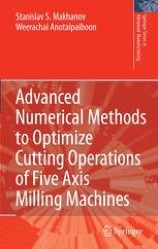
Advanced Numerical Methods to Optimize Cutting Operations of Five-Axis Milling Machines
Presents new optimization algorithms designed to improve the efficiency of tool paths for five-axis NC machining of sculptured surfaces. The book introduces the reader to fundamental issues involved in the tool path planning such as the kinematics of five-axis machines, types of 5 axis machines, part surface representation, machining strips, optimal tool orientation, gouging avoidance and forward step error. It also introduces new methods of optimization based on research conducted by the authors, including schemes performed in the spatial domain, angular domain as well as procedures to optimize the initial setup. The book can be used by undergraduate and graduate students and researchers in the field of NC machining and CAD/CAM as well as by the corporate research groups for advanced optimization of cutting operations.
Advanced manufacturing technology and systems
Advanced manufacturing technology and systems cover a broad scope involving manufacturing processes, machine tool design, system optimization, smart and flexible manufacturing, theoretical study and metrology. This reprint comprises 19 original papers concerning recent advances in the research and development of AMTSs. Specifically, there are many research fields that are covered: machining processes (six papers), micro-/nano-precision fabrication (four papers), and system optimization (eight papers), in addition to one review.
