



الصفحة 1
الصفحة 1

Object-Oriented Software Engineering Using UML Patterns and Java
Shows students how to use both the principles of software engineering and the practices of various object-oriented tools, processes, and products. Using a step-by-step case study to illustrate the concepts and topics in each chapter, Bruegge and Dutoit emphasize learning object-oriented software engineer through practical experience: students can apply the techniques learned in class by implementing a real-world software project. The third edition addresses new trends, in particular agile project management (Chapter 14 Project Management) and agile methodologies (Chapter 16 Methodologies).

Introduction to the theory of computation
Gain a solid understanding of the fundamental mathematical properties of computer hardware, software, and applications with a blend of practical and philosophical coverage and mathematical treatments, including advanced theorems and proofs.

Individual differences in sensory and consumer science : Experimentation, analysis and interpretation
Individual differences in sensory and consumer science: Experimentation, Analysis and Interpretation presents easily readable, State-of-the-art coverage on how to plan and execute experiments that give rise to individual differences, Also providing the framework for successful analysis and interpretation of results. The book highlights the different methodologies that can be applied and how to select the correct methodology based on the type of study you are performing, Be it product research and development, Quality control or consumer acceptance studies.Written by an experienced team of statisticians and sensory and consumer scientists, The book provides both academics and industry professionals with the first complete overview of a topic of ever-increasing importance.

Distributed systems : Concurrency and consistency
Explores the gray area of distributed systems and draws a map of weak consistency criteria, identifying several families and demonstrating how these may be implemented into a programming language. Unlike their sequential counterparts, distributed systems are much more difficult to design, and are therefore prone to problems. On a large scale, usability reminiscent of sequential consistency, which would provide the same global view to all users, is very expensive or impossible to achieve.
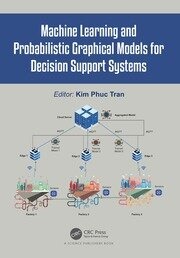
Machine Learning and Probabilistic Graphical Models for Decision Support Systems
Presents recent advancements in research, a review of new methods and techniques, and applications in decision support systems (DSS) with Machine Learning and Probabilistic Graphical Models, which are very effective techniques in gaining knowledge from Big Data and in interpreting decisions. It explores Bayesian network learning, Control Chart, Reinforcement Learning for multicriteria DSS, Anomaly Detection in Smart Manufacturing with Federated Learning, DSS in healthcare, DSS for supply chain management, etc. Researchers and practitioners alike will benefit from this book to enhance the understanding of machine learning, Probabilistic Graphical Models, and their uses in DSS in the context of decision making with uncertainty. The real-world case studies in various fields with guidance and recommendations for the practical applications of these studies are introduced in each chapter.

Applications of artificial intelligence, big data and internet of things in sustainable development
Focuses on different algorithms and models related to AI, big data and IoT used for various domains. It enables the reader to have a broader and deeper understanding of several perspectives regarding the dynamics, challenges, and opportunities for sustainable development using artificial intelligence, big data and IoT. Applications of Artificial Intelligence, Big Data and Internet of Things (IoT) in Sustainable Development focuses on IT-based advancements in multidisciplinary fields such as healthcare, finance, bioinformatics, industrial automation, and environmental science.
An Introduction to Formal Languages and Automata
Designed for an introductory course on formal languages, automata, compatibility, and related matters forming what is known as the theory of computation
