



الصفحة 1
الصفحة 1

Obstructions in Security-Aware Business Processes : Analysis, Detection, and Handling
This book explores the dilemma-like stalemate between security and regulatory compliance in business processes on the one hand and business continuity and governance on the other. The growing number of regulations, e.g., on information security, data protection, or privacy, implemented in increasingly digitized businesses can have an obstructive effect on the automated execution of business processes. Such security-related obstructions can particularly occur when an access control-based implementation of regulations blocks the execution of business processes. By handling obstructions, security in business processes is supposed to be improved. For this, the book presents a framework that allows the comprehensive analysis, detection, and handling of obstructions in a security-sensitive way. Thereby, methods based on common organizational security policies, process models, and logs are proposed. The Petri net-based modeling and related semantic and language-based research, as well as the analysis of event data and machine learning methods finally lead to the development of algorithms and experiments that can detect and resolve obstructions and are reproducible with the provided software.
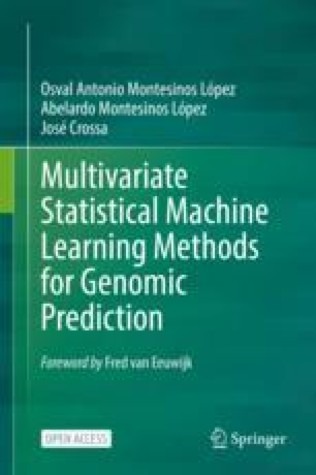
Multivariate Statistical Machine Learning Methods for Genomic Prediction
This book brings together the latest genome base prediction models currently being used by statisticians, breeders and data scientists. It provides an accessible way to understand the theory behind each statistical learning tool, the required pre-processing, the basics of model building, how to train statistical learning methods, the basic R scripts needed to implement each statistical learning tool, and the output of each tool. To do so, for each tool the book provides background theory, some elements of the R statistical software for its implementation, the conceptual underpinnings, and at least two illustrative examples with data from real-world genomic selection experiments.
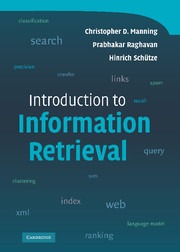
Introduction to information retrieval
Teaches classical and web information retrieval, including web search and the related areas of text classification and text clustering from basic concepts. It gives an up-to-date treatment of all aspects of the design and implementation of systems for gathering, indexing, and searching documents; methods for evaluating systems; and an introduction to the use of machine learning methods on text collections. All the important ideas are explained using examples and figures, making it perfect for introductory courses in information retrieval for advanced undergraduates and graduate students in computer science.

Deep learning for computational problems in hardware security : Modeling attacks on strong physically unclonable function circuits
Discusses a broad overview of traditional machine learning methods and state-of-the-art deep learning practices for hardware security applications, in particular the techniques of launching potent "modeling attacks" on Physically Unclonable Function (PUF) circuits, which are promising hardware security primitives. The volume is self-contained and includes a comprehensive background on PUF circuits, and the necessary mathematical foundation of traditional and advanced machine learning techniques such as support vector machines, logistic regression, neural networks, and deep learning. This book can be used as a self-learning resource for researchers and practitioners of hardware security, and will also be suitable for graduate-level courses on hardware security and application of machine learning in hardware security.

Data science on the Google cloud platform : Implementing end-to-end real-time data pipelines : From ingest to machine learning
Learn how easy it is to apply sophisticated statistical and machine learning methods to real-world problems when you build using Google Cloud Platform (GCP). This hands-on guide shows data engineers and data scientists how to implement an end-to-end data pipeline with cloud native tools on GCP. You'll work through a sample business decision by employing a variety of data science approaches. Follow along by building a data pipeline in your own project on GCP, and discover how to solve data science problems in a transformative and more collaborative way. Employ best practices in building highly scalable data and ML pipelines on Google Cloud Automate and schedule data ingest using Cloud Run Create and populate a dashboard in Data Studio Build a real-time analytics pipeline using Pub/Sub, Dataflow, and BigQuery Conduct interactive data exploration with BigQuery Create a Bayesian model with Spark on Cloud Dataproc Forecast time series and do anomaly detection with BigQuery ML Aggregate within time windows with Dataflow Train explainable machine learning models with Vertex AI Operationalize ML with Vertex AI Pipelines

Computing Meaning : Vol.3
This book provides an in-depth view of the current issues, problems and approaches in the computation of meaning as expressed in language. Aimed at linguists, computer scientists, and logicians with an interest in the computation of meaning, this book focuses on two main topics in recent research in computational semantics. The first topic is the definition and use of underspecified semantic representations, i.e. formal structures that represent part of the meaning of a linguistic object while leaving other parts unspecified. The second topic discussed is semantic annotation. Annotated corpora have become an indispensable resource both for linguists and for developers of language and speech technology, especially when used in combination with machine learning methods. The annotation in corpora has only marginally addressed semantic information, however, since semantic annotation methodologies are still in their infancy. This book discusses the development and application of such methodologies.

Computational Collective Intelligence ; 12th International Conference, ICCCI 2020, Da Nang, Vietnam, November 30 – December 3, 2020, Proceedings
This volume constitutes the refereed proceedings of the 12th International Conference on Computational Collective Intelligence, ICCCI 2020, held in Da Nang, Vietnam, in November 2020.* The 70 full papers presented were carefully reviewed and selected from 314 submissions. The papers are grouped in topical sections on: knowledge engineering and semantic web; social networks and recommender systems; collective decision-making; applications of collective intelligence; data mining methods and applications; machine learning methods; deep learning and applications for industry 4.0; computer vision techniques; biosensors and biometric techniques; innovations in intelligent systems; natural language processing; low resource languages processing; computational collective intelligence and natural language processing; computational intelligence for multimedia understanding; and intelligent processing of multimedia in web systems.

Clinical text mining : Secondary use of electronic patient records
Describes the results of natural language processing and machine learning methods applied to clinical text from electronic patient records. It is divided into twelve chapters. Chapters 1-4 discuss the history and background of the original paper-based patient records, their purpose, and how they are written and structured. These initial chapters do not require any technical or medical background knowledge. The remaining eight chapters are more technical in nature and describe various medical classifications and terminologies such as ICD diagnosis codes, SNOMED CT, MeSH, UMLS, and ATC. Chapters 5-10 cover basic tools for natural language processing and information retrieval, and how to apply them to clinical text. The book’s closing chapters present a number of applications in clinical text mining and summarise the lessons learned from the previous chapters.
Marketing analytics : A machine learning approach
Gives a comprehensive overview of marketing analytics, incorporating machine learning methods of data analysis that automates analytical model building. The volume covers the important aspects of marketing analytics, including segmentation and targeting analysis, statistics for marketing, marketing metrics, consumer buying behavior, neuromarketing techniques for consumer analytics, new product development, forecasting sales and price, web and social media analytics, and much more.
Machine learning methods for reverse engineering of defective structured surfaces
Pascal Laube presents machine learning approaches for three key problems of reverse engineering of defective structured surfaces: parametrization of curves and surfaces, geometric primitive classification and inpainting of high-resolution textures. The proposed methods aim to improve the reconstruction quality while further automating the process. The contributions demonstrate that machine learning can be a viable part of the CAD reverse engineering pipeline.
Machine Learning Approaches in Cyber Security Analytics
Introduces various machine learning methods for cyber security analytics. With an overwhelming amount of data being generated and transferred over various networks, monitoring everything that is exchanged and identifying potential cyber threats and attacks poses a serious challenge for cyber experts. Further, as cyber attacks become more frequent and sophisticated, there is a requirement for machines to predict, detect, and identify them more rapidly. Machine learning offers various tools and techniques to automate and quickly predict, detect, and identify cyber attacks.
Machine Learning : Modeling Data Locally and Globally
Machine Learning - Modeling Data Locally and Globally presents a novel and unified theory that tries to seamlessly integrate different algorithms. Specifically, the book distinguishes the inner nature of machine learning algorithms as either "local learning"or "global learning."This theory not only connects previous machine learning methods, or serves as roadmap in various models, but – more importantly – it also motivates a theory that can learn from data both locally and globally. This would help the researchers gain a deeper insight and comprehensive understanding of the techniques in this field. The book reviews current topics,new theories and applications.

Applied and computational mathematics for digital environments
Contains the 11 papers that were accepted and published in the Special Issue “Applied and Computational Mathematics for Digital Environments” of the MDPI Mathematics journal. The topics of interest include, among others, scientific research, applied tasks, and problems in the following areas: The construction of mathematical and information models of intelligent computer systems for monitoring and controlling the parameters of digital environments; The development of intelligent optimization algorithms that search for optimal parameter values of mathematical and information models in digital environments; Software and mathematical technologies in the implementation of intelligent monitoring and computer control of the parameters of digital environments; The development and application of mathematical and information models, machine learning methods, and artificial intelligence for the analysis and processing of big data in digital environments.
