



الصفحة 1
الصفحة 1

Nature, Value, Duty : Life on Earth with Holmes Rolston, III
"Nature Value and Duty: Life on Earth with Holmes Rolston, III" is a collection of contemporary writings on the work of Holmes Rolston, III. The authors contributing to this volume are a mixture of senior scholars in environmental ethics and new voices in philosophy and in literature. Together they provide an in depth evaluation of many of the topics discussed by Rolston. They probe the strengths and weaknesses of his work and suggest valuable correctives. Rolston himself, in a detailed reply to each of his critics at the end of the volume, reveals where some of these criticisms sting him the most and in the process provides one of the most detailed and articulate defenses of his position ever offered."

Intelligent Life in the Universe : Principles and Requirements Behind Its Emergence
This book addresses the possible origins, development and fate of intelligent life in the universe. The author presents a wide-ranging analysis of the type of knowldege that can be inferred about extraterrestial intelligent societies from our own biological, cultural and scientific evolution, and from the likely future of mankind. Providing extensive background information from astronomy, geology, chemistry and biology, the book will appeal to both the scientist and the general reader.

High-Resolution Approaches in Stratigraphic Paleontology
This volume delves into a spectrum of theoretical as well as applied aspects of high-resolution stratigraphic approaches in paleontology. It explores how increasingly detailed knowledge of the fossil record can enhance our understanding of the evolution of life on Earth and also allows geoscientists to address a broad range of important evolutionary and environmental questions in this arena.
From Suns to Life: : A Chronological Approach to the History of Life on Earth
This review emerged from several interdisciplinary meetings and schools gathering a group of astronomers, geologists, biologists, and chemists, attempting to share their specialized knowledge around a common question: how did life emerge on Earth? Their ultimate goal was to provide some kind of answer as a prerequisite to an even more demanding question: is life universal? The main chapters of this review present the formation and evolution of the solar system (3); the building of a habitable planet (4); prebiotic chemistry, biochemistry, and the emergence of life (5); the environmental context of the early Earth (6); and the ancient fossil record and early evolution (7). The concluding chapter (9) provides the highlights of the review and presents the different points of view about the universality of life. Two pedagogical chapters are included; one on chronometers (2), another in the form of a "frieze" (8) which summarizes in graphical form the present state of knowledge about the chronology of the emergence of life on Earth, before the Cambrian explosion.

From Fossils to Astrobiology : Records of Life on Earth and Search for Extraterrestrial Biosignatures
From Fossils to Astrobiology reviews developments in paleontology and geobiology that relate to the rapidly-developing field of Astrobiology, the study of life in the Universe. Many traditional areas of scientific study, including astronomy, chemistry and planetary science, contribute to Astrobiology, but the study of the record of life on planet Earth is critical in guiding investigations in the rest of the cosmos. In this varied book, expert scientists from 15 countries present peer-reviewed, stimulating reviews of paleontological and astrobiological studies. The overviews of established and emerging techniques for studying modern and ancient microorganisms on Earth and beyond, will be valuable guides to evaluating biosignatures which could be found in the extraterrestrial surface or subsurface within the Solar System and beyond.

Demands of Expanding Populations and Development Planning : Clean Air, Safe Water, Fertile Soils
This book brings together three topics that interact to affect the quality of life on Earth. First, it examines expanding populations (and contracting ones) in regional and national contexts. Second, the book reviews the impacts of pollution on people, ecosystems and economic ventures.Third, the book asserts that well-planned development projects adhering to environmental laws and with best available technologies, will reduce ecosystem pollution yet yield strong profit margins.

Comets : Nature, Dynamics, Origin, and their Cosmogonical Relevance
The book covers the most recent ideas about the nature and dynamics of comets, including a thorough discussion on Oort cloud dynamics which has not received due attention in other books on the subject. It also discusses the most relevant aspects of the physics and chemistry of comet nuclei, highlighting their importance as relics of the protoplanetary disk and, perhaps, as carriers of water and organics that permitted the development of life on Earth. The book contains several tables with useful data, and an ample bibliography covering the most recent work as well as some historical key contributions to the subject. It may be suitable as a textbook for graduate students with some basic knowledge of celestial mechanics and astrophysics, as well as a consult book for comet researchers, or researchers from other related fields willing to start working on comets, or get an updated view of the subject.

Lectures in astrobiology ; Vol I ; Part 2 : From prebiotic chemistry to the origin of life on earth
The first comprehensive textbook at the graduate level encompassing all aspects associated with the emerging field of astrobiology. Volume I gathers a fist set of extensive lectures that cover a broad range of topics, from the formation of solar system to the quest for the most primitive life forms that emerged on the early Earth.
Astrobiology : Future perspectives
Astrobiology, a new exciting interdisciplinary research field, seeks to unravel the origin and evolution of life wherever it might exist in the Universe. The current view of the origin of life on Earth is that it is strongly connected to the origin and evolution of our planet and, indeed, of the Universe as a whole. We are fortunate to be living in an era where centuries of speculation about the two ancient and fundamental problems: the origin of life and its prevalence in the Universe are being replaced by experimental science. The subject of Astrobiology can be approached from many different perspectives. This book is focused on abiogenic organic matter from the viewpoint of astronomy and planetary science and considers its potential relevance to the origins of life on Earth and elsewhere. Guided by the review papers in this book, the concluding chapter aims to identify key questions to motivate future research and stimulate astrobiological applications of current and future research facilities and space missions. Today’s rich array of new spacecraft, telescopes and dedicated scientists promises a steady flow of discoveries and insights that will ultimately lead us to the answers we seek.

Amino acids and the asymmetry of life : Caught in the act of formation
This book describes how the basic building blocks of life, the amino acids, formed. After a comprehensible introduction into stereochemistry, the author addresses the inherent property of amino acids in living organisms, namely the preference for left-handedness. What was the cause for violation of parity of amino acids in the emergence of life on Earth? All the fascinating models proposed by physicists, chemists and biologist are vividly presented including the scientific conflicts.
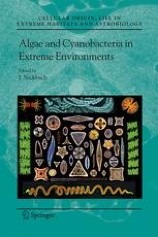
Algae and Cyanobacteria in Extreme Environments
ALGAE AND CYANOBACTRIA IN EXTREME ENVIRONMENTS is a unique collection of essays, contributed by leading scientists from around the world, devoted to algae – and some related microbes – observed in unexpected harsh habits, which it seems are an oasis or Garden of Eden for these organisms. This timely book on Extremophilic alga, including its especially impressive micrographs, may provide clues about the edges of life on Earth and possibly elsewhere in the universe. This volume is a must for students of the field of biodiversity, as well as those in Phycology, ecology and general biological research.
A History of Atmospheric CO2 and Its Effects on Plants, Animals, and Ecosystems
The authors address the future role of atmospheric CO2 and its likely effects on ecosystems. This book incorporates the advances of various earth science, environmental, and ecological fields into an overall account of global change and the changing dynamics of life on Earth.
