



الصفحة 1
الصفحة 1
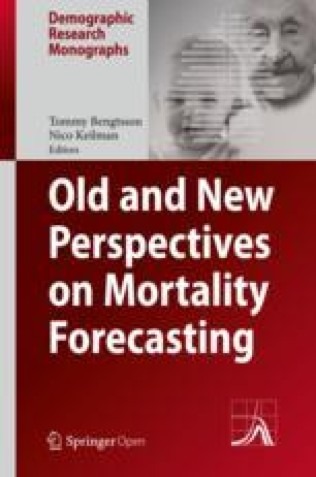
Old and New Perspectives on Mortality Forecasting
This book describes methods of mortality forecasting and discusses possible improvements. It contains a selection of previously unpublished and published papers, which together provide a state-of-the-art overview of statistical approaches as well as behavioural and biological perspectives. The different parts of the book provide discussions of current practice, probabilistic forecasting, the linearity in the increase of life expectancy, causes of death, and the role of cohort factors.

Nutrition, diet and healthy aging
Over the last 100 years, the numerous advances in science, the improved sanitary conditions and a decline in poverty have led to an increase in life expectancy. As a result, in the coming years, the number of over-65s will triple, and the over-80s will be the fastest growing portion of the population. However, an increased lifespan is associated with an increase in chronic diseases, such as cardiovascular disease, diabetes, cancer, sarcopenia, and degenerative disorders. Therefore, ideally, increased lifespan should be associated to a better healthspan, which is the period one individual is living in good health

How Long Do We Live? : Demographic Models and Reflections on Tempo Effects
The book reviews the debate on how best to measure period longevity. In the various chapters, leading experts in demography critically examine the existence of the tempo effect in mortality, present extensions and applications, and compare period and cohort longevity measures. The book provides a deeper understanding of and new insights into the fundamental question "How long do we live"?

Healthy Longevity in China : Demographic, Socioeconomic, and Psychological Dimensions
China is aging at an extraordinary speed and has the largest quantity of elderly persons in the world. Scholars utilize this unprecedented living experience of human being and the unique Chinese Longitudinal Healthy Longevity Survey (CLHLS) datasets with the aim to answer in this volume the following questions critical to the aging population world wide. Is the period of disability compressing or expanding with increasing life expectancy and what factors are associated with these trends in the recent decades? Is it possible to realize morbidity compression with a prolongation of the life span in the future?The first section of the book presents the CLHLS project’s study design, sample distribution, contents of data collected, and assessments of age reporting and data quality. The remaining chapters are grouped into sections dealing with the demographic, social, economic, familial and psychological dimensions of healthy longevity.

Gesundheitsversorgung am Lebensende : Soziale Ungleichheit in Bezug auf Institutionsaufenthalte und Sterbeorte = Health care at the end of life : Social inequality in relation to institutional stays and places of death
Damian Hedinger examines the question of health care at the end of life, which is becoming more and more important due to demographic aging and increasing life expectancy. He proceeds from both a scientific and a socio-political perspective and uses administrative data from Switzerland to find out why one spends a longer or shorter period in a home or hospital and why one dies where. It turns out that in addition to medical factors, socio-economic, familial and cultural determinants also have a significant influence on health care before death.
Longer Life and Healthy Aging
Focuses on theoretical issues and empirical findings related to trends and determinants of healthy aging, including factors related to "healthy longevity" of the oldest-old, aged 80 and over. The group is the most rapidly increasing elderly sub-population and is most likely to need assistance in daily living in all countries. Chapters include both longitudinal and cross-sectional data from North America, Europe, and Asia in country-specific studies and cross-national comparisons. Part I focuses on the definition, components, concepts, measurements, and determinants of healthy aging, and discusses the trends and patterns of disability and healthy life expectancy at the macro level. Part II addresses individual healthy aging, including its biological and socio-demographic aspects. Part III focuses on issues concerning the family and healthy aging, and Part IV explores formal and informal care for healthy aging through governmental policy interventions and community service programs.

Cirrhosis and New Treatment
The liver organ in the human body is located in the abdominal-pelvic space below the diaphragm. It is responsible for metabolic functions. This research talks about the liver anatomy and its functions as well as the liver cirrhosis that defined as the histological development of regenerative nodules surrounded by fibrous bands in response to chronic liver injury that leads to portal hypertension and end stage liver disease. Recent advances in the understanding of the natural history and pathophysiology of cirrhosis, and in treatment of its complications, resulting in improved management, quality of life and life expectancy of cirrhotic patients. At present, liver transplantation remains the only curative option for a selected group of patients, but pharmacological therapies that can halt progression to decompensated cirrhosis or even reverse cirrhosis are currently being developed.

A History of Thermodynamics : The Doctrine of Energy and Entropy
The development of thermodynamics in the second half of the 19th century has had a strong impact on both technology and natural philosophy. It is true that the steam engine for the conversion of heat into work existed before thermodynamics was developed as a branch of physics. However, the systematic theory improved the conversion process, and it succeeded in developing other processes essential to modern life, notably refrigeration and rectification. So, altogether thermodynamics has provided humanity with cheap energy, and cheap fuel, -- consequently with cheap, and abundant, and unspoiled food. Thus thermodynamics has made populations grow, and life expectancy increase beyond anything people could possibly have imagined 200 years ago.
