



الصفحة 1
الصفحة 1

Nexus Network Journal : Leonardo da Vinci : Architecture and Mathematics
The quintessential Renaissance Man, Leonardo da Vinci was well aware of the fundamental importance of mathematics for architecture. This issue of the Nexus Network Journal examines Leonardo’s knowledge of theoretical mathematics, explores how he used concepts of geometry in his designs for architectural projects, and reports on a real-life construction project using Leonardo’s principles. Authors include Sylvie Duvernoy, Kim Williams, Rinus Roelofs, Biagio Di Carlo, Mark Reynolds, João Pedro Xavier, Vesna Petresin, Christopher Glass, and Jane Burry. To complete the issue Rachel Fletcher writes her Geometer’s Angle column on "Dynamic Symmetry", Michael Ostwald reviews A Theory of General Ethics by Warwick Fox, Sarah Clough Edwards reviews Inigo Jones and the Classical Tradition by Christy Anderson, and Sylvie Duvernoy reviews Architecture and Mathematics in Ancient Egypt by Corinna Rossi.

Evolvable systems : From biology to hardware ; 6th International Conference, ICES 2005, Sitges, Spain, September 12-14, 2005, Proceedings
The flying machines proposed by Leonardo da Vinci in the fifteenth century, the se- reproducing automata theory proposed by John von Neumann in the middle of the twentieth century and the current possibility of designing electronic and mechanical systems using evolutionary principles are all examples of the efforts made by humans to explore the mechanisms present in biological systems that permit them to tackle complex tasks. These initiatives have recently given rise to the emergent field of b- inspired systems and evolvable hardware. The inaugural workshop, Towards Evolvable Hardware, took place in Lausanne in October 1995, followed by the successive events of the International Conference on Evolvable Systems: From Biology to Hardware, held in Tsukuba (Japan) in October 1996, in Lausanne (Switzerland) in September 1998, in Edinburgh (UK) in April 2000, in Tokyo (Japan) in October 2001, and in Trondheim (Norway) in March 2003. Following the success of these past events the sixth international conference was aimed at presenting the latest developments in the field, bringing together researchers who use biologically inspired concepts to implement real systems in artificial intelligence, artificial life, robotics, VLSI design, and related domains. The sixth conference consolidated this biennial event as a reference meeting for the community involved in bio-inspired systems research. All the papers received were reviewed by at least three independent reviewers, thus guaranteeing a high-quality bundle for ICES 2005.
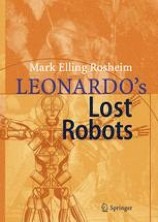
Leonardo´s Lost Robots
Reinterprets Leonardo's legacy of notes, showing that apparently unconnected fragments from dispersed manuscripts actually comprise cohesive designs for functioning automata. Using the rough sketches scattered throughout almost all of Leonardo's notebooks, the author has reconstructed Leonardo's programmable cart, which was the platform for other automata: a Robot Lion, a Robot Knight, and a hydraulically powered automaton for striking a bell.
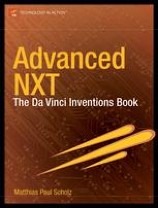
Advanced NXT : The Da Vinci Inventions Book
About building some of Leonardo da Vinci's most famous inventions with LEGO's breathtaking robot technology, the LEGO MINDSTORMS NXT. In this book, you will revive such fascinating devices as the flying machine, the aerial screw, the revolving bridge, the double leaf spring catapult, and the armored car—five centuries after their creation by the great Renaissance engineer.
