



الصفحة 1
الصفحة 1

History of Science, History of Text
This book explores the hypothesis that the types of inscription or text used by a given community of practitioners are designed in the very same process as the one producing concepts and results. The book sets out to show how, in exactly the same way as for the other outcomes of scientific activity, all kinds of factors, cognitive as well as cultural, technological, social or institutional, conjoin in shaping the various types of writings and texts used by the practitioners of the sciences. To make this point, the book opts for a genuinely multicultural approach to the texts produced in the context of practices of knowledge

High performance computing in science and engineering, Munich 2004 ; Transactions of the 2nd Joint HLRB and KONWIHR Status and Result Workshop, March 2-3, 2004, Technical University of Munich, and Leibniz-Rechenzentrum Munich, Germany
Three of the 38 papers deal with computer science, 11 with computational fluid dynamics, two with bio-sciences, six with chemistry, nine with solid-state physics, one with geophysics, four with fundamental physics and two with astrophysics. At a workshop on high performance computing papers should not only have a high scientific quality of the subject addressed, e.g. CFD (Computational Fluid Dynamics), physics, chemistry, but should ecially emphasize the necessity to have access to a high performance computer in order to solve the problem. It should also contain information about the simulation techniques used and about the performance of the computer when using distinc algorithms.

Hermann Cohens Critical Idealism
Publications on Cohen in the English language are small in number and this volume aims to fill the gap. It offers an analysis of Cohen’s System of Philosophy - the three-volume classic on logic, ethics, and aesthetics - and his writings on Judaism and religion. The book highlights Cohen’s contributions in these fields, including his discussions with Maimonides, Leibniz, Kant, and Hegel. It demonstrates the congeniality of Cohen’s critical idealism as expounded in the System and his writings on Judaism, and offers an overview of contemporary Cohen research.

Gottfried Wilhelm Leibniz : The Art of Controversies
All these perspectives (and more) are united in what this book identifies as his Art of Controversies, which might also be called an Art of Dialectical Cooperation. For it is based on the idea that knowledge production, acquisition, and evolution is not a one-man affair, but the result of the cooperation of many, coming from different perspectives; whence it follows that not only tolerance vis-à-vis the other, but also valuing the other’s contribution and integrating it – whether it stems from another age, continent, culture, discipline, religion, or individual – is indispensable. This dialectical Leibniz that emerges from the selected texts here translated, commented, and interpreted in the light of their context, isn’t for sure the familiar one. Yet, perhaps surprisingly.

Geometry and monadology : Leibniz’s Analysis Situs and philosophy of space
Reconstructs, from both historical and theoretical points of view, Leibniz’s geometrical studies, focusing in particular on the research Leibniz carried out in the last years of his life. It is indeed the first ever comprehensive historical reconstruction of Leibniz’s geometry that meets the interests of both mathematicians and philosophers. The main purpose of the work is to offer a better understanding of the Leibnizean philosophy of space and mature metaphysics, through a pressing confrontation with the problems of geometric foundations. Regarding the scope of these problems, the book also deals in depth with Leibniz’s theory of sensibility, thus favouring the comparison and contrast between Leibniz’s philosophy and Kant’s transcendentalist solution. The Appendix references to a number of previously unpublished manuscripts on geometry from the Leibniz Archiv in Hannover, which disclose new theories, points of view and technicalities of Leibniz’s thought.

Extensionalism : The Revolution in Logic
This vivid and thought-provoking book by the Israeli logician Nimrod Bar-Am impels one to rethink the place of logic in Western thought. It shows that the history of logic from Aristotle to Tarski is the history of the gradual undoing of the classic conflation of logic and empirical science. It sets tomorrow’s agenda for philosophers and historians of logic and scientific method by taking as its starting point the mere fact that, curiously, ancient logic is not as formal as current literature presents it. Rather, as Bar-Am explains, modern formal logic became possible only after a series of bold criticisms of the magnificent Aristotelian system. These criticisms begin with David Hume’s declaration that logic does not sanction induction, follow on with Kant’s view of logic as an extremely limited system, and culminating with Booles’ introduction of logic as an extensional system, and Russell’s solution to his own paradox.

Machine Learning and Data Mining in Pattern Recognition ; 5th International Conference, MLDM 2007, Leipzig, Germany, July 18-20, 2007, Proceedings
MLDM / ICDM Medaillie Meissner Porcellan, the “White Gold” of King August the Strongest of Saxonia Gottfried Wilhelm von Leibniz. This was the fifth MLDM in Pattern Recognition event held in Leipzig (www.mldm.de). This meeting from the very first event has focused on aspects of machine learning and data mining in pattern recognition problems.
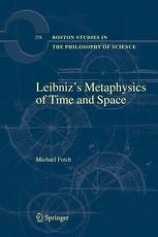
Leibnizs Metaphysics of Time and Space
Leibniz’s metaphysics of space and time stands at the centre of his philosophy and is one of the high-water marks in the history of the philosophy of science. In this work, Futch provides the first systematic and comprehensive examination of Leibniz’s thought on this subject. In addition to elucidating the nature of Leibniz’s relationalism, the book fills a lacuna in existing scholarship by examining his views on the topological structure of space and time, including the unity and unboundedness of space and time. It is shown that, like many of his more recent counterparts, Leibniz adopts a causal theory of time where temporal facts are grounded on causal facts, and that his approach to time represents a precursor to non-tensed theories of time.

Leibniz and the natural world : Activity, passivity and corporeal substances in Leibniz's Philosophy
In the present book, Pauline Phemister argues against traditional Anglo-American interpretations of Leibniz as an idealist who conceives ultimate reality as a plurality of mind-like immaterial beings and for whom physical bodies are ultimately unreal and our perceptions of them illusory. Re-reading the texts without the prior assumption of idealism allows the more material aspects of Leibniz's metaphysics to emerge. Leibniz is found to advance a synthesis of idealism and materialism. His ontology posits indivisible, living, animal-like corporeal substances as the real metaphysical constituents of the universe; his epistemology combines sense-experience and reason; and his ethics fuses confused perceptions and insensible appetites with distinct perceptions and rational choice. In the light of his sustained commitment to the reality of bodies, Phemister re-examines his dynamics, the doctrine of pre-established harmony and his views on freedom.

Leibniz and the English-Speaking World
These essays comprise a first attempt to assess overall the attention awarded to Leibniz’s philosophy in the English-speaking world in his own time and up to the present day. In addition to an introductory overview there are fourteen original and previously unpublished essays considering Leibniz’s connections with his English-speaking contemporaries and near contemporaries as well as the later reception of his thought in Anglo-American philosophy.
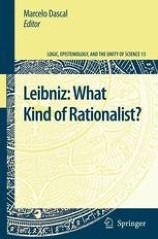
Leibniz : What Kind of Rationalist?
The chapters of the book are the result of intense discussion in the course of an international conference focused on the title question of this book, and were selected in view of their contribution to this topic. They are clustered in thematically organized parts. No effort has been made to hide the controversies underlying the different interpretations of Leibniz’s “rationalism” – in each particular domain and as a whole. On the contrary, the editor firmly believes that only through a variety of conflicting interpretive perspectives can the multi-faceted nature of an oeuvre of such a magnitude and variety as Leibniz’s be brought to light and understood as it deserves.
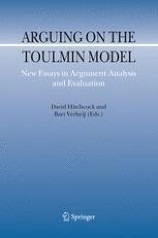
Arguing on the Toulmin model : New essays in argument analysis and evaluation
In The Uses of Argument Stephen Toulmin proposed a new model for the layout of arguments, with six components: claim, data, warrant, qualifier, rebuttal, backing. Toulmin’s model has been appropriated, adapted and extended by researchers in the fields of speech communications, philosophy and artificial intelligence. The volume aims to bring together the best contemporary reflection in these fields on the Toulmin model and its current appropriation.
