



الصفحة 1
الصفحة 1

Modeling Theory in Science Education
The book focuses as much on course content as on instruction and learning methodology, and presents practical aspects that have repeatedly demonstrated their value in fostering meaningful and equitable learning of physics and other science courses at the secondary school and college levels.The author shows how a scientific theory that is the object of a given science course can be organized around a limited set of basic models. Special tools are introduced, including modeling schemata, for students to meaningfully construct models and required conceptions, and for teachers to efficiently plan instruction and assess and regulate student learning and teaching practice. A scientific model is conceived to represent a particular pattern in the structure or behavior of physical realities and to explore and reify the pattern in specific ways. The author further shows how to engage students in modeling activities through structured learning cycles.

Mathematics Education and Language Diversity : The 21st ICMI Study
This book examines multiple facets of language diversity and mathematics education. It features renowned authors from around the world and explores the learning and teaching of mathematics in contexts that include multilingual classrooms, indigenous education, teacher education, blind and deaf learners, new media and tertiary education. Each chapter draws on research from two or more countries to illustrate important research findings, theoretical developments and practical strategies.

Handbook on Information Technologies for Education and Training
The handbook's goal is to enable the reader to gain a deep understanding of past, current and future research and applications in the field of educational technology. The reader will gain an in-depth understanding of complex theories, strategies, concepts, and methods relating to the design, development, implementation, and evaluation of educational technologies. Because it combines both the present experience in the field and the vision of its emerging directions, the handbook will be a comprehensive guide for researchers and practitioners working with educational technologies. All the chapters of the second edition are newly written, the handbook therefore presents the latest developments in the field.
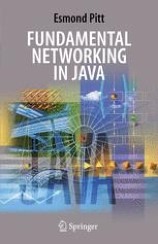
Fundamental networking in Java
This book is an in-depth learning and teaching resource for the understanding and programming of TCP/IP networking in Java. It covers 'everything you can do to a socket in Java' and explains when and why you might - or might not - want to do that. The book covers TCP and UDP using both blocking streams and non-blocking channels, and also SSL secure sockets in both blocking and non-blocking modes, unravelling the mysteries of the SSLEngine in the process. Particular attention is paid to the neglected topics of multi-homing and multicast. A unique chapter on client and server architectures uses a quantitative approach rather than the usual design-patterns approach, leading to architectures with predictable performance rather than just coding elegance.

European Traditions in Didactics of Mathematics
This book discusses several didactic traditions in mathematics education in countries across Europe, including France, the Netherlands, Italy, Germany, the Czech and Slovakian Republics, and the Scandinavian states. It shows that while they all share common features both in the practice of learning and teaching at school and in research and development, they each have special features due to specific historical and cultural developments. The book also presents interesting historical facts about these didactic traditions, the theories and examples developed in these countries.

European Higher Education Area : Challenges for a New Decade
This book highlights the major outcomes of the fourth edition of the Future of Higher Education – Bologna Process Researchers Conference (January 2020), which has already established itself as a landmark in the European higher education environment.

Enhancing Teaching and Learning through Assessment : Deriving an Appropriate Model
Provides a practical guide on the effective use of assessment. It includes the use of assessment tools and pedagogical design that help students deepen their learning. Major issues on assessment and some excellent examples are presented as a useful resource to university teachers in enhancing teaching and students' learning. It will also be found useful by teachers when implementing various assessment methods. School administrators and teaching development professionals will find the book useful when making decisions related to learning and teaching issues in their institutions.

Early geometrical thinking in the environment of patterns, mosaics and isometries
This book discusses the learning and teaching of geometry, with a special focus on kindergarten and primary education. It examines important new trends and developments in research and practice, and emphasizes theoretical, empirical and developmental issues. Further, it discusses various topics, including curriculum studies and implementation, spatial abilities and geometric reasoning, as well as the psychological roots of geometrical thinking and teacher preparation in geometry education. It considers these issues from historical, epistemological, cognitive semiotic and educational points of view in the context of students' difficulties and the design of teaching and curricula.

Creative applications of artificial intelligence in education
Explores the synergy between AI and education, highlighting its potential impact on pedagogical practices. It navigates the evolving landscape of AI-powered educational technologies and suggests practical ways to personalise instruction, nurture human-AI co-creativity, and transform the learning experience. Spanning from primary to higher education, this short and engaging volume proposes concrete examples of how educational stakeholders can be empowered in their AI literacy to foster creativity, inspire critical thinking, and promote problem-solving by embracing AI as a tool for expansive learning. Structured in three parts, the book starts developing the creative engagement perspective for learning and teaching to then present practical applications of AI in K-12 and higher education, covering different fields (teacher education, professional education, business education) as well as different types of AI supported tools (games, chatbots, and AI assisted assessment).

Learning Theory ; Vol. 4005 ; 19th Annual Conference on Learning Theory, COLT 2006, Pittsburgh, PA, USA, June 22-25, 2006, Proceedings
Constitutes the refereed proceedings of the 19th Annual Conference on Learning Theory, COLT 2006, held in Pittsburgh, Pennsylvania, USA in June 2006. The 43 revised full papers presented together with 2 articles on open problems and 3 invited lectures were carefully reviewed and selected from a total of 102 submissions. The papers cover a wide range of topics including clustering, un- and semisupervised learning, statistical learning theory, regularized learning and kernel methods, query learning and teaching, inductive inference, learning algorithms and limitations on learning, online aggregation, online prediction and reinforcement learning.
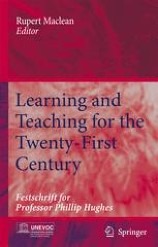
Learning and Teaching for the Twenty-first Century : Festschrift for Professor Phillip Hughes
This book stresses learning and teaching, rather than teaching and learning. The contention of the contributors is that the focus in all educational endeavours should not be primarily on teachers and teaching, but on learners; how to best facilitate learning, in the most effective, enjoyable, relevant and cost-effective ways for learners, whether they be children, youth or adults. The focus is therefore on how learning can be enhanced, through effective teaching; and how individuals can be best prepared to be excellent teachers.
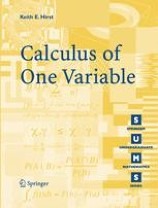
Calculus of one variable
Aimed at first-year undergraduates in mathematics and the physical sciences, the only prerequisites are basic algebra, coordinate geometry and the beginnings of differentiation as covered in school. The transition from school to university mathematics is addressed by means of a systematic development of important classes of techniques, and through careful discussion of the basic definitions and some of the theorems of calculus, with proofs where appropriate, but stopping short of the rigour involved in Real Analysis.The influence of technology on the learning and teaching of mathematics is recognised through the use of the computer algebra and graphical package MAPLE to illustrate many of the ideas.
