



الصفحة 1
الصفحة 1
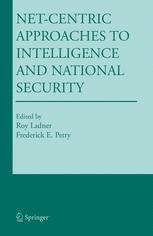
Net-Centric Approaches to Intelligence and National Security
Net-Centric Approaches to Intelligence and National Security considers the web architectures and recent developments that make net-centric approaches for intelligence and national security possible. The development of net-centric approaches for intelligence, national & homeland security applications has become a major concern in many areas such as defense intelligence and national and international law enforcement agencies, especially since the terrorist attacks of 9/11. Net-Centric Approaches to Intelligence and National Security presents developments in information integration and recent advances in web services including the concept of the semantic web. Discovery analysis and management of web-available data pose a number of interesting challenges for research in web-based management systems. Intelligent agents and data mining are among the techniques employed. A number of specific systems that are net-centric based in various areas of military applications, intelligence and law enforcements are presented utlilizing one or more of such techniques Net-Centric Approaches to Intelligence and National Security is designed for a professional audience of researchers and practitioners in industry. This volume is also suitable for graduate-level students in computer science.

Migrants with Irregular Status in Europe : Evolving Conceptual and Policy Challenges
This book explores the conceptual challenges posed by the presence of migrants with irregular immigration status in Europe and the evolving policy responses at European, national and municipal level. It addresses the conceptual and policy issues raised, post-entry, by this particular section of the migrant population.
Intelligence and Security Informatics ; Vol. 3917 ; International Workshop, WISI 2006, Singapore, April 9, 2006, Proceedings
Intelligence and security informatics (ISI) can be broadly defined as the study of the development and use of advanced information technologies and systems for national and international security-related applications. The First and Second Symposiums on ISI were held in Tucson, Arizona, in 2003 and 2004, respectively. In 2005, the IEEE International Conference on ISI was held in Atlanta, Georgia. These ISI conferences brought together academic researchers, law enforcement and intelligence experts, information technology consultants and practitioners to discuss their research and practice related to various ISI topics including ISI data management, data and text mining for ISI applications, terrorism informatics, deception detection, terrorist and criminal social network analysis, crime analysis, monitoring and surveillance, policy studies and evaluation, and information assurance, among others. We continued these stream of ISI conferences by organizing the Workshop on Intelligence and Security Informatics (WISI 2006) in conjunction with the Pacific Asia Conference on Knowledge Discovery and Data Mining (PAKDD 2006).
Intelligence and security informatics ; Vol. 3495 : IEEE International Conference on Intelligence and Security Informatics, ISI 2005, Atlanta, GA, USA, May 19-20, 2005, Proceedings
Intelligence and security informatics (ISI) can be broadly defined as the study of the development and use of advanced information technologies and systems for national and international security-related applications, through an integrated technological, organizational, and policy-based approach. In the past few years, ISI research has experienced tremendous growth and attracted substantial interest from academic researchers in related fields as well as practitioners from both government agencies and industry. The first two meetings (ISI 2003 and ISI 2004) in the ISI symposium and conference series were held in Tucson, Arizona, in 2003 and 2004, respectively. They provided a stimulating intellectual forum for discussion among previously disparate communities: academic researchers in information technologies, computer science, public policy, and social studies; local, state, and federal law enforcement and intelligence experts; and information technology industry consultants and practitioners.

Handbook of Digital and Mutlimedia Evidence
Handbook of Digital and Multimedia Forensic Evidence presents an overview of computer forensics perfect for beginners. This volume will serve as a foundation and guide for: (a) students considering a career in this field; (b) the law enforcement investigator assigned to work cybercrimes; (c) establishing training programs for forensic examiners; (d) the IT professional; (e) the veteran forensic examiner; (f) the prosecutor faced with litigating cybercrime cases brought before a trier of fact. A distinguished group of specialist authors have crafted chapters rich with detail yet accessible for readers who are not experts in the field. Tying together topics as diverse as applicable laws on search and seizure, investigating cybercrime, and preparation for courtroom tesitmony, Handbook of Digital and Multimedia Forensic Evidence is the ideal overall reference for this multi-faceted discipline.

Forensic pathology of trauma
The practice of forensic pathology includes the collection and analysis of evidence in relation to a corpse in order to establish the cause of death. Knowledge of the cause of death contributes to the determination of the manner of death by medical examiners and coroners, who are occasionally assisted by law enforcement officers. In the process of establishing the cause and manner of death, representatives of various investigative bodies have several responsibilities, including explaining the death to family members, attempting to reduce the risk of similar deaths in the future, and, if applicable, apprehending the individuals who are responsible for the death. The most well-known and popular role of a forensic pathologist is in the inves- gation of cases of suspicious death; however, most medicolegal autopsies involve unexpected deaths that are above suspicion, many of which are caused by trauma (trauma being defined as any physical force or agent that causes bodily harm). The purpose of Forensic Pathology of Trauma: Common Problems for the Pathologist is to provide practical advice and information about the conduct of the forensic autopsy in cases of trauma, and to offer guidance about the analysis of the autopsy findings in these cases.

Digital Government : E-Government Research, Case Studies, and Implementation
New information technologies are being applied swiftly to all levels of government service: local, county, regional and even national and international. Information technology (IT) is being used to improve data management and data sharing, planning and decision support, service delivery, and more. Application areas affected by government mandates to improve e-government service include healthcare and safety; law enforcement, security, and justice; education; land use; and many others. Information technology is being used to increase public access to information, to provide more convenient and timely transaction services, and to increase citizen participation in the establishment of government regulations and other processes. DIGITAL GOVERNMENT: E-Government Research, Case Studies, and Implementation provides the field with a definitive, interdisciplinary, and understandable review of recent IT and related research of particular importance to digital government. The book also includes explorations of current and future policy implications, and case studies of successful applications in a variety of government settings.

Crisis Management in the Food and Drinks Industry : A Practical Approach
This practical and greatly expanded edition by media and public relations veteran Colin Doeg focuses on the communications aspects of dealing with a crisis. It is global in its coverage of the subject, reviewing practices and requirements in countries ranging from the USA and the UK to Australia and New Zealand.Crisis Management in the Food and Drinks Industry is the only title dealing specifically with this crucial subject in relation to the food industry. As such, it is relevant not only to those in the food industry, but also to marketing and senior management in general in the fields of agriculture, public health and law enforcement.

Criminal profiling : Developing an effective science and practice
This book aims to transform criminal profiling into a credible science and practice that will reliably aid law enforcement investigation. Criminal Profiling tackles this problem squarely, exploring in detail how a science of profiling may be constructed and tested.

Criminal Poisoning : Investigational Guide for Law Enforcement, Toxicologists, Forensic Scientists, and Attorneys
Investigational Guide for Law Enforcement, Toxicologists, Forensic Scientists, and Attorneys, leading forensic scientist John Trestrail offers a pioneering survey of all that is known about the use of poison as a weapon in murder. Topics range from the use of poisons in history and literature to convicting the poisoner in court, and include a review of the different types of poisons, techniques for crime scene investigation, and the critical essentials of the forensic autopsy. The author updates what is currently known about poisoners in general (psychological profile, types, and statistical analyses) and their victims (who gets poisoned, investigative considerations, and classic symptoms of poisoning).

Criminal justice in America : the encyclopedia of crime, law enforcement, courts, and corrections
Provides a comprehensive overview of issues and trends in crime, law enforcement, courts, and corrections that encompass the field of criminal justice studies in the United States.

Court Delay and Law Enforcement in China : Civil process and economic perspective
On the basis of an empirical study and taking a comparative as well as an economic perspective Qing-Yun Jiang analyses the problem of court delay and law enforcement in China. He shows that delay is not a serious problem in the lower courts in respect to trial cases, but mainly in appeal cases and retrial cases, which require more time. Moreover, the study confirms that law enforcement has been an obstacle for the development of market economy and a bottleneck of the judiciary. The author concludes that judicial reform should not only deal with symptoms, but with the roots of the political and economic structure.

Computational Forensic ; 2nd International Workshop, IWCF 2008, Washington, DC, USA, August 7-8, 2008. Proceedings
This book constitutes the refereed proceedings of the Second International Workshop, IWCF 2008, held in Washington, DC, USA, August 2008. The papers are organized in topical sections on trends and challenges; scanner, printer, and prints; human identification; shoeprints; linguistics;decision making and search; speech analysis; signatures and handwriting.

Competition Authorities in South Eastern Europe : Building Institutions in Emerging Markets
Provides answers to key open questions concerning competition policy in emerging economies, with a focus on South Eastern Europe. The contributions address two major issues. One is the design of competition policy and the national competition authorities that enforce it, including the topics of competition advocacy and state aid control; the other is the use of economic methods in competition law enforcement, especially in the cases of relevant market definition and merger control. Many lessons learned in the countries of South Eastern Europe can be applied to the emerging markets of other regions. As such, the findings presented here will be highly relevant for officials and staff at national competition authorities, advisers to legislators shaping national competition policy, competition law professionals, and university students alike.

Advances in UAV detection, classification and tracking
Explores the latest techniques and advancements in unmanned aerial vehicle (UAV) detection, classification, and tracking. As UAV technology continues to evolve and become more accessible, there is a growing need for effective methods to detect, identify, and track these devices in various scenarios. This reprint provides a thorough overview of the state-of-the-art approaches for UAV detection, classification, and tracking, covering both theoretical and practical aspects.The reprint begins by introducing the basics of UAVs and their various applications, followed by a detailed overview of the challenges associated with UAV detection, classification, and tracking. The authors then present the latest techniques and algorithms used in the field, including machine-learning-based approaches, computer vision techniques, and sensor fusion techniques. The reprint also covers the challenges of real-world applications, such as dealing with occlusions, sensor noise, and environmental factors.
