



الصفحة 1
الصفحة 1

Galactose Regulon of Yeast : From Genetics to Systems Biology
The galactose regulon of yeast is one of the best studied regulons. It is an ideal paradigm for demonstrating fundamental and evolving concepts in biology and is used in this book as a model system to explain various facets of conventional and modern biology. The book starts with a brief historical overview on yeast research, i.e. early observations in enzyme adaptation, classical genetics, formulating hypotheses based on genetic inference. This is followed by molecular genetics of the galactose regulon, isolation of genes and testing of the hypotheses. The power of mutational analysis in deciphering molecular mechanisms is conveyed. Further, contemporary topics such as genomics, evolution, single cell analysis of transcriptional switching, binary and graded responses, biological consequences of feed back regulation in genetic circuits, and stochasticity are addressed.

Class 2 Transferases VIII : EC 2.6.1.58 - 2.7.1.37
Springer Handbook of Enzymes provides data on enzymes sufficiently well characterized. It offers concise and complete descriptions of some 5,000 enzymes and their application areas. Data sheets are arranged in their EC-Number sequence and the volumes themselves are arranged according to enzyme classes. This new, second edition reflects considerable progress in enzymology: many enzymes are newly classified or reclassified. Each entry is correlated with references and one or more source organisms. New datafields are created: application and engineering (for the properties of enzymes where the sequence has been changed). The total amount of material contained in the Handbook has more than doubled so that the complete second edition consists of 39 volumes as well as a Synonym Index.

Class 2 Transferases VI : 2.4.2.1 - 2.5.1.30
Springer Handbook of Enzymes provides data on enzymes sufficiently well characterized. It offers concise and complete descriptions of some 5,000 enzymes and their application areas. Data sheets are arranged in their EC-Number sequence and the volumes themselves are arranged according to enzyme classes. This new, second edition reflects considerable progress in enzymology: many enzymes are newly classified or reclassified. Each entry is correlated with references and one or more source organisms. New datafields are created: application and engineering (for the properties of enzymes where the sequence has been changed). The total amount of material contained in the Handbook has more than doubled so that the complete second edition consists of 39 volumes as well as a Synonym Index.
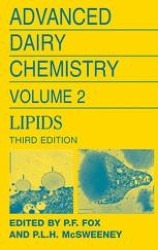
Advanced Dairy Chemistry ; Vol.2 : Lipids
The book is unique in the literature on milk lipids, a broad field that encompasses a diverse range of topics, including synthesis of fatty acids and acylglycerols, compounds associated with the milk fat fraction, analytical aspects, behavior of lipids during processing and their effect on product characteristics, product defects arising from lipolysis and oxidation of lipids, as well as nutritional significance of milk lipids.
