



الصفحة 1
الصفحة 1

Neo-Liberalism, State Power and Global Governance
Part One explores the pattern of national differences in the exercise of state power in a variety of industrialized and developing economies, despite the pressure to converge towards the dominant neo-liberal paradigm. Part Two analyses a variety of trans-national policy prescriptions for neo-liberalism and state power. Part Three explores whether the governance of labour markets is a special case in the global economy. Part Four sets out the need for institutional reform of the neo-liberal order in trade and finance. The volume concludes that there is the prospect of a more plural approach to state power and global governance, and one that recognizes the importance of the public domain of citizenship for delivering the global public goods of security, prosperity and environmental sustainability in the twenty-first century.
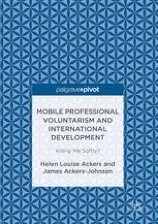
Mobile Professional Voluntarism and International Development : Killing Me Softly?
This book explores the impact that professional volunteers have on the low resource countries they choose to spend time in. Whilst individual volunteering may be of immediate benefit to individual patients, this intervention may have detrimental effects on local health systems; distorting labour markets, accentuating dependencies and creating opportunities for corruption. Improved volunteer deployment may avoid these risks and present opportunities for sustainable systems change. The empirical research presented in this book stems from a specific volunteering intervention funded by the Tropical Health Education Trust and focused on improving maternal and newborn health in Uganda.

Migrants, Refugees and Asylum Seekers’ Integration in European Labour Markets : A Comparative Approach on Legal Barriers and Enablers
This book discusses how, and to what extent, the legal and institutional regimes and the socio-cultural environments of a range of European countries (the Czech Republic, Denmark, Finland Greece, Italy, Switzerland and the UK), in the framework of EU laws and policies, have a beneficial or negative impact on the effective capacity of these countries to integrate migrants, refugees and asylum seekers into their labour markets.

Gender and migration : IMISCOE short reader
This short reader offers a critical review of the debates on the transformation of migration and gendered mobilities primarily in Europe, though also engaging in wider theoretical insights. Building on empirical case studies and grounded in an analytical framework that incorporates both men and women, masculinities, sexualities and wider intersectional insights, this reader provides an accessible overview of conceptual developments and methodological shifts and their implications for a gendered understanding of migration in the past 30 years. It explores different and emerging approaches in major areas, such as: gendered labour markets across diverse sectors beyond domestic and care work to include skilled sectors of social reproduction; the significance of families in migration and transnational families.
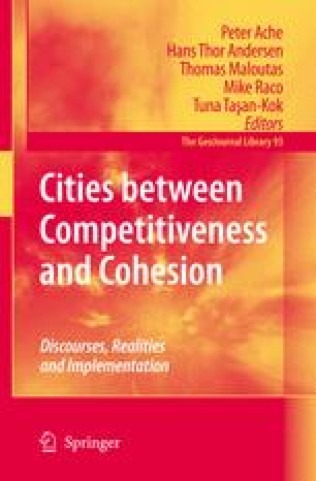
Cities between competitiveness and cohesion : Discourses, realities and implementation
The book shows that spatial and urban policy continues to be a key site of policy intervention and experimentation. Different national welfare systems, political cultures, and socio-economic conditions combine and recombine to address policy problems and opportunities. Collectively, the authors argue that the examined policy initiatives reflect and reproduce these broader changes and shifting ways of thinking about the appropriate relationships between citizens, businesses, and the state.
