



الصفحة 1
الصفحة 1

Nutrient Acquisition by Plants : An Ecological Perspective
Adaptation and evolution of terrestrial plants depend, to a large extent, on their ability to acquire nutrients. This is a modern and integrative treatment of the mechanisms controlling plant nutrient uptake and how plants respond to changes in the environment. The following key topics are covered: soil nutrient bioavailability; root responses to variations in nutrient supply; nitrogen fixation; regulation of nutrient uptake by internal plant demand; root characteristics; kinetics of nutrient uptake; root architecture; life span; mycorrhizae; responses to climate change. This integrated view helps us to understand the mechanisms that govern present-day plant communities and is indispensable in models designed to predict the response of plants to a changing climate.

Numerical and Practical Exercises in Thermoluminescence
Thermoluminescence (TL) is a well-established technique widely used in dosimetric and dating applications. Although several excellent reference books exist which document both the theoretical and experimental aspects of TL, there is a general lack of books that deal with specific numerical and practical aspects of analyzing TL data. Many times the practical details of analyzing numerical TL glow curves and of applying theoretical models are difficult to find in the published literature. Numerical and Practical Exercises in Thermoluminescence provides a practical guide for both established researchers and for new graduate students entering the field of TL, and is intended to be used in conjunction with and as a practical supplement to standard textbooks in the field.

Novel food grade enzymes : Applications in food processing and preservation industries
Covers all the aspects of food-grade enzymes, including their classification, kinetics, microbial production, biosynthetic pathways, commodity-wise industrial applications, and downstream processing strategies. The broad focus of this book is on the application of various classes of enzymes in dairy, fruits and vegetables, cereals and oilseeds, meat and poultry, and brewing and food packaging industries. Certain recent areas such as nanotechnological perspective in enzyme immobilization, infusion strategies as well as its efficient usage in food packaging and preservation are some of the salient highlights of this book. This book also discusses the aspects related to application of enzymes in functional food development and shelf life extension of various commodities food products.

Non-viral Gene Therapy: Gene Design and Delivery
The development of gene medicine based on the concept of molecular therapy has opened new medical horizons. Among the many techniques in gene medicine, gene design and delivery are especially significant in clinical applications. This book presents state-of-the-art information on non-viral gene-delivery techniques, covering a broad spectrum of disciplines that include chemistry, molecular biology, cell biology, and pharmacokinetics

Nimesulide - Actions and Uses
Nimesulide is a non-steroidal anti-inflammatory drug (NSAID) which acts as a cyclooxygenase- 2 inhibitor but also has other novel pharmacological features which account for its effect in the control of pain and inflammation. It has become a leading NSAID in over 50 countries worldwide. This book provides a comprehensive and fully up-to-date critical review of the published literature on nimesulide, including comparisons with anti-inflammatory, analgesic and antipyretic agents. The emphasis is on the action of nimesulide in relation to its therapeutic and side effects in comparison with other established NSAIDs, including the new class of Coxibs.

Newton-Euler Dynamics
Most books on "intermediate dynamics" covering advanced Newtonian and introductory Lagrangian methods.This material cannot be covered adequately in one course if it is to be shared with an introduction to Langrangian methods. This text is devoted to application of Newton-Euler methods to complex, real-life 3-D dynamics problems.

Nanocatalysis
Nanocatalysis is one of the most exciting subfields to have emerged from nanoscience. Its central aim is the control of chemical reactions by changing the size, dimensionality, chemical composition and morphology of the reaction center and by changing the kinetics using nanopatterning of the reaction centers. This approach opens up new avenues for atom-by-atom design of nanocatalysts with distinct and tunable chemical activity, specificity, and selectivity. This book is intended to give a pedagogical and methodological overview of this exciting and growing field and to highlight specific examples of current research. In this way, it serves both as an instructive introduction for graduate students who plan to enter the field and as a reference work for scientists already active in this and related areas.

Multivalency: Concepts, Research and Applications
Multivalency: Concepts, Research & Applications is divided into three parts. Part one provides background knowledge on various aspects of multivalency and cooperativity and presents practical methods for their study. Fundamental aspects such as thermodynamics, kinetics and the principle of effective molarity are described, and characterisation methods, experimental methodologies and data treatment methods are also discussed. Parts two and three provide an overview of current systems in which multivalency plays an important role in chemistry and biology, with a focus on the design rules, underlying chemistry and the fundamental principles of multivalency.

Modern Aspects of Electrochemistry ; Vol. 38
Solid State Electrochemistry encompassing modern equilibria concepts, thermodymanics and kinetics of charge carriers in solids.,Electron transfer processes, with special sections devoted to hydration of the proton and its heterogeneous transfer.Electrosorption at electrodes and its relevance to electrocatalysis and electrodeposition of metals,The behavior of Pt and other alloy electrocatalyst crystallites used as the electrode materials for phosphoric acid electrolyte fuel-cells.Applications of reflexology and electron microscopy to the materials science aspect of metal electrodes.Electroplating of metal matrix composites by codeposition of suspended particles, a process that has improved physical and electrochemical properties.

Modern Anesthetics
Some important constraints of anesthesia must be taken into consideration when the pharmacological properties of modern anesthetics are discussed. The most imp- tant of these could be that the target effect be achieved preferably within seconds, at most within a few minutes. Similarly, offset of drug action should be achieved within minutes rather hours. The target effects, such as unconsciousness, are pot- tially life-threatening, as are the side effects of modern anesthetics, such as respi- tory and cardiovascular depression. Finally, the patient’s purposeful responses are not available to guide drug dosage, because, either the patient is unconscious, or more problematically, the patient is aware but unable to communicate pain because of neuromuscular blockade. in this book the very mechanism of anesthetic action at the biophase” was discussed within the theoretical framework of the “u- tary theory of narcosis”.

Modeling in Biopharmaceutics, Pharmacokinetics and Pharmacodynamics : Homogeneous and Heterogeneous Approaches
The state of the art in Biopharmaceutics, Pharmacokinetics, and Pharmacodynamics Modeling is presented in this book. It shows how advanced physical and mathematical methods can expand classical models in order to cover heterogeneous drug-biological processes and therapeutic effects in the body. The book is divided into four parts; the first deals with the fundamental principles of fractals, diffusion and nonlinear dynamics; the second with drug dissolution, release, and absorption; the third with empirical, compartmental, and stochastic pharmacokinetic models, and the fourth mainly with nonclassical aspects of pharmacodynamics. The classical models that have relevance and application to these sciences are also considered throughout. Many examples are used to illustrate the intrinsic complexity of drug administration related phenomena in the human, justifying the use of advanced modeling methods.

Model Reduction and Coarse-Graining Approaches for Multiscale Phenomena
Model reduction and coarse-graining are important in many areas of science and engineering. How does a system with many degrees of freedom become one with fewer? How can a reversible micro-description be adapted to the dissipative macroscopic model? These crucial questions, as well as many other related problems, are discussed in this book. Specific areas of study include dynamical systems, non-equilibrium statistical mechanics, kinetic theory, hydrodynamics and mechanics of continuous media, (bio)chemical kinetics, nonlinear dynamics, nonlinear control, nonlinear estimation, and particulate systems from various branches of engineering. The generic nature and the power of the pertinent conceptual, analytical and computational frameworks helps eliminate some of the traditional language barriers, which often unnecessarily impede scientific progress and the interaction of researchers between disciplines such as physics, chemistry, biology, applied mathematics and engineering. All contributions are authored by experts, whose specialities span a wide range of fields within science and engineering.

Modafinil as a drug to raise mental and cognitive abilities
Investigates the scientific foundation of Modafinil’s cognitive effects, examining its pharmacodynamics, pharmacokinetics, and clinical applications. Furthermore, it explores the drug’s comparative advantages over natural cognitive enhancers, its side effect profile, patterns of use, and broader societal impact. By offering a comprehensive overview, this study aims to contribute to a better understanding of Modafinil as a modern cognitive enhancer in both medical and non-medical contexts.

Medicinal Chemistry for Practitioners
Presenting both a panoramic introduction to the essential disciplines of drug discovery for novice medicinal chemists as well as a useful reference for veteran drug hunters, this book summarizes the state-of-the-art of medicinal chemistry. It covers key drug targets including enzymes, receptors, and ion channels, and hit and lead discovery. The book hen surveys a drug's pharmacokinetics and toxicity, with a solid chapter covering fundamental bioisosteres as a guide to structure-activity relationship investigations.

Medical Treatment of Intoxications and Decontamination of Chemical Agents in the Area of Terrorist Attack
This book includes reports which were presented at a NATO Advanced Research Workshop (ARW) entitled?Medical Treatment of Intoxications and Decontamination of Chemical Agent in the Area of Terrorist Attack?. The focus of this workshop was assessment of scientific concepts and practical means for management of chemical agent casualties in the area of terrorist attack with emphasis on improving the medical treatment and decontamination. These problems were analyzed from an interdisciplinary perspective. The primary objective of the ARW was to provide countries in which chemical-defense systems are currently under development with the experience and expertise of those that are more advanced and/or have already been exposed and responded to a chemical-terrorist attack. . The main areas covered were: 1. new approaches in pre-treatment and prophylaxis of nerve agent intoxication; 2. diagnosis of exposure to chemical agents ; 3. therapy of chemical agent intoxication; 4. development of personal decontamination; 5. decontamination of intoxication with chemical agents.

Mathematics for enzyme reaction kinetics and Reactor performance ; 2 Volumes set
The second volume begins with an introduction to basic concepts in calculus, i.e. limits, derivatives, integrals and differential equations; limits, along with continuity, are further expanded afterwards, covering uni- and multivariate cases, as well as classical theorems. After recovering the concept of differential and applying it to generate (regular and partial) derivatives, the most important rules of differentiation of functions, in explicit, implicit and parametric form, are retrieved – together with the nuclear theorems supporting simpler manipulation thereof. The book then tackles strategies to optimize uni- and multivariate functions, before addressing integrals in both indefinite and definite forms.

Invariant Manifolds for Physical and Chemical Kinetics
By bringing together various ideas and methods for extracting the slow manifolds the authors show that it is possible to establish a more macroscopic description in nonequilibrium systems. The book treats slowness as stability. A unifying geometrical viewpoint of the thermodynamics of slow and fast motion enables the development of reduction techniques, both analytical and numerical. Examples considered in the book range from the Boltzmann kinetic equation and hydrodynamics to the Fokker-Planck equations of polymer dynamics and models of chemical kinetics describing oxidation reactions. Special chapters are devoted to model reduction in classical statistical dynamics, natural selection, and exact solutions for slow hydrodynamic manifolds. The book will be a major reference source for both theoretical and applied model reduction. Intended primarily as a postgraduate-level text in nonequilibrium kinetics and model reduction, it will also be valuable to PhD students and researchers in applied mathematics, physics and various fields of engineering.
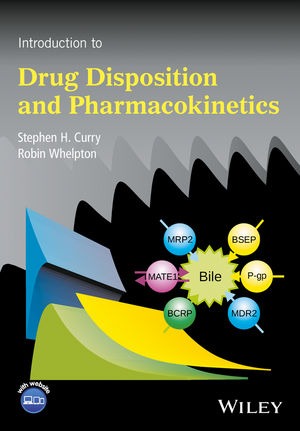
Introduction to Drug Disposition and Pharmacokinetics
The application of knowledge of drug disposition, and skills in pharmacokinetics, are crucial to the development of new drugs and to a better understanding of how to achieve maximum benefit from existing ones. The book takes the reader from basic concepts to a point where those who wish to will be able to perform pharmacokinetic calculations and be ready to read more advanced texts and research papers.

Introduction to basics of pharmacology and toxicology ; Vol.1 : General and molecular pharmacology : Principles of drug action
Illustrates the most crucial principles involved in pharmacology and allied sciences. The title begins by discussing the historical aspects of drug discovery, with up to date knowledge on Nobel Laureates in pharmacology and their significant discoveries. It then examines the general pharmacological principles - pharmacokinetics and pharmacodynamics, with in-depth information on drug transporters and interactions. In the remaining chapters, the book covers a definitive collection of topics containing essential information on the basic principles of pharmacology and how they are employed for the treatment of diseases.

Intermediate Dynamics : A Linear Algebraic Approach
As the name implies, Intermediate Dynamics: A Linear Algebraic Approach views "intermediate dynamics"--Newtonian 3-D rigid body dynamics and analytical mechanics--from the perspective of the mathematical field.
