



الصفحة 1
الصفحة 1
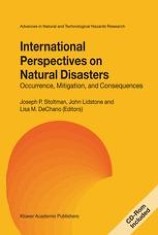
International Perspectives on Natural Disasters : Occurrence, Mitigation, and Consequences
Reports of natural disasters fill the media with regularity. Places in the world are affected by natural disaster events every day. Such events include earthquakes, cyclones, tsunamis, wildfires – the list could go on for considerable length. In the 1990s there was a concentrated focus on natural disaster information and mitigation during the International Decade for Natural Disasters Reduction (IDNDR). The information was technical and provided the basis for major initiatives in building structures designed for seismic safety, slope stability, severe storm warning systems, and global monitoring and reporting. Mitigation, or planning in the event that natural hazards prevalent in a region would suddenly become natural disasters, was a major goal of the decade-long program. During the IDNDR, this book was conceptualized, and planning for its completion began.

Geographical Education in a Changing World : Past Experience, Current Trends and Future Challenges
The status of geography in school curricula varies across the globe. Geography, as a discrete subject, has, in some countries, established a strong position in both primary and secondary schools while in others it has a weaker position, often a component of integrated and cross-curricular arrangements. Globally, the trend is for geography's status to be challenged. A central theme of this book is the location of geography in school curricula with particular reference to centrality and marginality. A second theme relates to the subject status of geography. A third theme relates to the spirit and purpose of school geography and the traditions that underpin the subject and how these are changing. A fourth theme relates to the way geography is being seen by curriculum planners as contributing to the achievement of governmental aims for society in general. A fifth theme concerns the human and material resources infrastructure.
