



الصفحة 1
الصفحة 1

Natural Resistance Mechanisms of Plants to Viruses
Resistance phenomena such as the local lesion response, induced resistance, "green islands" and resistance in various crop plants are linked with new information on gene-silencing mechanisms, gene silencing suppressors, movement proteins and plasmodesmatal gating, downstream signalling components, and more.

Mediterranean Island Landscapes : Natural and Cultural Approaches
Mediterranean islands exhibit many similarities in their biotic ecological, physical and environmental characteristics. There are also many differences in terms of their human colonization and current anthropogenic pressures. This book addresses in three sections these characteristics and examines the major environmental changes that the islands experienced during the Quaternary period. The first section provides details on natural and cultural factors which have shaped island landscapes. It describes the environmental and cultural changes of the Holocene and their effects on biota, as well as on the current human pressures that are now threats to the sustainability of the island communities. The second section focuses on the landscapes of the largest islands namely Sicily, Sardinia, Corsica, Cyprus, Crete, Malta and the Balearics. Each island chapter includes a special topic reflecting a particular characteristic of the island. Part three presents strategies for action towards sustainability in Mediterranean islands and concludes with a comparison between the largest islands.

Mechanisms, Symbols, and Models Underlying Cognition ; 1st International Work-Conference on the Interplay Between Natural and Artificial Computation, IWINAC 2005, Las Palmas, Canary Islands, Spain, June 15-18, 2005, Proceedings, Part I
Constitute the refereed proceedings of the First International Work-Conference on the Interplay between Natural and Artificial Computation, IWINAC 2005. This two-volume set contains papers that are related with the conceptual developments in the fields of Neurophysiology and cognitive science, and also to bioinspired programming strategies.

Insect Conservation and Islands
A series of original papers and reviews dealing with the peculiarities of island insects and their conservation in many parts of the world. Contributions to this special issue of Journal of Insect Conservation range from biogeographical analyses andecological features of island insects and their evolution to the variety of concerns for their wellbeing, and practical conservation through a variety of, sometimes novel, approaches. They provide a valuable and up-to-date resource for entomologists and conservation practitioners.

Geophysics of the Canary Islands : Results of Spain's Exclusive Economic Zone Program
This book contains the results of a 9 year (1995-2004) investigation of the Canary Islands Exclusive Economic Zone, using state of the art technology. The main result areas are: a multibeam survey demonstrating the magnitude of catastrophic failures of the Canary Islands; a comparison of the morphology of the Canary Islands with Hawaii; the significance of hydrothermal activity in the Canary Channel associated with Mesozoic salt diapirs; an analysis of the morphology and structure of the offshore extension of the Anaga massif in Tenerife island; a detailed description of the archipelago gravity field and magnetic field of the Canary Islands

From grids to service and pervasive computing
Grids are a crucial enabling technology for scientific and industrial development. Peer-to-peer computing, grid, distributed storage technologies, emerging web service technologies, and other types of networked distributed computing have provided new paradigms exploiting distributed resources. Grids are revolutionizing computing as profoundly as e-mail and the Web.From Grids to Service and Pervasive Computing, the 10th edited volume of the CoreGRID series, is based on the 2008 CoreGRID Symposium, held August 25-26 in the Canary Islands, Spain.

Counteracting Urban Heat Island Effects in a Global Climate Change Scenario
Urban Heat Islands (UHIs) are a microclimatic phenomenon which manifests as a significant increase in the temperature of cities compared to their surrounding areas. Recently the phenomenon has been enforced by the tendency to climate change and in particular by extreme climate events. This book presents and analyzes the results of a project to develop and apply mitigation and adaptation strategies and measures for counteracting the global urban heat islands phenomenon, supported by the EU’s Central Europe Regional Development Fund.
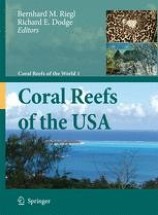
Coral Reefs of the USA
This book will therefore be of broad general interest. For the first time, complete scholarly reviews are given for the geology, geomorphology and the biology of reefs encompassing a vast area stretching from the Mariana Islands in the west, Samoa in the south, Hawaii in the north and the Virgin Islands in the east.
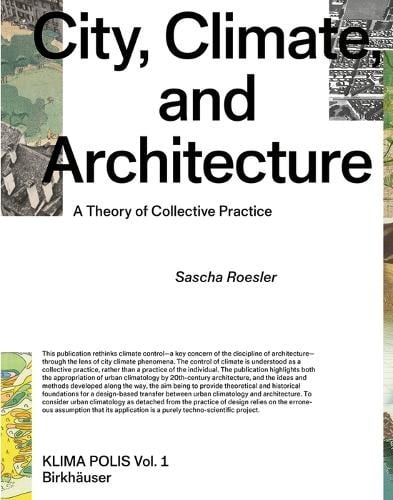
City, climate, and architecture : A theory of collective practice
Based on a history of climate control on urban scales, it promotes the integration of indoors and outdoors in order to reduce environmental and thermal loads in cities. Just as heating and cooling practices inside the buildings are affecting the (urban) climate outdoors, urban heat islands are influencing the energy requirements and thermal conditions inside the buildings. While the first part of the book focuses on the interwar period in Europe, the publication’s second part considers examples from all over the globe, tracing the growing significance of ecological thinking for the design of urban environments.

Biological Invasions in South Africa
This book presents a comprehensive account of all aspects of biological invasions in South Africa, where research has been conducted over more than three decades, and where bold initiatives have been implemented in attempts to control invasions and to reduce their ecological, economic and social effects.

Biological Invasions in New Zealand
Man’s recent colonization of New Zealand has dramatically altered the resident biota and resulted in the introduction of numerous alien organisms to these once remote islands. In reverse, there is increasing evidence of a lesser known export of species to other regions of the world. This volume presents an in-depth review of the level and rate of such invasions, and investigates what controls the success of invaders and the consequences for ecosystems both on land and offshore. It provides invasion biologists everywhere with tests of current theories about those factors leading to the success of invaders as well as evaluating principles for understanding the nature of their impacts that form a solid basis for the effective management of biological invasions worldwide.
Biogeography, Time, and Place : Distributions, Barriers, and Islands
Biogeography considers the distribution of biological units over a wide range of scales. The units range from genotypes, populations and species to families and higher taxa. Processes can be local, such as the isolation on islands due to sea-level fluctuations, or large-scale tectonic processes that separates continents and creates oceans. In all processes time is an important factor and by combining data on recent patterns with paleontological data the understanding of the distribution of extant taxa can be improved. This volume focuses on speciation due to isolation in island-like settings, and the evolution of large-scale diversity as the result of origination, maintenance and extinction.
Australias arc of Instability : The political and cultural dynamics of regional security
The idea for this book emerged from a conversation between Vivian Forbes and Charles Eaton following two seminars held in the Department of Geography at the University of Western Australia given by Trevor So?eld and Christopher Grif?n more than ?ve years ago. One seminar involved papers from Charles Eaton and Christopher Grif?n on the recent Speight coup in Fiji; the other, given by Trevor So?eld, was on the Solomon Islands. The seminars were attended by, among others, Dennis Rumley, who on getting involved in the conversation, suggested the idea of a book and then followed through on its scope, structure, planning, and possible contributors. Looking back now, we owe a special debt of gratitude to Charles Eaton both for his enthusiasm and his ideas then, and for his continued support throughout the whole project. Since that time ?ve years ago, many people have boarded and have left the Arc.

Artificial intelligence and knowledge engineering applications : A bioinspired approach ; 1st international work-Conference on the interplay between natural and artificial computation, IWINAC 2005, Las Palmas, Canary Islands, Spain, June 15-18, 2005, Proceedings, Part II
The computational paradigm considered here is a conceptual, theoretical andformal framework situated above machines and living creatures (two instantia-tions), sufficiently solid, and still non-exclusive, that allows us:1. to help neuroscientists to formulate intentions, questions, experiments, meth-ods and explanation mechanisms assuming that neural circuits are the psy-chological support of calculus;2. to help scientists and engineers from the fields of artificial intelligence (AI)and knowledge engineering (KE) to model, formalize and program the com-putable part of human knowledge;3. to establish an interaction framework between natural system computation(NSC) and artificial system computation (ASC) in both directions, fromASC to NSC (in computational neuroscience), and from NSC to ASC (inbioinspired computation).
