



الصفحة 1
الصفحة 1
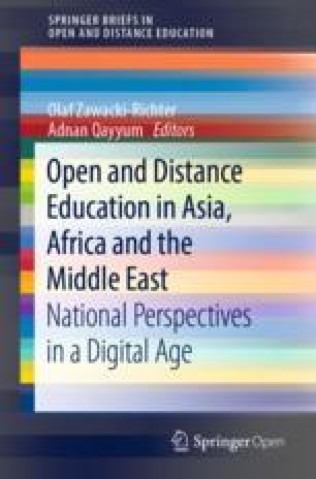
Open and distance education in Asia, Africa and the Middle East : National perspectives in a digital age
This book describes the history, structure and institutions of open and distance education in six countries: China, India, Russia, Turkey, South Africa and South Korea. It describes how open and distance education is evolving in a digital age to reflect the needs and circumstances of the national higher education systems in these countries. It also explores the similarities and differences between how their open and distance higher education systems are managed and structured. The book compare and draw conclusions about the nature of open and distance education in the context of various national higher education systems. In a digital era characterized by the growing use of online, open and distance education, this book will prove particularly valuable for policy-makers and senior administrators who want to learn about establishing or expanding open and distance education services. In addition, it offers a valuable reference guide for researchers, academics and students interested in understanding the different approaches to open and distance education.

Motivational profiles in TIMSS mathematics : Exploring student clusters across aountries and time
This open access book presents a person-centered exploration of student profiles, using variables related to motivation to do school mathematics derived from the IEA’s Trends in International Mathematics and Science Study (TIMSS) data. Statistical cluster analysis is used to identify groups of students with similar motivational profiles, across grades and over time, for multiple participating countries. In this book, a person-centered analysis of distinct and meaningful motivational profiles and their differences on sociodemographic variables and mathematics performance broadens understanding about the role that motivation characteristics play in learning and achievement in mathematics.

Missions of universities : Past, present, future
provides an analysis of university missions over time and space. It starts out by presenting a governance framework focusing on the demands on universities set by regulators, market actors and scrutinizers. It examines organizational structures, population development, the fundamental tasks of universities, and internal governance structures. Next, offers a discussion of the idea and role of universities in society, exploring concepts such as autonomy and universality, and the university as a transformative institute. The next four chapters deal with the development of universities from medieval times, through the Renaissance, towards the research universities in the nineteenth century in Europe and the United States.

Mathematics teacher preparation in Central America and the Caribbean : The cases of Colombia, Costa Rica, the Dominican Republic and Venezuela
This book brings to the international Educational Community an important collection of experiences and ideas in the Mathematics Education of four countries of a region within the heart of the American continent, a region that has been many times forgotten. The dissemination of these results can promote the search for international collaborative actions in a wider scale.

Mathematics Education in East Africa : Towards Harmonization and Enhancement of Education Quality
In the increasingly global and technological world mathematics is seen as a significant gatekeeper of opportunities for social and economic advancement and mobility. Hence, countries and development agencies in the broader sub-Saharan Africa region are looking towards increasing access to relevant and high-quality secondary education as a lever towards economic development. Policy makers and other key decision makers in education look towards improvement in mathematics teaching and learning as a key focus in education reform. In the East Africa region also a number of initiatives have been taken at the national level in the respective countries to improve the quality of mathematics education. This book provides an in-depth comparative analysis of the developments and issues in mathematics education in Kenya, Tanzania, Rwanda and Uganda, and advances our understanding of the state of secondary mathematics education in East Africa.

International comparative studies in mathematics : Lessons for improving students’ learning
It argues that the main purpose of educational research is to improve student learning, and that international comparative studies are no exception.

Interdisciplinary Mathematics Education : The State of the Art and Beyond
This book is the first major publication on the topic of “Interdisciplinary Mathematics Education” It offers extensive theoretical insights, empirical research, and practitioner accounts of interdisciplinary mathematics work in STEM and beyond (e.g. in music and the arts).
Intercultural Dialogue in the European Education Policies : A Conceptual Approach
This book analyses intercultural dialogue as a concept, policy and ideal in European education policy documentation. The core European transnational organizatons – the Council of Europe and the European Union – have actively promoted policies to engender inclusive societies and respond to challenges that diversification may entail.

Intercultural approaches to education : From theory to practice
This book provides an analysis of contemporary societies and schools shaped by cultural diversity, globalization and migration. This diversity is necessarily reflected in education systems and requires the promotion of intercultural approaches able to improve learning processes and the quality of education.

Indigenous pathways, transitions and participation in higher education : From policy to practice
This book brings together contributions by researchers, scholars, policy-makers, practitioners, professionals and citizens who have an interest in or experience of Indigenous pathways and transitions into higher education. University is not for everyone, but a university should be for everyone. To a certain extent, the choice not to participate in higher education should be respected given that there are other avenues and reasons to participate in education and employment that are culturally, socially and/or economically important for society. Those who choose to pursue higher education should do so knowing that there are multiple pathways into higher education and, once there, appropriate support is provided for a successful transition.

Improving Inclusive Education through Universal Design for Learning
Provides an analysis of how the educational strategy of Universal Design for Learning can stimulate the process of inclusive education in different educational-cultural contexts and different areas of the educational system. The findings of the research deepen the conception of inclusive education and present an analysis of factors that are significant for developing the educational system as well as providing evidence-based recommendations for educational practice. The research for this work was done in four European countries with various historical-cultural contexts: Lithuania and Poland underwent a transformation of the educational systems at the turning point in their political system, shifting from a strictly centralized Soviet policy to a liberal and democratic education system; Austria has experienced changes in social stratification and a need for cultural harmonisation arising from active national migration processes, whereas Finland has been gradually developing a socio-democratic model of national welfare.

Improving a Country’s Education : PISA 2018 Results in 10 Countries
This book compares and contrasts the results of international student assessments in ten countries. The OECD’s Programme for International Student Assessment (PISA) released the results of its 2018 assessment in December 2019. This book reflects the debates that typically follow the release of these results and focuses on the causes of differences between countries. Such causes include continuous decline in one country, improvement combined with increasing internal inequalities in another country, or rapid improvement in spite of an outdated curriculum in yet another.

Implementing deeper learning and 21st Century education reforms : Building an education renaissance after a global pandemic
This book is a comparative analysis of recent large scale education reforms that broadened curriculum goals to better prepare students for the 21st century. The book examines what governments actually do when they broaden curriculum goals, with attention to the details of implementation.

IEA International Computer and Information Literacy Study 2018 Assessment Framework
This book is designed to assess how well students are prepared for study, work and life in a digital world. The study measures international differences in students’ computer and information literacy (CIL): their ability to use computers to investigate, create, participate and communicate at home, at school, in the workplace and in the community. Participating countries also have an option for their students to complete an assessment of computational thinking (CT). The ICILS assessment framework articulates the basic structure of the study, providing a description of the field and the constructs to be measured. This book outlines the design and content of the measurement instruments, sets down the rationale for those designs, and describes how measures generated by those instruments relate to the constructs. Hypothesized relations between constructs provide the foundation for some of the analyses that follow.

Higher Education Landscape 2030 : A Trend Analysis Based on the AHEAD International Horizon Scanning
The digital transformation clearly highlights the role of universities and institutes of higher education in shaping a higher education system that is more open and provides education to everyone who can benefit from it

Higher Education in Romania : Overcoming Challenges and Embracing Opportunities
The book focuses on areas of interest for Romanian higher education, such as systemic measures to improve access, participation and completion for (vulnerable) students, better promotion of the Romanian higher education to attract students, as well as instruments for a more efficient use of data at higher education level. Each article includes evidence-based policy proposals that could support new strategic initiatives in higher education, including new legislation.

Handbook of education policy studies : Values, governance, globalization, and methodology ; Vol.1
This handbook brings together the latest research from a wide range of internationally influential scholars to analyze educational policy research from international, historical and interdisciplinary perspectives.

Handbook of education policy studies : School/University, curriculum, and assessment ; Vol.2
This handbook brings together the latest research from a wide range of internationally influential scholars to analyze educational policy research from international, historical and interdisciplinary perspectives. By effectively breaking through the boundaries between countries and disciplines, it presents new theories, techniques and methods for contemporary education policy, and illustrates the educational policies and educational reform practices that various countries have introduced to meet the challenges of continuous change.
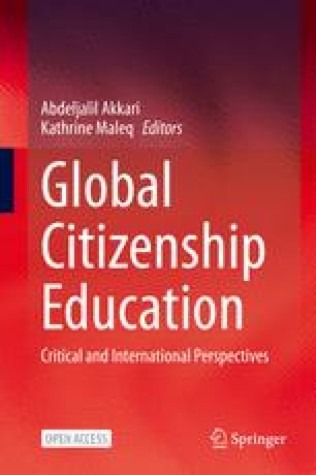
Global Citizenship Education : Critical and International Perspectives
This book takes a critical and international perspective to the mainstreaming of the Global Citizenship Concept and analyses the key issues regarding global citizenship education across the world. In that respect, it addresses a pressing need to provide further conceptual input and to open global citizenship agendas to diversity and indigeneity.

Gender Differences in Computer and Information Literacy : An In-depth Analysis of Data from ICILS
When computer technology was first introduced in schools, there was a prevailing belief that information and communication technologies were ‘boys’ toys’; boys were assumed to have more positive attitudes toward using computer technologies. As computer technologies have become more established throughout societies, gender gaps in students’ computer and information literacy appear to be closing, although studies into gender differences remain sparse.
