



الصفحة 1
الصفحة 1

Mediation in Collective Labor Conflicts
This book opens up the black box of mediation in collective conflicts through the analyses and comparisons of various systems. Mediation and related third party interventions such as conciliation and facilitation are discussed as effective prevention and regulation tools for different types of collective labor conflicts. These interventions fit in a new developed five-phase model of collective conflicts in organizations, going from capacity building in latent conflicts, through conciliation, mediation and arbitration in escalating phases, to rebuilding of trust after hot conflicts. The book regards to labor mediation systems, presenting comparative research on the perspectives of mediators and

Human and organisational factors : Practices and strategies for a changing world
This book addresses several questions regarding the implementation of human and organisational factors (HOF) so that recent improvements in industrial safety can be built upon.

ERP Systems and Organisational Change : A Socio-technical Insight
ERP (Enterprise Resource Planning) systems are now the backbone of the information systems in public and private sector organisations. This book provides a unique and comprehensive insight into ERP systems, from both a social and a technical viewpoint.

Cross cultural issues in consumer science and consumer psychology : Current perspectives and future directions
Shows cross-cultural issues in consumer psychology and consumer science as the world becomes an increasingly global marketplace. An international panel of experts analyzes current trends in consumer behavior across diverse countries worldwide and across cultural groups within countries, depicting commonly-used cross-cultural frameworks and research methods. Beginning with conceptualizing and quantifying culture at the national level, the volume then moves to individual levels of analysis of consumer decision-making, examining consumer data as they affect business decisions in marketing products internationally. The resulting work synthesizes the consumer science, international business, and consumer psychology literatures for a deeper understanding of all three disciplines and pathways to future research as cultures interact and tastes evolve.

Consumer psychology : A life span developmental approach
Approaches consumer psychology from a unique perspective - it covers the entire lifespan, from birth to old age. Childhood and youth are not discussed as areas special, different and remote from the rest of consumer research but are integrated into our development as humans. Consumption is viewed as a process by groups and individuals with the cycle continuing through to disposal or ownership and possession. The author discusses how people’s natural lifespan influences their relationship to the things they own, how preferences are developed from childhood and how motivations for purchases change throughout their lives from childhood to old age. This book brings together the most recent findings and theories on child and youth consumption, including children’s understanding of advertising and marketing, teen and youth identities and their consumption tastes.
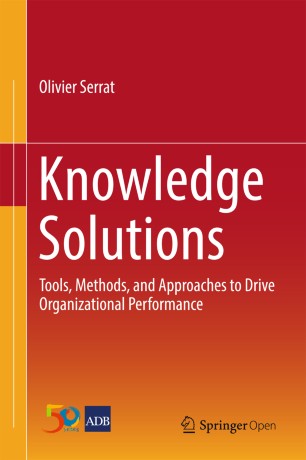
Knowledge Solutions : Tools, Methods, and Approaches to Drive Organizational Performance
Covers topics in knowledge management and competence in strategy development, management techniques, collaboration mechanisms, knowledge sharing and learning, as well as knowledge capture and storage. Presented in accessible “chunks,” it includes more than 120 topics that are essential to high-performance organizations. The extensive use of quotes by respected experts juxtaposed with relevant research to counterpoint or lend weight to key concepts; “cheat sheets” that simplify access and reference to individual articles; as well as the grouping of many of these topics under recurrent themes make this book unique. In addition, it provides scalable tried-and-tested tools, method and approaches for improved organizational effectiveness.
Augmented Humanity : Being and Remaining Agentic in a Digitalized World
This book will examine the implications of digitalization for the understanding of humanity, conceived as a community of intelligent agency. It addresses important topics across a range of social and behavioral theories and identifies a range of novel mechanisms and their social behavioral effects. Across the book, the author highlights the expansion of intelligent processing capability brought about by digitalization and the challenges this exposes for integrating artificial and human capabilities
