



الصفحة 1
الصفحة 1

Industrial enzymes : Structure, function and applications
Man's use of enzymes dates back to the earliest times of civilization. Important human activities such as the production of certain types of foods and beverages, and the tanning of hides and skins to produce leather for garments, serendipitously took advantage of enzyme activities. Important advances in our understanding of the nature of enzymes and their action were made in the late 19th and early 20th centuries, seeding the explosive expansion from the 1950s and 60s onward to the present billion dollar enzyme industry. Recent developments in the fields of genetic engineering and protein chemistry are bringing ever more powerful means of analysis to bear on the study of enzyme structure and function that will undoubtedly lead to the rational modification of enzymes to match specific requirements as well as the design of new enzymes with novel properties.

Glycopeptides and Glycoproteins : Synthesis, Structure, and Application
Their structure, biosynthesis, and mode of action are summarized in the fth chapter. The last chapter covers current methods for the determination of high-resolution structures of glycopeptides and glycoproteins mainly based onNMRspectroscopy, X-raycrystallography,and molecular modeling.This series presents critical reviews of the present position and future trends in modern chemical research Short and concise reports on chemistry.
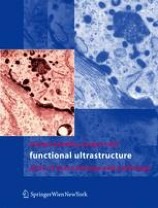
Functional ultrastructure: Atlas of tissue biology and pathology
The quality of data represented by the a growing tendency to substitute modern light mic- images of cells and tissues had been perfected to a very scopic techniques for electron microscopy because it is high level by the great microscopists of the era including less technically demanding and is more readily available. This atlas reminds us that the images that we see in leading tion obtained by electron microscopy is invaluable and journals for the most part do not reach the same techni- has no substitute.

Experimental Glycoscience : Glycobiology
The aim of this book is to provide experimental protocols covering many aspects of glycobiology, glycotechnology, and chemistry: biochemistry, molecular and cellular biology, genetics, physiology, and medicine. The protocols are all self-contained descriptions of the equipment and reagents needed, followed by details of the experimental procedure.

Crystalline cellulose and derivatives : Characterization and structures
Constitutes a valuable, concise and up-to-date guide for the materials and life science community interested in cellulose and related materials. Reliable crystal structures of all cellulose polymorphs and cellulose derivatives determined are critically reviewed and discussed. Models are represented in graphs together with a collection of geometrical data as well as the atomic coordinates for further use. The background for fiber diffraction, computer-aided modeling and spectroscopic investigations is briefly introduced and also included are the necessary molecular data from oligosaccharides as a basis for structure evaluations. X-ray diffraction patterns and spectroscopic diagrams are presented as references to characterize cellulosic materials and to serve as fingerprint tools for the exploration of unknown specimens of cell walls and of industrially processed films and fibers as well as solid-state materials.

Combinatorial Chemistry on Solid Supports
In this volume, state-of-the-art solid-phase synthesis is presented from different angles. Ranging from methodology development to application in the synthesis of complex native and designed structures, a complete overview is presented. We are confident that addressing the fascinating interface between chemistry and biology is only possible by innovative methods in both disciplines. Combinatorial chemistry is surely one of these.This book, written by an international group of renowned experts in their respective field, covers recent advances in important topics regarding combinatorial chemistry on solid supports
Managing Diversity in Intergovernmental Organisations
Intensifying worldwide environmental changes as well as political, cultural, religious, and economic crises have made intergovernmental organisations (IGOs) important instruments in international and global cooperation. In order to cope with their diverse stakeholders, it is more imperative than ever for intergovernmental organisations to engage in personnel policy on an international scale. Successful diversity management is an essential prerequisite for organisational performance, conflict management, and dynamics of IGOs. Björn A. Peters examines the challenges of diversity and managing diversity in IGOs on the basis of the Mekong River Commission case study.

Laboratory Guide to the Methods in Biochemical Genetics
This manual deals specifically with laboratory approaches to diagnosing inborn errors of metabolism. The key feature is that each chapter is sufficiently detailed so that any individual can adopt the described method into their own respective laboratory.
Biotechnology for Fuels and Chemicals : The Twenty-Ninth Symposium
In Biotechnology for Fuels and Chemicals: The Twenty-Ninth Symposium, leading US and international researchers from academia, industry, and government exchange cutting-edge technical information and update current trends in the development and application of biotechnology for sustainable production of fuels and chemicals. This symposium emphasizes advances in biotechnology to produce high-volume, low-price products from renewable resources, while improving the environment. The major areas of interest include advanced feedstock production and processing, enzymatic and microbial biocatalysis, bioprocess research and development, opportunities in biorefineries, and commercialization of biobased products. International and domestic progress on producing liquid biofuels, especially ethanol and biodiesel, is highlighted, and related topics, including bioseparations and optimal integration of biochemical and thermochemical conversion technologies, are featured.
Applications of Mass Spectrometry in Life Safety
MS is continuously developing as one of the most re- able analytical method for elucidating the structure of molecules originating from various biological matrices. The potential of MS for high-sensitive structural a- lyses became unsurpassable after the introduction of electrospray (ESI) and matrix assisted laser/desorption ionization (MALDI) methods, on one hand, and the pos- bility to deduce in detail unknown biopolymer structures by highly accurate mo- cular mass measurement followed by sequencing using dissociation techniques based on multiple stage MS, on the other.

Allelopathy : A Physiological Process with Ecological Implications
This book provides the reader relevant information about actual knowledge about the process of allelopathy, covering all aspects from the molecular to the ecological level. Special relevance is given to the physiological and ecophysiological aspects of allelopathy. Several ecosystems are studied and methodological considerations are taken into account in several different chapters. The book has been written to be useful both for Ph.D. students and for senior researchers, so the chapters include all necessary information to be read by beginners, but they also include a lot of useful information and discussion for the initiated.
