



الصفحة 1
الصفحة 1

ICAME 2005 ; Proceedings of the 28th International Conference on the Applications of the Mössbauer Effect (ICAME 2005) held in Montpellier, France, 4–9 September 2005, Vol. I (Part I–II/V)
This book provides an up-to-date overview of the Mössbauer effect in physics, chemistry, electrochemistry, catalysis, biology, medicine, geology, mineralogy, archaeology and materials science.

HFI ; Proceedings of the 13th International Conference on Hyperfine Interactions and 17th International Symposium on Nuclear Quadrupole Interactions, (HFI/NQI 2004) Bonn, Germany, 22-27 August, 2004
Proceedings of the 13th International Conference on Hyperfine Interactions and 17th International Symposium on Nuclear Quadrupole Interactions, HFI/NQI 2004, held in Bonn, Germany, 22-27 August, 2004 Researchers and graduate students interested in the Mössbauer Effect and its applications will find this volume indispensable. The volume presents the most recent developments in the methodology of Mössbauer spectroscopy.

Frontiers in Quantum Systems in Chemistry and Physics
The basic theory of matter on the nanoscale is quantum mechanics and the application of quantum mechanics to the study of the many-body problem in molecules and materials is a rapidly developing field of research. Frontiers in Quantum Systems in Chemistry and Physics defines the leading edge; hence it describes the new theoretical developments available to a wider audience and presents theories which provide, for example, new insights into the structure of increasing complex molecular systems or molecules in a variety of environments. New computational techniques and practices are accessed, exploiting the wide range of equipment available to the researcher from “leadership” class supercomputers to distributed workstations and the internet.

Experimental Aspects of Quantum Computing
Practical quantum computing still seems more than a decade away, and researchers have not even identified what the best physical implementation of a quantum bit will be. There is a real need in the scientific literature for a dialog on the topic of lessons learned and looming roadblocks. These papers, which appeared in the journal of "Quantum Information Processing" are dedicated to the experimental aspects of quantum computing These papers highlight the lessons learned over the last ten years, outline the challenges over the next ten years, and discuss the most promising physical implementations of quantum computing.

LACAME 2004 ; Proceedings of the 9th Latin American Conference on the Applications of the Mössbauer Effect, (LACAME 2004) held in Mexico City, Mexico, 19-24 September 2004
Proceedings of the 9th Latin American Conference on the Applications of the Mössbauer Effect, LACAME 2004, held in Mexico City, Mexico, 19-24 September 2004. Researchers and graduate students interested in the Mössbauer Effect and its applications will find this volume indispensable. The volume presents the most recent developments in the methodology of Mössbauer spectroscopy.

IWNMS 2004 ; Proceedings of the International Workshop on Nanomaterials, Magnetic Ions and Magnetic Semiconductors Studied Mostly by Hyperfine Interactions (IWNMS 2004) held in Baroda, India, 10-14 February 2004
Proceedings of the Baroda Workshop IWNMS 2004, held in Baroda, India, 10-14 February, 2004 Researchers and graduate students interested in the Mössbauer Effect and its applications will find this volume indispensable. The volume presents the most recent developments in the methodology of Mössbauer spectroscopy.
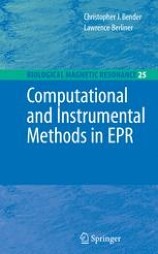
Computational and Instrumental Methods in EPR
This volume is devoted to both instrumentation and computation aspects of EPR, while addressing applications such as spin relaxation time measurements, the measurement of hyperfine interaction parameters, and the recovery of Mn(II) spin Hamiltonian parameters via spectral simulation.
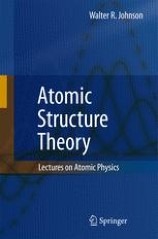
Atomic structure theory : Lectures on atomic physics
This is a textbook for students with a background in quantum mechanics. The text is designed to give hands-on experience with atomic structure calculations. Material covered includes angular momentum methods, the central field Schrödinger and Dirac equations, Hartree-Fock and Dirac-Hartree-Fock equations, multiplet structure, hyperfine structure, the isotope shift, dipole and multipole transitions, basic many-body perturbation theory, configuration interaction, and correlation corrections to matrix elements.

Atomic spectroscopy : Introduction to the theory of hyperfine structure
Atomic Spectroscopy provides a comprehensive discussion on the general approach to the theory of atomic spectra, based on the use of the Lagrangian canonical formalism. This approach is developed and applied to explain the hydrogenic hyperfine structure associated with the nucleus motion, its finite mass, and spin. The non-relativistic or relativistic, spin or spin-free particle approximations can be used as a starting point of general approach. The special attention is paid to the theory of Lamb shift formation. The formulae for hydrogenic spectrum including the account of Lamb shift are written in simple analytical form. The book is of interest to specialists, graduate and postgraduate students, who are involved into the experimental and theoretical research in the field of modern atomic spectroscopy.
