



الصفحة 1
الصفحة 1

Metal-Catalysed Reactions of Hydrocarbons
This unique book, drawing on the author’s lifetime experience, critically evaluates the extensive literature on the field of Metal-Catalysed Reactions of Hydrocarbons. Emphasis is placed on reaction mechanisms involving hydrogenation, hydrogenolysis, skeletal and positional isomerisation, and exchange reactions. The motivation for fundamental research in heterogeneous catalysis is to identify the physicochemical characteristics of active centres for the reaction being studied, to learn how these may be modified or manipulated to improve the desired behavior of the catalyst, and to recognize and control those aspects of the catalyst's structure that limit its overall performance. By restricting the subject of the book to hydrocarbons, Bond has progressively developed the subject matter to include areas of importance both to researchers and to those working in the industry.

Habitats and Biota of the Gulf of Mexico : Before the deepwater horizon oil spill ; Vol.2 : Fish resources, fisheries, sea turtles, avian resources, marine mammals, diseases and mortalities
The Gulf of Mexico is an open and dynamic marine ecosystem rich in natural resources but heavily impacted by human activities, including agricultural, industrial, commercial and coastal development. Nutrients and pollutants from coastal communities and dozens of rivers flow into the Gulf, including material from the Mississippi River watershed, which drains over one third of continental United States. The Gulf of Mexico has been continuously exposed to petroleum hydrocarbons for millions of years from natural oil and gas seeps on the sea floor, and more recently from oil drilling and production activities located in the water near and far from shore. Major accidental oil spills in the Gulf are infrequent; two of the most significant include the Ixtoc I blowout in the Bay of Campeche in 1979 and the Deepwater Horizon Oil Spill in 2010.

Habitats and Biota of the Gulf of Mexico : Before the deepwater horizon oil spill ; Vol.1 : Water quality, sediments, sediment contaminants, oil and gas Seeps, coastal habitats, offshore plankton and benthos, and shellfish
The Gulf of Mexico is an open and dynamic marine ecosystem rich in natural resources but heavily impacted by human activities, including agricultural, industrial, commercial and coastal development. Nutrients and pollutants from coastal communities and dozens of rivers flow into the Gulf, including material from the Mississippi River watershed, which drains over one third of continental United States. The Gulf of Mexico has been continuously exposed to petroleum hydrocarbons for millions of years from natural oil and gas seeps on the sea floor, and more recently from oil drilling and production activities located in the water near and far from shore. Major accidental oil spills in the Gulf are infrequent; two of the most significant include the Ixtoc I blowout in the Bay of Campeche in 1979 and the Deepwater Horizon Oil Spill in 2010.

Evaporites : Sediments, Resources and Hydrocarbons
The monograph offers a comprehensive discussion of the role of evaporites in hydrocarbon generation and trapping. For the first time, diverse knowledge on exploitable salts has been assembled and organized, along with a summary of evaporate karst hazards as well as a summary of exploitative methods and pitfalls in dealing with evaporites in conventional and solution mining. Written by a field specialist in research and exploration, the book presents a comprehensive synthesis of the low temperature realm of evaporite evolution. It is aimed for earth science professionals, sedimentologists, oil and gas explorers, mining geologists, as well as environmental geologists.

Energy in Africa : Challenges and Opportunities
This open access book presents a picture of the current energy challenges on the African continent (and the Sub-Saharan region in particular) and proposes pathways to an accelerated energy transition. Starting with an analysis of the status quo and the outlook for Africa’s energy demand and energy access, it provides an account of the available resources, including hydrocarbons and renewable energy resources, which are playing an increasingly crucial role. It then moves on to analyze the level of investment required to scale-up Africa’s energy systems, shedding light on the key barriers and elaborating on potential solutions. It also provides a suggestion for improving the effectiveness of EU–Africa cooperation. While mainly intended for policymakers and academics, this book also speaks to a broader audience interested in gaining an overview of the challenges and opportunities of the African energy sector today and in the future.

Combustion : Physical and Chemical Fundamentals, Modeling and Simulation, Experiments, Pollutant Formation
The actual fourth edition presents a completely restructured book: Mathematical Formulae and derivations as well as the space-consuming reaction mechanisms have been replaced from the text to appendix. A new chapter discusses the impact of combustion processes on the earth’s atmosphere, the chapter on auto-ignition is extended to combustion in Otto- and Diesel-engines, and the chapters on heterogeneous combustion and on soot formation appear heavily revised.
Lipids in Health and Disease
Lipids are functionally versatile molecules. They have evolved from relatively simple hydrocarbons that serve as depot storages of metabolites and barriers to the permeation of solutes into complex compounds that perform a variety of signalling functions in higher organisms. This volume is devoted to the polar lipids and their constituents. We have omitted the neutral lipids like fats and oils because their function is generally to act as deposits of metabolizable substrates. The sterols are also outside the scope of the present volume and the reader is referred to volume 28 of this series which is the subject of cholesterol. The polar lipids are comprised of fatty acids attached to either glycerol or sphingosine. The fatty acids themselves constitute an important reservoir of substrates for conversion into families of signalling and modulating molecules including the eicosanoids amongst which are the prostaglandins, thromboxanes and leucotrienes. The way fatty acid metabolism is regulated in the liver and how fatty acids are desaturated are subjects considered in the first part of this volume. This section also deals with the modulation of protein function and inflammation by unsaturated fatty acids and their derivatives. New insights into the role of fatty acid synthesis and eicosenoid function in tumour progression and metastasis are presented.
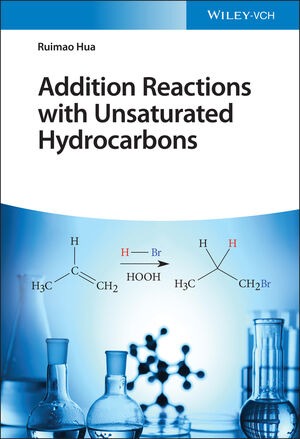
Addition Reactions with Unsaturated Hydrocarbons
Addition Reactions with Unsaturated Hydrocarbons presents an up-to-date overview of modern methods that utilize reactions of unsaturated hydrocarbons as building blocks of organic synthesis, covering the conceptual and practical knowledge required for designing atom-efficient reactions to synthesize functionalized molecules. This authoritative volume discusses homo-dimerization and cross-dimerization of alkynes and/or alkenes, synthesis of carbonyl compounds from the hydration of alkynes, cycloadditions of alkynes and alkenes for the synthesis of carbocycles and heterocycles.
A Sea Change: The Exclusive Economic Zone and Governance Institutions for Living Marine Resources
A Sea Change in a Changing Sea The oceans, seas and coastal areas encompass over 70% of the earth’s surface. They are a critical driver of the earth’s hydrologic cycle and climate system, important for c- merce, transport, and tourism, a source of economically important living marine resources, minerals such as hydrocarbons, as well as new pharmaceutical compounds. The marine environment provides essential habitats for thousands of marine living 1 2 resources, which in turn contribute significantly to global food security, employment, 3 and trade. Overall, the sea’s contribution to human welfare, in terms of market and non-market resources and environmental services, has been estimated at US$21 trillion/year (Costanza, 2000). However, despite the importance of the ocean realm to humans, there is a growing sense that human impacts are destabilizing this system. Some experts believe that current fishing levels are approaching or exceeding the total 4 productivity of the ocean ecosystem (National Research Council, 1999).
