



الصفحة 1
الصفحة 1

Modeling Communication with Robots and Virtual Humans ; Second ZiF Research Group International Workshop on Embodied Communication in Humans and Machines, Bielefeld, Germany, April 5-8, 2006, Revised Selected Papers
The 17 articles in this state-of-the-art survey address artificial intelligence research on communicative agents and also provide an interdisciplinary perspective from linguistics, behavioral research, theoretical biology, philosophy, communication psychology, and computational neuroscience. The topics include studies on human multimodal communication; the modeling of feedback signals, facial expression, eye contact, and deception; the recognition and comprehension of hand gestures and head movements; communication interfaces for humanoid robots; the evolution of cognition and language; emotion and social appraisal in nonverbal communication; dialogue models and methodologies; theory of mind and intentionality; complex systems, dynamic field theory, and connectionist modeling.

Human-Like Biomechanics : A Unified Mathematical Approach to Human Biomechanics and Humanoid Robotics
The book contains six Chapters and an Appendix. The first Chapter is an Introduction, giving a brief review of mathematical techniques to be used in the text. The second Chapter develops geometrical basis of human-like biomechanics, while the third Chapter develops its mechanical basis, mainly from generalized Lagrangian and Hamiltonian perspective. The fourth Chapter develops topology of human-like biomechanics, while the fifth Chapter reviews related nonlinear control techniques. The sixth Chapter develops covariant biophysics of electro-muscular stimulation. The Appendix consists of two parts: classical muscular mechanics and modern path integral methods, which are both used frequently in the main text.

Fast Motions in Biomechanics and Robotics : Optimization and Feedback Control
In the past decades, much progress has been made in the field of walking robots. The current state of technology makes it possible to create humanoid robots that nearly walk like a human being, climb stairs, or avoid small - stacles. However, the dream of a robot running as fast and as elegantly as a human is still far from becoming reality. Control of such fast motions is still a big technological issue in robotics, and the maximum running speed of contemporary robots is still much smaller than that of human track runners. The conventional control approach that most of these robots are based on does not seem to be suitable to increase the running speeds up to a biological level.

Evolvable Machines : Theory & Practice
Methods for the artificial evolution of active components, such as programs and hardware, are rapidly developing branches of adaptive computation and adaptive engineering. "Evolvable Machines" reports innovative and significant progress in automatic and evolutionary methodology applied to machine design. This book presents theoretical as well as practical chapters concentrating on Evolvable Robots, Evolvable Hardware Synthesis, as well as Evolvable Design.

Computational Mind : A Complex Dynamics Perspective
Computational Mind: A Complex Dynamics Perspective is a graduate–level monographic textbook in the field of Computational Intelligence. It presents a modern dynamical theory of the computational mind, combining cognitive psychology, artificial and computational intelligence, and chaos theory with quantum consciousness and computation. The book introduces to human and computational mind, comparing and contrasting main themes of cognitive psychology, artificial and computational intelligence. It presents brain/mind dynamics from the chaos theory perspective, including sections on chaos in human EEG, basics of nonlinear dynamics and chaos, techniques of chaos control, synchronization in chaotic systems and complexity in humanoid robots. This book presents modern theory of quantum computational mind, including sections on Dirac–Feynman quantum dynamics, quantum consciousness, and quantum computation using Josephson junctions. The book is designed as a one–semester course for computer scientists, engineers, physicists and applied mathematicians, both in industry and academia. It includes a strong bibliography on the subject and detailed index.

Cognitive Vision ; 4th International Workshop, ICVW 2008, Santorini, Greece, May 12, 2008, Revised Selected Papers
This volume constitutes the post-conference proceedings of the 4th International Cognitive Vision Workshop, ICVW 2008, held in Santorini, Greece, on May 12, 2008.
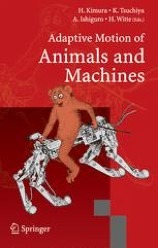
Adaptive Motion of Animals and Machines
Apparently, the ability of animals and robots to adapt in a real world cannot be explained or realized by one single function in a control system and mechanism. That is, adaptation in motion is induced at every level from the central nervous system to the musculoskeletal system.Thus,weorganized the International Symposium on Adaptive Motion in Animals and Machines (AMAM) forscientist sandengineersconcerned with adaptation on various level stobebrought together todiscussprinciplesateachleveland to investigate principles governing total systems.
