



الصفحة 1
الصفحة 1

Nutrition and diet in health: Principles and applications
Food provides us with essential nutrients involved in many physiological activities and biological processes in the body including growth and development, metabolism, immune function, and overall well-being. Nutrition and Diet in Health: Principles and Applications reviews and discusses the issues related to the roles of nutrition and diets in human health and diseases. The book contains two sections - one section features principles, the other, covers applications. Part One provides information on sustainable use of nutrition and diets in health and diseases; advanced biotechnological approaches to improve nutritional content of food; trace elements in nutrition; drug and nutrient interactions; functional foods and nutraceuticals in health maintenance; and Bio markers of functional foods and nutraceuticals in health maintenance. Part Two discusses the significance of nutrition in selected human diseases, including cardiovascular diseases, cancer, infection, neurodegenerative diseases, and metabolic co-morbidities. It also discusses optimal nutrition for wellness, fitness, pregnancy, mental health, aging, and longevity.

Natural products and human diseases : Pharmacology, molecular targets, and therapeutic benefits
Provides insight into the clinical and translational application of natural products in human diseases Details the impact of natural products on a molecular basis Describes the identification of biomarkers, therapeutic effects of phytochemicals, and and new targets

Nanobiosensors : From design to applications
Nanobiosensors - From Design to Applications covers several aspects of biosensors beginning from the basic concepts to advanced level research. It will help to bridge the gap between various aspects of biosensors development technology and applications. It covers biosensors related material in broad spectrum such as basic concepts, biosensors & their classification, biomarkers & their role in biosensors, nanostructures-based biosensors, applications of biosensors in human diseases, drug detection, toxins, and smart phone based biosensors.

Mouse Models of Human Blood Cancers : Basic Research and Pre-clinical Applications
Although it remains an open question among some people whether mice and humans are similar in disease development, the laboratory mouse has emerged as the preeminent animal model for human diseases. This is underscored by the recently completed mouse and human genome projects, which have revealed that mice and humans share the vast majority of their genes, and thus get many of the same diseases, and for the same reasons. Emphasizing why mouse models are valuable in vivo systems for understanding disease mechanisms and developing therapeutic strategies for human blood cancers, "Mouse Models of Human Blood Cancers: Basic Research and Pre-clinical Applications," edited by Shaoguang Li, aims on presenting thorough analyses of the pathological features and the molecular bases of several major types of blood cancer and to describe translational research using mouse cancer models.

Molecular and Cellular Signaling
A small number of signaling pathways, no more than a dozen or so, form a control layer that is responsible for all signaling in and between cells of the human body. The signaling proteins belonging to the control layer determine what kinds of cells are made during development and how they function during adult life. Malfunctions in the proteins belonging to the control layer are responsible for a host of human diseases ranging from neurological disorders to cancers. Most drugs target components in the control layer, and difficulties in drug design are intimately related to the architecture of the control layer. Molecular and Cellular Signaling provides an introduction to molecular and cellular signaling in biological systems with an emphasis on the underlying physical principles. The text is aimed at upper-level undergraduates, graduate students and individuals in medicine and pharmacology interested in broadening their understanding of how cells regulate and coordinate their core activities and how diseases arise when these regulatory systems malfunction, as well as those in chemistry, physics and computer science interested in pursuing careers in biological and medical physics, bioinformatics and systems biology. To that end, the book includes background information and review sections, and chapters on signaling in the immune, endocrine (hormonal) and nervous systems. It has chapters on cancer, apoptosis and gene regulation, and contains chapters on bacteria and viruses. In those chapters not specifically devoted to pathogens, connections between diseases, drugs and signaling are made. Each chapter also features a problem set to facilitate further discussion and understanding.

Introduction to basics of pharmacology and toxicology ; Vol.2 : Essentials of systemic pharmacology : From principles to practice
Describes the pharmacology of drugs acting on different systems in the human body Analyses various human diseases and the pharmacological agents governing them Provides a valuable reference resource for academicians, researchers, and clinical practitioners Offers a comprehensive overview of the pharmacology concerning the autonomic, central, and peripheral nervous systems. Presenting up-to-date information on chemical mediators and their significance, it highlights the therapeutic aspects of several diseases affecting the cardiovascular, renal, respiratory, gastrointestinal, endocrinal, and hematopoietic systems. The book also includes drug therapy for microbial and neoplastic diseases. It also comprises sections on immunopharmacology, dermatological, and ocular pharmacology providing valuable insights into these emerging and recent topics.

Innovative Medicine : Basic Research and Development
Devoted to innovative medicine, comprising the proceedings of the Uehara Memorial Foundation Symposium 2014. It remains extremely rare for the findings of basic research to be developed into clinical applications, and it takes a long time for the process to be achieved. The task of advancing the development of basic research into clinical reality lies with translational science, yet the field seems to struggle to find a way to move forward. To create innovative medical technology, many steps need to be taken: development and analysis of optimal animal models of human diseases, elucidation of genomic and epidemiological data, and establishment of “proof of concept”.

Humanized mice
The term humanized mouse in this text refers to a mouse in which human tissues and cells have been transplanted and show the same biological function as they do in the human body. That is, the physiological properties and functions of tra- planted human tissues and cells can be analyzed in the mouse instead of using a living human body. It should therefore be possible to study the pathophysiology and treatment of human diseases in mice with good reproducibility.

Genome integrity : Facets and perspectives
The volume begins with DNA replication and continues with replicative DNA repair and pleiotropic protein interactions. Examples of human diseases are included and the cellular responses to radiation and genotoxic stress affecting whole genomes are reviewed.

Genetic surgery : from genes to solutions
As a tool for modifying the genome, gene editing technologies has developed rapidly in recent years, the application of these technologies in basic biomedical research has yielded significant advances in identifying and studying key molecular targets relevant to human diseases and their treatment. The clinical translation of genome editing techniques offers unprecedented biomedical engineering capabilities in the diagnosis, prevention, and treatment of disease or disability...

Endocrinology : Basic and Clinical Principles
For this new edition of Conn & Melmed's Endocrinology: Basic and Clinical Principles, a panel of distinguished scientists and clinicians has completely rewritten every chapter to reflect the latest advances in our understanding of the endocrine system. Maintaining the original goal of the first edition to integrate the basic science of endocrinology with its physiological and clinical principles, the authors have succinctly summarized in 450 pages the latest findings on hormone secretion and hormone action, as well as all of the most recent insights into the physiology and pathophysiology of hormonal disorders. Coverage extends across the entire spectrum of endocrinology-from mammalian cells, plants, and insects to animal models and human diseases-with much increased coverage of diabetes and metabolism. Highlights include cutting-edge discussions of appetite disorders, obesity, reproductive failure, control of thyroid function, hormone action in humans and the lower species, and the mechanisms subserving hormone secretion.

Dissecting the Molecular Anatomy of Tissue
The book provides an updated overview of molecular analysis of human tissues, and the impact this analysis has on diagnosis and prognosis of human diseases. Special emphasis is placed on human cancer and the future directions of the field. Methods of handling clinical tissue samples, including the impact of handling on subsequent molecular analysis, are also discussed. In addition, detailed protocols for molecular analysis of DNA, RNA and protein, with special emphasis on molecular analysis of highly complex human tissue samples containing mixtures of cell populations, are provided.

Diarrhea : Causes. diagnosis. Treatment
Diarrhea is a common condition that that affects most individuals at some point in their lives and can be thought of as both a symptom and a sign which varies in severity and etiology. The evaluation of diarrhea varies depending on duration, severity, and presence of certain concurrent symptoms. Treatment also varies, though rehydration therapy is an important aspect of the management of any patient with diarrhea...

Dendritic Cells in Clinics
Great advances have taken place in basic research and the clinical usefulness of dendritic cells (DCs). It has now been clearly established, for instance, that these cells play a crucial role in immune responses against infectious diseases and cancers. Antigen-presenting DCs are widely distributed in the body and regulate both immunity and immune tolerance. Experimental studies have provided important insights into DCs and how they can be used for treating animal models of various diseases that occur in humans. The role of these cells in pathogenesis and the treatment of human diseases is elaborately set forth in this valuable book. Researchers in the field are optimistic that DCs, already in use for treating patients with cancers, soon can be used therapeutically for patients with chronic infections, autoimmune diseases, and allergic manifestations. This volume provides a working definition of DCs and also explains the phenotypes and functions of DCs so that these can be readily understood not only by clinicians but by immunologists, researchers, and students as well.

Cytogenetics and molecular cytogenetics
Genomic technologies provide the means of diagnosis and management of many human diseases. Without insights from cytogenetics, correct interpretation of modern high-throughput results is difficult, if not impossible. This book summarizes applications of cytogenetics and molecular cytogenetics for students, clinicians and researchers in genetics, genomics and diagnostics. The book combines the state-of-the-art knowledge and practical expertise from leading researchers and clinicians and provides a comprehensive overview of current medical and research applications of many of these technologies.

Conditional Mutagenesis : An Approach to Disease Models
Leading experts provide timely and comprehensive information on methods for conditional mutagenesis in the mouse (part 1) and their application to model human physiology and pathophysiology (part 2). It illustrates how sophisticated genetic manipulations of the mouse genome are employed to model human diseases and to identify underlying molecular mechanisms. Finally the book considers the development of new drugs to treat them.

Chemical components in some winter vegetables and their effectiveness in treating diseases
Cruciferous (Brassicaceae) vegetables comprise many important species cultivated worldwide and utilized traditionally for culinary and medicinal purposes in different cultures. In the last couple of decades, growing scientific evidence has suggested that consumption of cruciferous vegetables has a preventive role against a variety of human diseases. This prompted the development of nutritional ingredients derived from these vegetables and their use as dietary supplements in different formulations that contain complete plant extracts or specific compounds...

Cell therapy stem cells and regenerative medicine
Provides an overview of cell-based therapy for human diseases including the definition, history, and clinical applications of human stem cells and their use in regenerative medicine. It covers human pluripotent stem cells (human embryonic stem cells and human induced pluripotent stem cells), mesenchymal stem/stromal cells, and hematopoietic stem cells, bone marrow mononuclear cells. In terms of clinical applications, this book also provides an update on recent human trials using these cells to treat various diseases, including neurological disorders, pulmonary dysfunctions, metabolic/endocrine-related diseases, frailty, and cancer treatment. In addition, it discusses the authors’ clinical trial experiences related to these conditions in a clinical setting to provide additional insight into regenerative medicine, especially cell-based therapy.
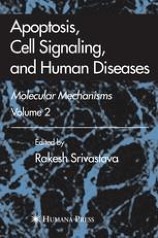
Apoptosis, cell signaling, and human diseases : Molecular mechanisms ; Vol.2
Volume 1 is divided into two sections: "Malignant Transformation and Metastasis" and "Molecular Basis of Disease Therapy." Volume 2 follows a similar structure and is divided into sections entitled "Kinases and Phosphate" and "Molecular Basis of Cell Death." All of the contributors are at the forefront of scientific discovery, and the reviews they present systemically examine the most exciting and innovative aspects of their particular areas of expertise. Researchers will find these volumes of major benefit as they search for novel and more effective treatments for human diseases.
Apoptosis, cell signaling, and human diseases : Molecular mechanisms ; Vol.1
Volume 1 is divided into two sections: “Malignant Transformation and Metastasis” and “Molecular Basis of Disease Therapy.” Volume 2 follows a similar structure and is divided into sections entitled “Kinases and Phosphate” and “Molecular Basis of Cell Death.” All of the contributors are at the forefront of scientific discovery, and the reviews they present systemically examine the most exciting and innovative aspects of their particular areas of expertise. Researchers will find these volumes of major benefit as they search for novel and more effective treatments for human diseases.
