



الصفحة 1
الصفحة 1

Neo-Liberalism, Globalization and Human Capital Learning : Reclaiming Education for Democratic Citizenship
Throughout the world, neoliberalism functions to decouple learning from the most important elements of civic education, transforming education into training and students into consumers. Neoliberalism, Globalization, and Human Capital Learning is an enormously important book that reveals in painstaking detail how neoliberal ideology destroys critical education. But it does much more. It also provides the insights and tools for educators to both overcome the market-based attack on critical education and address schooling as a democratic public sphere and the classroom as a laboratory for the nurturing of critical agency and social responsibility. This dynamic book should stir a public outcry among concerned citizens and educators through out the globe.

Microsimulation Population Projections with SAS : A Reference Guide
This book for a researcher needs to perform microsimulation for population projections, building its own model with a common statistical software such as SAS might a good option, because this software is widely used among scholars and is taught in most social sciences departments. We define what is microsimulation: a modelling based on individual-level data rather than aggregated level data, in which transitions between the states are determined stochastically with a random experiment. We finally provide some examples of microsimulation models used by social scientists.

Intangible capital and growth : Essays on labor productivity, monetary economics, and political economy ; Vol.1
It is now widely recognized that intangible capital has been a crucial element in the growth performance of these economies and their firms. In the author's view, “intangible capital” serves as the most appropriate umbrella term for capturing several dimensions of capital that are not tangible in nature but are nevertheless fundamentally important for growth. The term encompasses investments in education (human capital) and in informal (social capital) and formal (rule of law) institutions by the public sector and households, as well as investments by businesses aimed at enhancing their knowledge base, such as software, innovative property, and economic competencies.

Institutional Reform for Innovation and Entrepreneurship : An Agenda for Europe
The authors of this book advise the economies of the European Union to become more entrepreneurial in promoting innovation and economic growth. The authors propose a reform strategy with respect to several aspects to achieve this goal. Starting with the rule of law and the protection of property rights; the tax system; the authors deal with regulations governing savings, capital and finance, and the organization of labor markets and social insurance systems. Framework strategies related to the regulations governing goods and service markets, bankruptcy and insolvency are also put forward. A core understanding and future path is also provided towards R&D, commercialization and knowledge spillovers; human capital investments; and informal institutions.

Innovative trends in international business and sustainable management
Describes multidimensional trends, challenges, and opportunities for the development of international business and sustainable management in the context of a global pandemic. This book uniquely highlights new priorities of scientific and practical research in the field of international business and sustainable management that require a systematic knowledge of the ongoing transformations of trends, challenges, and opportunities for the development.

Effectiveness of University Education in Italy : Employability, Competences, Human Capital
In this volume we present papers on the effectiveness of university education, on employability of graduates, with a discussion on the opportunity to consider the employment rate as the main assessment indicator, on competence analysis for backward assessment purposes and finally on university human capital indicators.

Economic Liberalization and Integration Policy : Options for Eastern Europe and Russia
The authors of this book analyze the dynamics of macroeconomic and structural developments in Eastern Europe and Russia, with special attention paid to problems of international and national integration, "Dutch disease" and natural resource dependency, and distortions in institutional reforms. The analysis also sheds light on how these problems have implications for cooperation among OECD-countries. A critical focus is on institutional adjustment and learning, human capital formation, trade and foreign investment.

Consumer behavior over the life course : Research frontiers and new directions
Examines consumer behavior using the “life course” paradigm, A multidisciplinary framework for studying people's lives, structural contexts, and social change. It contributes to marketing research by providing new insights into the study of consumer behavior and illustrating how to apply the life course paradigm’s concepts and theoretical perspectives to study consumer topics in an innovative way. Also oresenting applications of the life course approach in such research topics as decision making, maladaptive behaviors (e.g., compulsive buying, binge eating), consumer well-being, and cognitive decline.
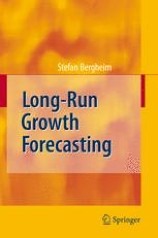
Long-Run Growth Forecasting
Explores how to set up an empirical model that helps with forecasting long-term economic growth in a large number of countries. It offers a systematic approach to models of potential GDP that can also be used for forecasts of more than a decade. It is an attempt to fill the wide gap between the high demand for such models by commercial banks, international organizations, central banks and governments on the one hand and the limited supply on the other hand. Frequent forecast failures in the past (e.g. Japan 1990, Asia 1997) and the heavy economic losses they produced motivated the work. The book assesses the large number of different theories of economic growth, the drivers of economic growth, the available datasets and the empirical methods on offer. A preference is shown for evolutionary models and an augmented Kaldor model. The book uses non-stationary panel techniques to find pair-wise cointegration among GDP per capita and its main correlates such as physical capital, human capital and openness.
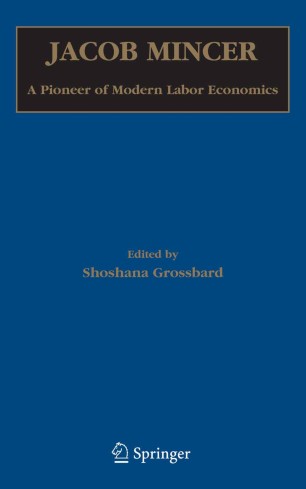
Jacob Mincer : A Pioneer of Modern Labor Economics
This volume contains essays by or about Jacob Mincer who, along with Gary Becker, is a founding father of modern empirical labor economics. His methodology analyzes the economics of the working world, and his human capital model is a fundamental tool in empirical economics.
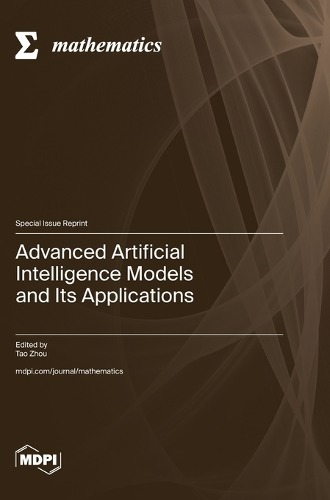
Advanced artificial intelligence models and its applications
The field of artificial intelligence (AI) has undergone enormous expansion since its inception in the mid-20th century, as demonstrated by its application across an array of engineering and scientific challenges. Particularly in the last decade, AI has witnessed a significant breakthrough with the advent of deep learning, which has facilitated the employment of various AI models across a multitude of domains. This reprint features ten papers accepted for publication in the Special Issue titled "Advanced Artificial Intelligence Models and Their Applications," published in the MDPI Mathematics journal. These papers explore numerous facets of advanced artificial intelligence models and their applications, covering areas such as cybersecurity, image classification, logistics optimization, automatic music generation, human capital investment, writer recognition, remote sensing image indexing, target tracking, and more.
