



الصفحة 1
الصفحة 1

Olfactory knows the truth
Olfaction, the sense of smell detects and discriminate odors as well as social cues which influence our innate responses. The olfactory system in human beings is found to be weak as compared to other animals; however, it seems to be very precise. It can detect and discriminate millions of chemical moieties (odorants) even in minuscule quantities. The sense of smell is greatly underappreciated, despite the fact that it monitors the intake of airborne agents into the human respiratory system and determine to a large degree the flavor and palatability of foods and beverage. In addition to enhancing quality of life, this primary sensory system warns of spoiled foods, leaking natural gas, polluted air and smoke, and mediates basic elements of communication (e.g., mother-infant interaction). It is now apparent that smell dysfunction is among the first clinical signs of such neurodegenerative diseases as Alzheimer’s disease and sporadic Parkinson’s disease.

Investigations Into the Phenomenology and the Ontology of the Work of Art : What are Artworks and How Do We Experience Them?
This book investigates the nature of aesthetic experience and aesthetic objects. Written by leading philosophers, psychologists, literary scholars and semioticians, the book addresses two intertwined issues. The first is related to the phenomenology of aesthetic experience: The understanding of how human beings respond to artworks, how we process linguistic or visual information, and what properties in artworks trigger aesthetic experiences. The examination of the properties of aesthetic experience reveals essential aspects of our perceptual, cognitive, and semiotic capacities. The second issue studied in this volume is related to the ontology of the work of art: Written or visual artworks are a specific type of objects, containing particular kinds of representation which elicit a particular kind of experience.

Foundations of marketing
Digital Humans: Thriving in an Online World is an insightful, engaging and interdisciplinary discussion of how best to transform your organisation into a nimble, digital enterprise with human beings firmly established at the centre of it. The book presents new and effective ways to make strategic decisions about your company’s future based on our new physical-digital hybrid reality.

Folk Psychology Re-Assessed
FOLK PSYCHOLOGY, THEORY OF MIND AND SIMULATION The tasks we face in our day to day social lives are quite heterogeneous but many of them make a common demand upon us. They require us to understand and interact with other people and, in most social encounters, we exhibit a special sensitivity to our fellow human beings that is quite different from the way we respond to inanimate objects and most other species of organism. Social life is dependent, to a considerable degree, on our ability to understand what is distinctive about human behaviour and to successfully apply that understanding in all manner of situations.

Farewell to the Internal Clock : A contribution in the field of chronobiology
Nearly everything making up what we call the “environment” of a plant has an infuence on the way it grows. Sunlight, te- perature, moisture contents of soil and atmosphere and vib- tions are all obvious examples of environmental components, and transient variations in their amount or intensity lead the plant to manifest more or less immediate responses. Small changes in carbon dioxide level in the atmosphere can even have effects, but these take a longer time to be registered – at least those that are visible, albeit at the microscopic level. Plants meet the challenges of the environment by means of acclimation. In this respect, plants are notable for the pl- ticity of their development. However, where morphological or physiological plasticity is no longer an option, the responses would be by means of adaptations as a result of genetic - lection or genetic “assimilation” (Waddington 1957).

Ecosystem-Based Management, Ecosystem Services and Aquatic Biodiversity : Theory, Tools and Applications
Aquatic ecosystems are rich in biodiversity and home to a diverse array of species and habitats, providing a wide variety of benefits to human beings. Many of these valuable ecosystems are at risk of being irreversibly damaged by human activities and pressures, including pollution, contamination, invasive species, overfishing and climate change. Such pressures threaten the sustainability of these ecosystems, their provision of ecosystem services and ultimately human well-being.

Contemporary Bioethics : Islamic Perspective
This book discusses the common principles of morality and ethics derived from divinely endowed intuitive reason through the creation of al-fitr' a (nature) and human intellect (al-‘aql). Biomedical topics are presented and ethical issues related to topics such as genetic testing, assisted reproduction and organ transplantation are discussed. Whereas these natural sources are God’s special gifts to human beings, God’s revelation as given to the prophets is the supernatural source of divine guidance through which human communities have been guided at all times through history. The second part of the book concentrates on the objectives of Islamic religious practice – the maqa' sid – which include: Preservation of Faith, Preservation of Life, Preservation of Mind (intellect and reason), Preservation of Progeny (al-nasl) and Preservation of Property. Lastly, the third part of the book discusses selected topical issues, including abortion, assisted reproduction devices, genetics, organ transplantation, brain death and end-of-life aspects.
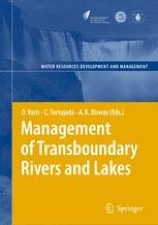
Management of Transboundary Rivers and Lakes
As it circulates in the atmosphere, in the rivers, lakes, soil, rock, and in the oceans, it is the major conveyer of va- ous chemical substances and of energy, and it can also be called as the blood of the ecosystems of this planet. But at the same time water is interwoven in the va- ous functions of the nature and the human society in countless ways which makes water one of the most complicated challenges of the mankind today.Human beings are exploiting and enjoying, but at the same time polluting and deteriorating, the waters in various ways and water is equally important to the - man socio-economic system as it is to the nature. It may sound a bit anecdotal to say that water obeys no borders, but that is true; the hydrologic cycle with its r- ers, river basins, lakes, aquifers, rainfalls, oceans, etc., cross administrational b- ders without any passport control. River and lake basins are in most cases very different from the administrational borders that the human beings have set up.
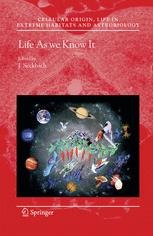
Life as We Know It
Life As we Know It ["LAKI"] covers several aspects of Life, ranging from the prebiotic level, origin of life, evolution of prokaryotes to eukaryotes and finally to various affairs of human beings. Although it is hard to define Life, one can, however, characterize it and describe its features. Topics treated are categories of bacteria, algae and fungi, conscience, philosophy, theology, aesthetics, appearance of sport and life destiny, life after clinical death, and thoughts of the world to come ("Olam Haba"). The various chapters have been written so that they are accessible to all - from the avid lay reader to the specialist – and make available multidisciplinary sources of information about Life. This volume will interest open minded scholars, students at all levels of general sciences, natural and Life science, researchers of philosophy, theology, history of Life, astrobiology, and those who wish to widen their knowledge about "who are we in the universe".
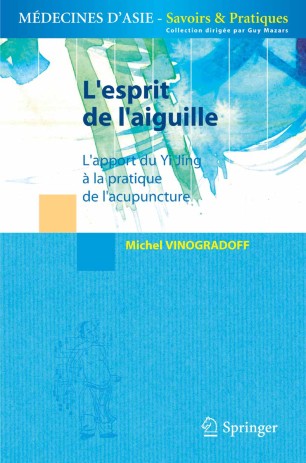
L’esprit de l’aiguille : L’apport du Yi Jing à la pratique de l’acupuncture = The Spirit of the Needle: The contribution of the Yi Jing to the practice of acupuncture
Acupuncture deciphers and heals human beings in all their mutations. The symbolism of Yi Jing joins the humanism of this Traditional Medicine for a dynamic reading of the changes and transformations at work in human beings. The double reflection generates a global vision of the human being and the approach to patients is changed. After an approach to the state of mind, encountered in these two fields, the author sets out to find the oldest roots of the notions of Yin and Yang. This allows him to identify the main strengths of the constitution of a human being and to deepen its symbolic construction. Three fields of application of this approach are then studied. The Extraordinary Meridians are viewed from a descriptive and behavioral perspective, which makes them extremely lively and familiar. Luo points, human being's relationship points with Reality, are also considered on a practical level using a symbolic reading of the links of Heaven, Earth and Man. Many examples shed light on these aspects. The last application is a detailed and comprehensive presentation of the fundamental and symbolic functions of the twelve main meridians through the hexagrams which correspond to their ancient Shu points. This original book is intended for any practitioner of traditional Chinese medicine curious to broaden their field of investigation. Dr M. Vinogradoff has been practicing acupuncture for 25 years. He is a member of the French Acupuncture Association, the French Acupuncture College and the Ricci Institute. After having published the complete translation of Yi Jing, in 2006 he published a novel, the action of which is set in Ancient China.
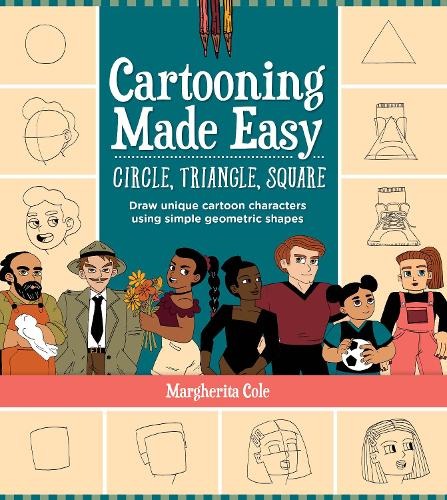
Cartooning made easy : Circle, triangle, square : Draw unique cartoon characters using simple geometric shapes
offers easy-to-follow instruction for using basic shapes to draw cute cartoon characters. Her approach is simple: All you need are basic drawing tools and shapes to cartoon! The book features dozens of drawing projects and step-by-step instruction perfect for beginning and aspiring artists, cartoonists, illustrators, pen and graphite artists, and many others. Each project combines simple geometric shapes—including circles and triangles and squares but also ovals, rectangles, and more—to draw adorable, cartoon-inspired artwork, including cartoon: Heads / Faces / Bodies / Unique characters / Animals, such as elephants / And more!
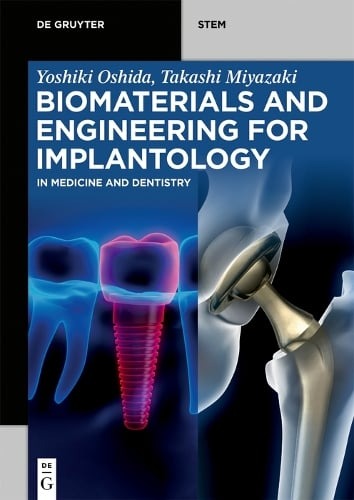
Biomaterials and engineering for implantology: in medicine and dentistry
Biomaterials are composed of metallic materials, ceramics, polymers, composites and hybrid materials. Biomaterials used in human beings require safety regulations, toxicity, allergic reaction, etc. When used as implantable materials their biological compatibility, biomechanical compatibility, and morphological compatibility must be acessed. This book explores the design and requirements of biomaterials for the use in implantology.
Animals in space : From research rockets to the space shuttle
Animals in Space will explain why dogs, primates, mice and other rodents were chosen and tested, at a time when dedicated scientists from both space nations were determined to establish the survivability of human subjects on both ballistic and orbital space flights. It will also recount the way this happened; the secrecy involved and the methods employed, and offer an objective analysis of how the role of animals as spaceflight test subjects not only evolved, but subsequently changed over the years in response to a public outcry led by animal activists. It will explore the ways in which animal high-altitude and space flight research impacted on space flight biomedicine and technology, and how the results - both successful and disappointing - allowed human beings to then undertake that same hazardous journey with far greater understanding and confidence.
