



الصفحة 1
الصفحة 1

Indigenous Cultures and Sustainable Development in Latin America
This book outlines development theory and practice over time as well as critically interrogates the “cultural turn” in development policy in Latin American indigenous communities, specifically, in Guatemala, Honduras, Ecuador, and Bolivia.

Digital Soil Mapping with Limited Data
This book focuses on digital soil mapping methodologies and applications for areas where data are limited, and has the following sections (i) introductory papers, (ii) dealing with limited spatial data infrastructures, (iii) methodology development, and (iv) examples of digital soil mapping in various parts of the globe (including USA, Brazil, UK, France, Czech Republic, Honduras, Kenya, Australia). The final chapter summarises priorities for digital soil mapping.
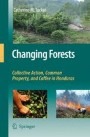
Changing Forests : Collective Action, Common Property, and Coffee in Honduras
It merges political ecology, collective-action theories, and institutional analysis to study how the people and forests have changed through socioeconomic and political transitions. It studies the complex, often contradictory relationships between the people and their natural resources to understand why forest cover endures."Changing Forests" therefore encompasses three broad phases: (1) the premodern period, which considers historic perturbations in western Honduras from the period of colonialism into the middle of the twentieth century; (2) the period of state-led logging and intervention in La Campa, which caused major degradation in forest cover; and (3) the recent period in which export coffee production transformed property rights, and people’s perceptions of the forest gained new conservationist and economic dimensions. Each phase entails perspectives and experiences that influenced human use of forests, and shaped subsequent transformations.
