



الصفحة 1
الصفحة 1

Investigating the Body in the Victorian Asylum : Doctors, Patients, and Practices
This book explores how the body was investigated in the late nineteenth-century asylum in Britain. As more and more Victorian asylum doctors looked to the bodily fabric to reveal the ‘truth’ of mental disease, a whole host of techniques and technologies were brought to bear upon the patient's body. These practices encompassed the clinical and the pathological, from testing the patient's reflexes to dissecting the brain.

Improving Psychiatric Care for Older People : Barbara Robb’s Campaign 1965-1975
This book tells the story of Barbara Robb and her pressure group, Aid for the Elderly in Government Institutions (AEGIS). In 1965, Barbara visited 73-year-old Amy Gibbs in a dilapidated and overcrowded National Health Service psychiatric hospital back-ward. She was so appalled by the low standards that she set out to make improvements. Barbara’s book Sans Everything: A case to answer was publicly discredited by a complacent and self-righteous Ministry of Health. However, inspired by her work, staff in other hospitals ‘whistle-blew’ about events they witnessed, which corroborated her allegations. Barbara influenced government policy, to improve psychiatric care and health service complaints procedures, and to establish a hospitals' inspectorate and ombudsman.

Healthy Minds in the Twentieth Century : In and Beyond the Asylum
This book contributes a new dimension to the study of mental health and psychiatry in the twentieth century. It takes the present literature beyond the ‘asylum and after’ paradigm to explore the multitude of spaces that have been permeated by concerns about mental well-being and illness.

Harnessing the Power of the Criminal Corpse
This book is the culmination of many years of research on what happened to the bodies of executed criminals in the past. Focusing on the eighteenth and nineteenth centuries, it looks at the consequences of the 1752 Murder Act. These criminal bodies had a crucial role in the history of medicine, and the history of crime, and great symbolic resonance in literature and popular culture. Starting with a consideration of the criminal corpse in the medieval and early modern periods, chapters go on to review the histories of criminal justice, of medical history and of gibbeting under the Murder Act, and ends with some discussion of the afterlives of the corpse, in literature, folklore and in contemporary medical ethics. Using sophisticated insights from cultural history, archaeology, literature, philosophy and ethics as well as medical and crime history, this book is a uniquely interdisciplinary take on a fascinating historical phenomenon.

From Melancholia to Depression : Disordered Mood in Nineteenth-Century Psychiatry
This book maps a crucial but neglected chapter in the history of psychiatry: how was melancholia transformed in the nineteenth century from traditional melancholy madness into a modern biomedical mood disorder

De Barrett à Zollinger-Ellison Quelques cas historiques en gastroentérologie = From Barrett to Zollinger-Ellison Some historical cases in gastroenterology
Portrays the character traits, the little quirks or the great faults of this illustrious character. In a text combining science, history and humor, we are presented with the essentials of what should not be forgotten.
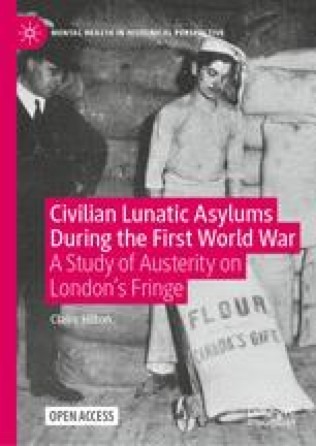
Civilian Lunatic asylums during the First World War : A study of Austerity on London's Fringe
This book explores the history of asylums and their civilian patients during the First World War, focusing on the effects of wartime austerity and deprivation on the provision of care.
Bearing Witness : Ruth Harrison and British Farm Animal Welfare (1920–2000)
This book is the biography of one of Britain’s foremost animal welfare campaigners and of the world of activism, science, and politics she inhabited. In 1964, Ruth Harrison’s bestseller Animal Machines triggered a gear change in modern animal protection by popularising the term ‘factory farming’ alongside a new way of thinking about animal welfare.
A History of Radionuclide Studies in the UK : 50th Anniversary of the British Nuclear Medicine Society
The British Nuclear Medicine Society celebrates its 50th Anniversary with this booklet, which reflects the research of many of the pioneers in the use of radionuclides for the diagnosis and therapy of human disease. Since 1949 there have been remarkable advances in radionuclide techniques and imaging equipment: from the first devices “home-made” in the many physics departments throughout the UK, to the sophisticated multimodality imagers now in everyday use in Nuclear Medicine. The BNMS has been instrumental in promoting the use of radionuclide techniques in the investigation of pathology by supporting and providing education, research and guidelines on the optimum use of radiation to help patients.
