



الصفحة 1
الصفحة 1
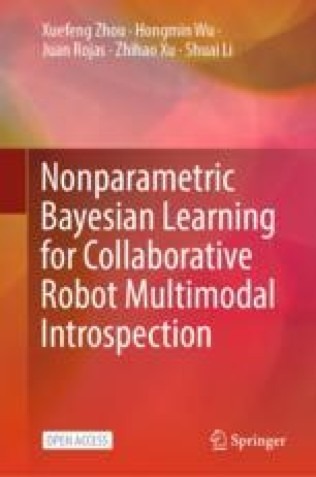
Nonparametric Bayesian Learning for Collaborative Robot Multimodal Introspection
This book focuses on robot introspection, which has a direct impact on physical human–robot interaction and long-term autonomy, and which can benefit from autonomous anomaly monitoring and diagnosis, as well as anomaly recovery strategies.

Introduction to Mathematical Methods in Bioinformatics
This book looks at the mathematical foundations of the models currently in use. This book is unique in the sense that it looks at the mathematical foundations of the models, which are crucial for correct interpretation of the outputs of the models.

Introduction to Machine Learning with Applications in Information Security
Provides a classroom-tested introduction to a wide variety of machine learning and deep learning algorithms and techniques, reinforced via realistic applications. The book is accessible and doesn't prove theorems, or dwell on mathematical theory. The goal is to present topics at an intuitive level, with just enough detail to clarify the underlying concepts. The book covers core classic machine learning topics in depth, including Hidden Markov Models (HMM), Support Vector Machines (SVM), and clustering. Additional machine learning topics include k-Nearest Neighbor (k-NN), boosting, Random Forests, and Linear Discriminant Analysis (LDA). The fundamental deep learning topics of backpropagation, Convolutional Neural Networks (CNN), Multilayer Perceptrons (MLP), and Recurrent Neural Networks (RNN) are covered in depth. A broad range of advanced deep learning architectures are also presented, including Long Short-Term Memory (LSTM), Generative Adversarial Networks (GAN), Extreme Learning Machines (ELM), Residual Networks (ResNet), Deep Belief Networks (DBN), Bidirectional Encoder Representations from Transformers (BERT), and Word2Vec.

Introduction to Computational Biology : An Evolutionary Approach
Molecular biology has changed dramatically over the past two decades. Until the early 1990s genes were studied one at a time by small teams of researchers; today entire genomes are sequenced by internationally collaborating laboratories. In the bygone gene-centered era the accumulation of data was the rate-limiting step in research. Now that step is often data interpretation. This is increasingly dependent on computational methods and as a consequence, computational biology has emerged in the past decade as a new subdiscipline of biology. This introduction to computational biology is centered on the analysis of molecular sequence data. There are two closely connected aspects to biological sequences: (i) their relative position in the space of all other sequences, and (ii) their movement through this sequence space in evolutionary time. Accordingly, the first part of the book deals with classical methods of sequence analysis: pairwise alignment, exact string matching, multiple alignment, and hidden Markov models. In the second part evolutionary time takes center stage and phylogenetic reconstruction, the analysis of sequence variation, and the dynamics of genes in populations are explained in detail. In addition, the book contains a computer program with a graphical user interface that allows the reader to experiment with a number of key concepts developed by the authors.

Information theory and machine learning
The recent successes of machine learning, especially regarding systems based on deep neural networks, have encouraged further research activities and raised a new set of challenges in understanding and designing complex machine learning algorithms. New applications require learning algorithms to be distributed, have transferable learning results, use computation resources efficiently, convergence quickly on online settings, have performance guarantees, satisfy fairness or privacy constraints, incorporate domain knowledge on model structures, etc. A new wave of developments in statistical learning theory and information theory has set out to address these challenges.

Information extraction : Algorithms and prospects in a retrieval context
The book focuses on content recognition in text. It elaborates on the past and current most successful algorithms and their application in a variety of domains (e.g., news filtering, mining of biomedical text, intelligence gathering, competitive intelligence, legal information searching, and processing of informal text). An important part discusses current statistical and machine learning algorithms for information detection and classification and integrates their results in probabilistic retrieval models. The book also reveals a number of ideas towards an advanced understanding and synthesis of textual content.

Inference in Hidden Markov Models
This book is a comprehensive treatment of inference for hidden Markov models, including both algorithms and statistical theory. Topics range from filtering and smoothing of the hidden Markov chain to parameter estimation, Bayesian methods and estimation of the number of states.In a unified way the book covers both models with finite state spaces, which allow for exact algorithms for filtering, estimation etc. and models with continuous state spaces (also called state-space models) requiring approximate simulation-based algorithms that are also described in detail. Simulation in hidden Markov models is addressed in five different chapters that cover both Markov chain Monte Carlo and sequential Monte Carlo approaches. Many examples illustrate the algorithms and theory. The book also carefully treats Gaussian linear state-space models and their extensions and it contains a chapter on general Markov chain theory and probabilistic aspects of hidden Markov models.
Implementing machine learning for finance : A systematic approach to predictive risk and performance analysis for investment portfolios
Introduces pattern recognition and future price forecasting that exerts effects on time series analysis models, such as the Autoregressive Integrated Moving Average (ARIMA) model, Seasonal ARIMA (SARIMA) model, and Additive model, and it covers the Least Squares model and the Long Short-Term Memory (LSTM) model. It presents hidden pattern recognition and market regime prediction applying the Gaussian Hidden Markov Model. The book covers the practical application of the K-Means model in stock clustering. It establishes the practical application of the Variance-Covariance method and Simulation method (using Monte Carlo Simulation) for value at risk estimation. It also includes market direction classification using both the Logistic classifier and the Multilayer Perceptron classifier. Finally, the book presents performance and risk analysis for investment portfolios. You will: Understand the fundamentals of the financial market and algorithmic trading, as well as supervised and unsupervised learning models that are appropriate for systematic investment portfolio management / Know the concepts of feature engineering, data visualization, and hyperparameter optimization / Design, build, and test supervised and unsupervised ML and DL models / Discover seasonality, trends, and market regimes, simulating a change in the market and investment strategy problems and predicting market direction and prices / Structure and optimize an investment portfolio with preeminent asset classes and measure the / underlying risk

Hidden Markov Models in Finance
A number of methodologies have been employed to provide decision making solutions to a whole assortment of financial problems in today's globalized markets. Hidden Markov Models in Finance by Mamon and Elliott will be the first systematic application of these methods to some special kinds of financial problems; namely, pricing options and variance swaps, valuation of life insurance policies, interest rate theory, credit risk modeling, risk management, analysis of future demand and inventory level, testing foreign exchange rate hypothesis, and early warning systems for currency crises.

Gesture in Human-Computer Interaction and Simulation ; 6th International Gesture Workshop, GW 2005, Berder Island, France, May 18-20, 2005, Revised Selected Papers
The international Gesture Workshops have become the leading interdisciplinary events for dissemination of the latest results on gesture-based communication. The goal of these workshops is to bring together researchers who want to meet and share ideas on advanced research on gesture related to multidisciplinary scienti?c ?elds. Depending on the ?elds, the objectives can be very di?erent. While physiology and biomechanics aim to extract fundamental knowledge of physical gesture, computer sciences try to capture di?erent aspects of gesture and extract features that help to identify, interpret or rebuild the underlying mechanisms of communication gestures. Other approaches and methodologies are followed by cognitive sciences and linguistics, bringing a complementary - derstanding of motor control and gesture meaning. The results can be enhanced by technological applications or demonstrations.

Enterprise Information Systems V
ICEIS focuses on real world applications and aims at bringing together researchers, engineers and practitioners interested in the advances and business applications of information systems. As in previous years, ICEIS’2003 held four simultaneous tracks covering different aspects of enterprise computing: Databases and Information Systems Integration, Artificial Intelligence and Decision Support Systems, Information Systems Analysis and Specification and Software Agents and Internet Computing. Although ICEIS’2003 received 546 paper submissions from over 50 countries, only 80 were accepted as full papers and presented in 30-minutes oral presentations. With an acceptance rate of 15%, these numbers demonstrate the intention of preserving a high quality forum for future editions of this conference. From the articles accepted as long papers for the conference, only 32 were selected for inclusion in this book Additional keynote lectures, tutorials and industrial sessions were also held during ICEIS’2003, and, for the first time this year, the 1st Doctoral Consortium on Enterprise Information Systems gave PhD students an opportunity to present their work to an international audience of experts in the field of information systems.

Data Mining : Theory, Methodology, Techniques, and Applications
This volume provides a snapshot of the current state of the art in data mining, presenting it both in terms of technical developments and industrial applications. The collection of chapters is based on works presented at the Australasian Data Mining conferences and industrial forums.

Mathematical Linguistics
Mathematical Linguistics introduces the mathematical foundations of linguistics to computer scientists, engineers, and mathematicians interested in natural language processing. The book presents linguistics as a cumulative body of knowledge from the ground up, with no prior knowledge of linguistics being assumed, covering more than the average two-semester introductory course in linguistics.This comprehensive, reader-friendly volume offers readers a high-level orientation, discussing the foundations of the field and presenting both the classical work and the most recent results. It covers an extremely rich array of topics including not only syntax and semantics but also phonology and morphology, probabilistic approaches, complexity, learnability, and the analysis of speech and handwriting.
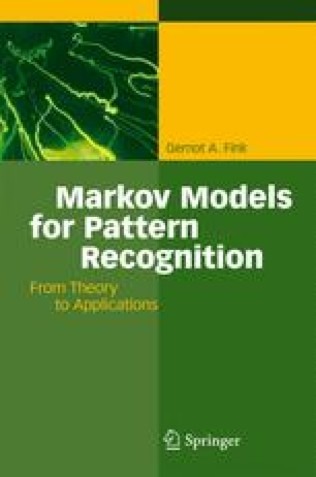
Markov Models for Pattern Recognition : From Theory to Applications
Describes the underlying theoretical concepts - covering Hidden Markov models and Markov chain models - and presents the techniques and algorithmic solutions essential to creating real world applications. The actual use of Markov models in their three main application areas - namely speech recognition, handwriting recognition, and biological sequence analysis - is presented with examples of successful systems.
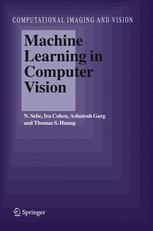
Machine Learning in Computer Vision
The goal of this book is to address the use of several important machine learning techniques into computer vision applications. An innovative combination of computer vision and machine learning techniques has the promise of advancing the field of computer vision, which contributes to better understanding of complex real-world applications. The effective usage of machine learning technology in real-world computer vision problems requires understanding the domain of application, abstraction of a learning problem from a given computer vision task, and the selection of appropriate representations for the learnable (input) and learned (internal) entities of the system. In this book, we address all these important aspects from a new perspective: that the key element in the current computer revolution is the use of machine learning to capture the variations in visual appearance, rather than having the designer of the model accomplish this. As a bonus, models learned from large datasets are likely to be more robust and more realistic than the brittle all-design models.
Machine Learning for Multimedia Content Analysis
Challenges in complexity and variability of multimedia data have led to revolutions in machine learning techniques. Multimedia data, such as digital images, audio streams and motion video programs, exhibit richer structures than simple, isolated data items. A number of pixels in a digital image collectively conveys certain visual content to viewers. A TV video program consists of both audio and image streams that unfold the underlying story. To recognize the visual content of a digital image, or to understand the underlying story of a video program, we may need to label sets of pixels or groups of image and audio frames jointly.

Machine Learning : ECML 2005 ; 16th European Conference on Machine Learning, Porto, Portugal, October 3-7, 2005, Proceedings
The European Conference on Machine Learning (ECML) and the European Conference on Principles and Practice of Knowledge Discovery in Databases (PKDD) were jointly organized this year for the ?fth time in a row, after some years of mutual independence before. After Freiburg (2001), Helsinki (2002), Cavtat (2003) and Pisa (2004), Porto received the 16th edition of ECML and the 9th PKDD in October 3–7. Having the two conferences together seems to be working well: 585 di?erent paper submissions were received for both events, which maintains the high s- mission standard of last year. Of these, 335 were submitted to ECML only, 220 to PKDD only and 30 to both. Such a high volume of scienti?c work required a tremendous e?ort from Area Chairs, Program Committee members and some additional reviewers. On average, PC members had 10 papers to evaluate, and Area Chairs had 25 papers to decide upon. We managed to have 3 highly qualified independent reviews per paper (with very few exceptions) and one additional overall input from one of the Area Chairs. After the authors’ responses and the online discussions for many of the papers, we arrived at the ?nal selection of 40 regular papers for ECML and 35 for PKDD. Besides these, 32 others were accepted as short papers for ECML and 35 for PKDD. This represents a joint acceptance rate of around 13% for regular papers and 25% overall.

Knowledge science, engineering and management ; 2nd International Conference, KSEM 2007, Melbourne, Australia, November 28-30, 2007, Proceedings
Constitutes the refereed proceedings of the Second International Conference on Knowledge Science, Engineering and Management, KSEM 2007, held in Melbourne, Australia, in November 2007. The papers provide new ideas and report research results in the broad areas of knowledge science, knowledge engineering, and knowledge management.
Biometrics, Computer Security Systems and Artificial Intelligence Applications
This book presents the most recent achievements in some fascinating and rapidly developing fields within Computer Science. The scientific works presented in this book have been partitioned into three topical groups: Image Analysis and Biometrics, Computer Security Systems, and Artificial Intelligence and Applications. Image Analysis and Biometrics is the branch of Computer Science dealing with the very difficult task of artificial, visual perception of objects and surroundings, as well as the problems connected with it. Computer Security and Safety is at present a very important and intensively investigated branch of Computer Science because of the menacing activity of hackers and computer viruses.

Bioinformatics and the cell : Modern computational approaches in genomics, proteomics and transcriptomics
"Xuhua Xia’s Bioinformatics and the Cell is a welcome addition to the bourgeoning field of bioinformatics text books. Xia stakes out a too-often neglected middle ground in bioinformatics by presenting a work that emphasizes methods’ biological utility without eschewing algorithmic formalism. Readers will find a well-rounded presentation of bioinformatics techniques employed in genomics, transcriptomics and proteomics – unified throughout by the common theme of molecular evolution."
