



الصفحة 1
الصفحة 1

Heterocycles from Carbohydrate Precursors
This book is a volume in the series Topics in Heterocyclic Chemistry.Itc- ers the key methods used for designing synthetic approaches to heterocycles from carbohydrates and the value and scope of these methods. Carbohydrates are widely distributed in nature and constitute the largest part of renewable biomasses. Moreover, many carbohydrates and their derivatives are comm- cially available at relatively cheap prices. Consequently their utilization is highly encouraged and economically they are of great signifcance. Moreover, carbohydrates are highly functionalized compounds that can be readily deritized and/or cyclized to provide heterocyclic compounds. This book provides a modern account and an up-to-date description of the advancement in the synthesis of diverse heterocycles from carbohydrates. Carbohydrates can be considered as a source of chiral centers in addition to the variable modifcation thereof.
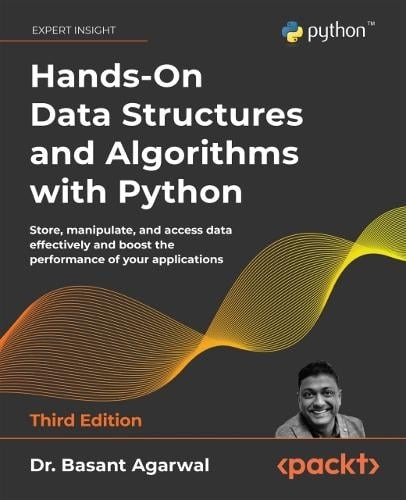
Hands-On Data Structures and Algorithms with Python : Store, manipulate, and access data effectively ; 3rd ed.
Expands your understanding of key structures, including stacks, queues, and lists, and also show you how to apply priority queues and heaps in applications. You'll learn how to analyze and compare Python algorithms, and understand which algorithms should be used for a problem based on running time and computational complexity. You will also become confident organizing your code in a manageable, consistent, and scalable way, which will boost your productivity as a Python developer. By the end of this Python book, you'll be able to manipulate the most important data structures and algorithms to more efficiently store, organize, and access data in your applications

Gradient Flows : In Metric Spaces and in the Space of Probability Measures ; 1st ed.
This book is devoted to a theory of gradient flows in spaces which are not nec- sarily endowed with a natural linear or differentiable structure. It is made of two parts, the first one concerning gradient flows in metric spaces and the second one 2 1 devoted to gradient flows in the L -Wasserstein space of probability measures on p a separable Hilbert space X (we consider the L -Wasserstein distance, p? (1,?), as well). The two parts have some connections, due to the fact that the Wasserstein space of probability measures provides an important model to which the “metric” theory applies, but the book is conceived in such a way that the two parts can be read independently, the first one by the reader more interested to Non-Smooth Analysis and Analysis in Metric Spaces, and the second one by the reader more oriented to theapplications in Partial Differential Equations, Measure Theory and Probability.

Globalization and Summit Reform : An Experiment in International Governance
This account of the 'L-20 project' describes and analyses a 3-year mobilization designed as an alternative to the political deadlocks preventing progress on critical global issues. The L-20 would include leaders from the existing G-countries, augmented by key regional powers such as China, Brazil, India, South Africa and Egypt. The book traces the origins and findings of the project, which generated a broad array of cutting-edge research and over twenty substantive, action-oriented workshops involving hundreds of experts and practitioners around the world. The workshop series examined in detail the operational possibilities for a Leaders Group addressing a range of issues, including infectious disease control, climate change/global warming, energy security, nuclear proliferation, management of international financial crises, and the provision of safe drinking water and sanitation, to name just a few.

Global RFID : The Value of the EPCglobal Network for Supply Chain Management
At the same time, I was a junior Brand Manager at Procter & Gamble w- ried about a much more mundane problem: how to keep my products on the shelf. Embedding RFID tags in the products, and RFID readers in the shelf, seemed like the perfect – indeed the only – way to do this. But I needed RFID to be cheaper, better, and standardized in an open system. In early 1999, by sheer chance, I met Brock and Sarma. The result was a potent meeting of minds. I was looking to fund research, and Brock, Sarma and Siu were looking for research funding. Working with Alan Haberman of the Uniform Code Council, one of the founding fathers of the UPC bar code, and Allan Boath of the Gillette C- pany, we developed a plan for a new industry funded research consortium at MIT.
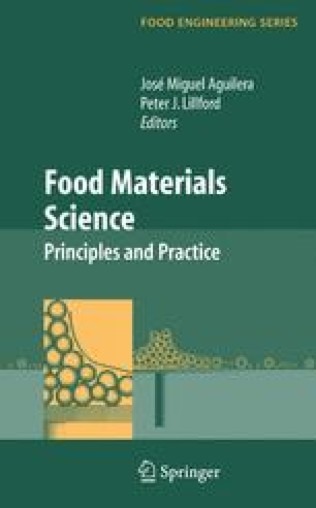
Food Materials Science : Principles and Practice
Food manufacture is about producing billions of units of standardized products which must be cheap, nutritious, safe and appealing to the consumer’s taste. Food products are complex multicomponent and structured edible materials that nevertheless must comply with the laws of physics and fundamentals of engineering sciences. In the last 20 years the design of food products with specific functionalities has advanced significantly by the application of scientific knowledge from disciplines such as polymer physics, colloidal and mesoscopic physics, materials science and new imaging and probing techniques borrowed from chemistry, biology and medicine. Our knowledge of the relationship between microstructure, processing, and macroscopic properties continues to increase as the science of food materials advances at a fast pace.

Eye Tracking Methodology : Theory and Practice
Despite the availability of cheap, fast, accurate and usable eye trackers, there is still little information available on how to develop, implement and use these systems. This second edition of Andrew Duchowski’s successful guide to these systems contains significant additional material on the topic and fills this gap in the market with this accessible and comprehensive introduction. Opening with useful background information, including an introduction to the human visual system and key issues in visual perception and eye movement, the second part surveys eye-tracking devices and provides a detailed introduction to the technical requirements necessary for installing a system and developing an application program. The book focuses on video-based, corneal-reflection eye trackers – the most widely available and affordable type of system, before closing with a look at a number of interesting and challenging applications in human factors, collaborative systems, virtual reality, marketing and advertising.

Essential Issues in SOC Design : Designing Complex Systems-on-Chip
SOC design is fast becoming the key area of focus that engineers and researchers from the Electronic Design Automation field are focusing on in their quest to further develop Integrated Circuit technology. The more systems and even networks that we can integrate on one piece of silicon, the faster, cheaper, more powerful and efficient the technology will become. Essential Issues in SOC Design contains valuable academic and industrial examples for those involved with the design of complex SOCs, all contributors are selected from a region of the world that is generally known to lead the "SOC-Revolution", namely Asia.

Environmental Geotechnics
A guide to aid engineers in applying geotechnical principles, processes and techniques in a way that will not only reduce their environmental impact but should benefit the environment. The major construction-environment interface is geotechnical in nature. For engineers to be able to foresee environmental problems and modify construction projects, or derive novel approaches, to prevent negative impacts from their works, they need a thorough knowledge of their subject and a constant awareness of the pollution-output' of any construction operation.

Device Applications of Nonlinear Dynamics
This edited book is devoted specifically to the applications of complex nonlinear dynamic phenomena to real systems and device applications. While in the past decades there has been significant progress in the theory of nonlinear phenomena under an assortment of system boundary conditions and preparations, there exist comparatively few devices that actually take this rich behavior into account. "Device Applications of Nonlinear Dynamics" applies and exploits this knowledge to make devices which operate more efficiently and cheaply, while affording the promise of much better performance. Given the current explosion of ideas in areas as diverse as molecular motors, nonlinear filtering theory, noise-enhanced propagation, stochastic resonance and networked systems, the time is right to integrate the progress of complex systems research into real devices.

Design of High Voltage xDSL Line Drivers in Standard CMOS
The book focusses on the line driver, the most demanding building block of the xDSL modem for lowering power. To reduce the cost, the cheapest technology is selected: standard CMOS, without any extra process options to increase the nominal supply voltage.

Dendrimer Catalysis
catalytically active dendrimers have emerged as a class of molecular catalysts that has substantially enriched the field of homogeneous (and in part heterogeneous) catalysis. A general survey of transition metal dendrimer catalysts and the way they have developed is followed by in-depth discussions of dendritic transition metal catalysis based on non-covalent catalyst-support interaction and an overview of the rapidly growing field of stereoselective dendrimer catalysis. The development of dendrimer-encapsulated bimetallic nanoparticles has provided the interface with heterogeneous colloid catalysis. As cheaper and readily accessible alternatives to regular dendrimers, hyperbranched polymers are increasingly being used as catalyst platforms. These topics are complemented by a review of metallodendritic exoreptors for the redox recognition of oxo-anions and halides.

Computer networking : A top-down approach ; 8th ed.
The text works its way from theapplication layer down toward the physical layer, motivating students by exposing them to important concepts early in their study of networking. Focusing on the Internet and the fundamentally important issues of networking, This text provides an excellent foundation for students in computer science and electrical engineering, without requiring extensive knowledge of programming or mathematics. The 8th Edition, Global Edition, has been updated to reflect the most important and exciting recent advances in networking, including the importance of software-defined networking (SDN) and the rapid adoption of 4G/5G networks and the mobile applications they enable.

Computational intelligence for agent-based systems
In these last years the digital technology explosion has spawned so many new lifestyle models that the boundaries between "real" and "digital" are fiercely debated. This scenario has deeply changed the viewpoint about computer applications: computers become smaller, cheapest and hugely distributed in wired or unwired networks, applications become so flexible and intelligent as to tailor its communication facilities in order to increase the usability of the system. Such data-intensive, unstructured spaces featured by minimal or no centralized control flow, present a challenge for traditional methods of analysis, design and integration of advanced, distributed and intelligent computer systems. Within this challenge, an important role is played by two important research areas : Fuzzy Technology, thanks to its ability to exploit the tolerance for imprecision to achieve tractability and Agent Technology, thanks to its nature to employ agent-wise communities to carry out complex goals by means of smart interaction, cooperation, and pro-activeness.

L'astrofilo moderno = The modern amateur astronomer
In less than two decades, amateur astronomy has changed its face. The reason, of course, is technological progress. Cheap but high-quality telescopes, computer-controlled "go-to" mounts, autoguiders, CCD cameras, video cameras and (as always) computers and the Internet are just some of the elements that revolutionized 21st century astronomy. Not only have they made amateur astronomy more "friendly" and fun, but they have also greatly expanded the potential of the amateur astronomer. Martin Mobberley first tackles the basic issues and then analyzes in depth what tools are available on the market. From here he starts to review the revolutionary possibilities that open up for amateur astronomers, from imaging, to spectroscopy, to photometry, to the surveillance of Near-Earth objects - comets and asteroids that can come dangerously close to the Earth.

Bioterrorism and Infectious Agents : A New Dilemma for the 21st Century
Since the terrorist attack on the United States on September 11, 2001 and subsequent cases of anthrax in Florida and New York City, attention has been focused on the threat of b- logical warfare and bioterrorism. Biological warfare agents are de?ned as “living org- isms, whatever their nature, or infected material derived from them, which are used for h- tile purposes and intended to cause disease or death in man, animals and plants, and depend for their efforts on the ability to multiply in person, animal or plant attacked.” Biological warfare agents may be well suited for bioterrorism to create havoc and terror in a civilian population, because they are cheap and easy to obtain and dispense. Infectious or contagious diseases have played a major part in the history of warfare – deliberately or inadvertently – in restricting or assisting invading armies over the centuries. In 1346, the Tartars catapulted plaque-infected bodies into Kaffa in the Crimea to end a 3-year siege. Blankets contaminated with smallpox to infect North American Indians were used by British forces in the 18th century. More recently, the Japanese released ?eas infected with plaque in Chinese cities in the 1930s and 1940s. Biological research programs for both offensive and defensive strategies have been developed by the United States, Britain, the former Soviet Union, and Canada; several other nations are thought to have such programs.
Biomining
Biomining is the biotechnology that uses microorganisms to recover metals, in particular copper and gold, from ores and concentrates. Having developed from a very simple operational (in terms of both engineering and biology) process, biomining has developed into a multifaceted technology, to the extent that many of the largest industrial stirred tanks and heaps throughout the world are employed for bioprocessing minerals. This book has a strong applied approach and describes emerging and established industrial processes, as well as the underlying theory of the process, and the biology of the microorganisms involved. Chapters have been written by personnel from leading biomining companies, consultants and internationally recognized researchers and academics

Applications and theory of Petri Nets 2005 ; 26th international conference, ICATPN 2005, Miami, FL, June 20-25, 2005, Proceedings
This volume contains the proceedings of the 26th International Conference on Application and Theory of Petri Nets and Other Models of Concurrency (ICATPN 2005). The Petri net conferences serve to discuss yearly progress in the ?eld of Petri nets and related models of concurrency, and to foster new - vancesintheapplicationandtheoryofPetrinets. Several tutorials and workshops were organized within the conf- ence, covering introductory and advanced aspects related to Petri nets.Detailed
A Modular Calculus for the Average Cost of Data Structuring
This volume, with forewords by Greg Bollella and Dana Scott, presents novel programs based on the new advances in this area, including the first randomness-preserving version of Heapsort. Programs are provided, along with derivations of their average-case time, to illustrate the radically different approach to average-case timing. The automated static timing tool applies the Modular Calculus to extract the average-case running time of programs directly from their MOQA code.
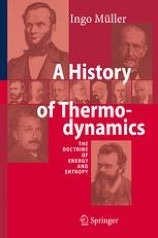
A History of Thermodynamics : The Doctrine of Energy and Entropy
The development of thermodynamics in the second half of the 19th century has had a strong impact on both technology and natural philosophy. It is true that the steam engine for the conversion of heat into work existed before thermodynamics was developed as a branch of physics. However, the systematic theory improved the conversion process, and it succeeded in developing other processes essential to modern life, notably refrigeration and rectification. So, altogether thermodynamics has provided humanity with cheap energy, and cheap fuel, -- consequently with cheap, and abundant, and unspoiled food. Thus thermodynamics has made populations grow, and life expectancy increase beyond anything people could possibly have imagined 200 years ago.
