



الصفحة 1
الصفحة 1
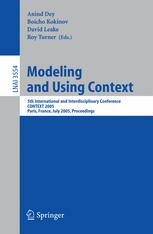
Modeling and Using Context ; 5th International and Interdisciplinary Conference, CONTEXT 2005, Paris, France, July 5-8, 2005, Proceedings
Context is of crucial importance for research and applications in many disciplines, as evidenced by many workshops, symposia, seminars, and conferences on specific aspects of context. The International and Interdisciplinary Conference on Modeling and Using Context (CONTEXT), the oldest conference series focusing on context, provides a unique interdisciplinary emphasis, bringing together participants from a wide range of disciplines, including artificial intelligence, cognitive science, computer science, linguistics, organizational science, philosophy, psychology, ubiquitous computing, and application areas such as medicine and law, to discuss and report on context-related research and projects. Previous CONTEXT conferences were held in Rio de Janeiro, Brazil (1997), Trento, Italy (1999, LNCS 1688), Dundee, UK (2001, LNCS 2116), and Palo Alto, USA (2003, LNCS 2680). CONTEXT 2005 was held in Paris, France during July 5–8, 2005. There was a strong response to the CONTEXT 2005 Call for Papers, with 120 submissions received. A careful review process assessed all submissions, with each paper first reviewed by the international Program Committee, and then reviewer discussions were initiated as needed to assure that the final decisions carefully considered all aspects of each paper. Reviews of submissions by the Program Chairs were supervised independently and anonymously, to assure fair consideration of all work. Out of the 120 submissions, 23 were selected as full papers for oral presentation, and 20 were selected as full papers for poster presentation. These outstanding papers are presented in this proceedings.

Information Retrieval Technology ; Vol. 4182 ; 3rd Asia Information Retrieval Symposium, AIRS 2006, Singapore, October 16-18, 2006, Proceedings
Asia Information Retrieval Symposium (AIRS) 2006 was the third AIRS conf- ence in the series established in 2004.The ?rst AIRS washeld in Beijing, China, and the 2nd AIRS was held in Cheju, Korea. The AIRS conference series traces its roots to the successful Information Retrieval with Asian Languages (IRAL) workshop series which started in 1996. The AIRS series aims to bring together international researchers and dev- opers to exchange new ideas and the latest results in information retrieval. The scope of the conference encompassed the theory and practice of all aspects of information retrieval in text, audio, image, video, and multimedia data. Wearehappyto reportthatAIRS2006received148submissions,thehighest number since the conference series started in 2004. Submissions came from Asia and Australasia, Europe, and North America. We accepted 34 submissions as regular papers (23%) and 24 as poster papers (16%). We would like to thank all the authors who submitted papers to the conf- ence, the seven area chairs, who worked tirelessly to recruit the program c- mittee members and oversaw the review process, and the program committee members and their secondary reviewers who reviewed all the submissions.

Image Analysis and Recognition ; Vol. 4142 ; 3rd International Conference, ICIAR 2006, Póvoa de Varzim, Portugal, September 18-20, 2006, Proceedings, Part II
ICIAR 2006, the International Conference on Image Analysis and Recognition, was the third ICIAR conference, and was held in P´ ovoa de Varzim, Portugal. ICIARisorganizedannually,andalternatesbetweenEuropeandNorthAmerica. ICIAR 2004 was held in Porto, Portugal and ICIAR 2005 in Toronto, Canada. The idea of o?ering these conferences came as a result of discussion between researchers in Portugal and Canada to encourage collaboration and exchange, mainlybetweenthesetwocountries,butalsowiththeopenparticipationofother countries, addressing recent advances in theory, methodology and applications. The response to the call for papers for ICIAR 2006 was higher than the two previous editions. From 389 full papers submitted, 163 were ?nally accepted (71 oral presentations, and 92 posters). The review process was carried out by the Program Committee members and other reviewers; all are experts in various image analysis and recognition areas. Each paper was reviewed by at least two reviewers, and also checked by the conference Co-chairs. The high quality of the papers in these proceedings is attributed ?rst to the authors, and second to the quality of the reviews provided by the experts.

Image Analysis and Recognition ; Vol. 4141 ; 3rd International Conference, ICIAR 2006, Póvoa de Varzim, Portugal, September 18-20, 2006, Proceedings, Part I
ICIAR 2006, the International Conference on Image Analysis and Recognition, was the third ICIAR conference, and was held in P´ ovoa de Varzim, Portugal. ICIARisorganizedannually,andalternatesbetweenEuropeandNorthAmerica. ICIAR 2004 was held in Porto, Portugal and ICIAR 2005 in Toronto, Canada. The idea of o?ering these conferences came as a result of discussion between researchers in Portugal and Canada to encourage collaboration and exchange, mainlybetweenthesetwocountries,butalsowiththeopenparticipationofother countries, addressing recent advances in theory, methodology and applications. The response to the call for papers for ICIAR 2006 was higher than the two previous editions. From 389 full papers submitted, 163 were ?nally accepted (71 oral presentations, and 92 posters). The review process was carried out by the Program Committee members and other reviewers; all are experts in various image analysis and recognition areas. Each paper was reviewed by at least two reviewers, and also checked by the conference Co-chairs. .

Image Analysis and Recognition ; Vol. 3656 ; 2ond International Conference, ICIAR 2005, Toronto, Canada, September 28-30, 2005, Proceedings
ICIAR 2005, the International Conference on Image Analysis and Recognition, was the second ICIAR conference, and was held in Toronto, Canada. ICIAR is organized annually, and alternates between Europe and North America. ICIAR 2004 was held in Porto, Portugal. The idea of o?ering these conferences came as a result of discussion between researchers in Portugal and Canada to encourage collaboration and exchange, mainly between these two countries, but also with the open participation of other countries, addressing recent advances in theory, methodology and applications. TheresponsetothecallforpapersforICIAR2005wasencouraging.From295 full papers submitted, 153 were ?nally accepted (80 oral presentations, and 73 posters). The review process was carried out by the Program Committee m- bers and other reviewers ; all are experts in various image analysis and recognition areas. Each paper was reviewed by at least two reviewers, and also checked by the conference co-chairs. The high quality of the papers in these proceedings is attributed ?rst to the authors,and second to the quality of the reviews provided by the experts. We would like to thank the authors for responding to our call, andwewholeheartedlythankthe reviewersfor theirexcellentwork,andfortheir timely response. It is this collective e?ort that resulted in the strong conference program and high-quality proceedings in your hands.

Esthetic & restorative dentistry : Material selection & technique
Provides the most up-to-date information on enhanced developments, materials, and techniques that have emerged since the publication of the second edition, offering the reader a completely updated, revised, and newly illustrated overview of modern esthetic and restorative dentistry complete with tutorial videos. New topics include web-based communication with the laboratory, indirect composite chairside CAD/CAM restorations, a comparison of digital and conventional techniques, the resin composite injection technique, as well as updated information on composites and ceramic systems, including esthetic zirconia. New cases illustrate the maintenance of esthetic restorative materials, esthetic contouring, immediate dentin sealing, and novel surgical techniques such as lip repositioning, connective tissue grafting, and ridge preservation with collagen membranes.
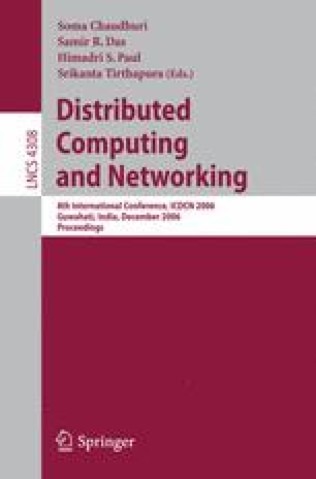
Distributed computing and networking ; 8th International conference, ICDCN 2006, Guwahati, India, December 27-30, 2006, Proceedings
VI realm between distributed computing and networking, namely, Modeling Biological Networks, Network Security, Algorithmic Issues in Wireless Sensor Networks, and Optical Networking. This was made possible by the efforts of the Tutorial Chairs, Sr- har Iyer and Pinaki Mitra. The Organizing Committee worked hard to ensure that the participants enjoyed a comfortable stay and the technical meetings proceeded as smoothly as possible.

Distributed computing -- IWDC 2004 ; 6th International Workshop, Kolkata, India, December 27-30, 2004, Proceedings
Last, but not least, thanks to all the participants and authors. We hope that they enjoyed the workshop as much as the wonderful and culturally vibrant city of Kolkata! Bhabani P. Sinha Indian Statistical Institute, Kolkata, India December 2004 Sajal K. Das University of Texas, Arlington, USA December 2004 Program Chairs’ Message On behalf of the Technical Program Committee of the 6th International Wo- shop on Distributed Computing, IWDC 2004, it was our great pleasure to w- come the attendees to Kolkata, India. Over the last few years, IWDC has emerged as an internationally renowned forum for interaction among researchers from academia and industries around the world.

Computer Vision - ECCV 2002 ; 7th European Conference on Computer Vision, Copenhagen, Denmark, May 28-31, 2002. Proceedings. Part IV
The privilege of organizing it was shared by three universities: The IT University of Copenhagen, the University of Copenhagen, and Lund University, with the conference venue in Copenhagen. This year’s conference attracted more papers than ever before, with around 600 submissions. Still, together with the conference board, we decided to keep the tradition of holding ECCV as a single track conference. Each paper was anonymously refereed by three different reviewers. For the ?nal selection, for the ?rst time for ECCV, a system with area chairs was used.
Computer Vision - ECCV 2002 ; 7th European Conference on Computer Vision, Copenhagen, Denmark, May 28-31, 2002. Proceedings. Part II
The privilege of organizing it was shared by three universities: The IT University of Copenhagen, the University of Copenhagen, and Lund University, with the conference venue in Copenhagen. This year’s conference attracted more papers than ever before, with around 600 submissions. Still, together with the conference board, we decided to keep the tradition of holding ECCV as a single track conference. Each paper was anonymously refereed by three different reviewers. For the ?nal selection, for the ?rst time for ECCV, a system with area chairs was used.

Computer Vision - ECCV 2002 ; 7th European Conference on Computer Vision, Copenhagen, Denmark, May 28-31, 2002, Proceedings, Part III
The privilege of organizing it was shared by three universities: The IT University of Copenhagen, the University of Copenhagen, and Lund University, with the conference venue in Copenhagen. This year’s conference attracted more papers than ever before, with around 600 submissions. Still, together with the conference board, we decided to keep the tradition of holding ECCV as a single track conference. Each paper was anonymously refereed by three different reviewers. For the ?nal selection, for the ?rst time for ECCV, a system with area chairs was used.
Computer Vision - ECCV 2002 ; 7th European Conference on Computer Vision, Copenhagen, Denmark, May 28-31, 2002, Proceedings, Part I
The privilege of organizing it was shared by three universities: The IT University of Copenhagen, the University of Copenhagen, and Lund University, with the conference venue in Copenhagen. This year’s conference attracted more papers than ever before, with around 600 submissions. Still, together with the conference board, we decided to keep the tradition of holding ECCV as a single track conference. Each paper was anonymously refereed by three different reviewers. For the ?nal selection, for the ?rst time for ECCV, a system with area chairs was used.

Computer Vision - ACCV 2006 ; Vol. 3852 ; 7th Asian Conference on Computer Vision, Hyderabad, India, January 13-16, 2006, Proceedings, Part II
ACCV has been making its rounds through the Asian landscape and came to India this year. Interest in computer vision is increasing and ACCV 2006 attracted about 500 submission. The evaluation team consisted of 27 experts serving as Area Chairs and about 270 reviewers in all. The whole process was conducted electronically in a double-blind manner,a ?rstfor ACCV.

Computer Vision - ACCV 2006 ; Vol. 3851 ; 7th Asian Conference on Computer Vision, Hyderabad, India, January 13-16, 2006, Proceedings, Part I
proceedings. ACCV has been making its rounds through the Asian landscape and came to India this year. Interest in computer vision is increasing and ACCV 2006 attracted about 500 submission. The evaluation team consisted of 27 experts serving as Area Chairs and about 270 reviewers in all. The whole process was conducted electronically in a double-blind manner,a ?rstfor ACCV.

Computer aided architectural design futures 2005 ; Proceedings of the 11th International CAAD futures Conference held at the Vienna University of Technology, Vienna, Austria, on June 20-22, 2005
MARTENS Bob and BROWN Andre Co-conference Chairs, CAAD Futures 2005 Computer Aided Architectural Design is a particularly dynamic field that is developing through the actions of architects, software developers, researchers, technologists, users, and society alike. CAAD tools in the architectural office are no longer prominent outsiders, but have become ubiquitous tools for all professionals in the design disciplines. At the same time, techniques and tools from other fields and uses, are entering the field of architectural design. This is exemplified by the tendency to speak of Information and Communication Technology as a field in which CAAD is embedded. Exciting new combinations are possible for those, who are firmly grounded in an understanding of architectural design and who have a clear vision of the potential use of ICT. CAAD Futures 2005 called for innovative and original papers in the field of Computer Aided Architectural Design, that present rigorous, high-quality research and development work. Papers should point towards the future, but be based on a thorough understanding of the past and present.

Machine Learning : ECML 2005 ; 16th European Conference on Machine Learning, Porto, Portugal, October 3-7, 2005, Proceedings
The European Conference on Machine Learning (ECML) and the European Conference on Principles and Practice of Knowledge Discovery in Databases (PKDD) were jointly organized this year for the ?fth time in a row, after some years of mutual independence before. After Freiburg (2001), Helsinki (2002), Cavtat (2003) and Pisa (2004), Porto received the 16th edition of ECML and the 9th PKDD in October 3–7. Having the two conferences together seems to be working well: 585 di?erent paper submissions were received for both events, which maintains the high s- mission standard of last year. Of these, 335 were submitted to ECML only, 220 to PKDD only and 30 to both. Such a high volume of scienti?c work required a tremendous e?ort from Area Chairs, Program Committee members and some additional reviewers. On average, PC members had 10 papers to evaluate, and Area Chairs had 25 papers to decide upon. We managed to have 3 highly qualified independent reviews per paper (with very few exceptions) and one additional overall input from one of the Area Chairs. After the authors’ responses and the online discussions for many of the papers, we arrived at the ?nal selection of 40 regular papers for ECML and 35 for PKDD. Besides these, 32 others were accepted as short papers for ECML and 35 for PKDD. This represents a joint acceptance rate of around 13% for regular papers and 25% overall.

Knowledge Discovery in Databases : PKDD 2005 ; 9th European Conference on Principles and Practice of Knowledge Discovery in Databases, Porto, Portugal, October 3-7, 2005, Proceedings
585 different paper submissions were received for both events, which maintains the high s- mission standard of last year. Of these, 335 were submitted to ECML only, 220 to PKDD only and 30 to both. Such a high volume of scientific work required a tremendous effort from Area Chairs, Program Committee members and some additional reviewers. On average, PC members had 10 papers to evaluate, and Area Chairs had 25 papers to decide upon. We managed to have 3 highly qua- ?ed independent reviews per paper (with very few exceptions)and one additional overall input from one of the Area Chairs. After the authors’ responses and the online discussions for many of the papers, we arrived at the final selection of 40 regular papers for ECML and 35 for PKDD. Besides these, 32 others were accepted as short papers for ECML and 35 for PKDD. This represents a joint acceptance rate of around 13% for regular papers and 25% overall. We thank all involved for all the e?ort with reviewing and selection of papers. Besides the core technical program, ECML and PKDD had 6 invited speakers, 10 workshops, 8 tutorials and a Knowledge Discovery Challenge.
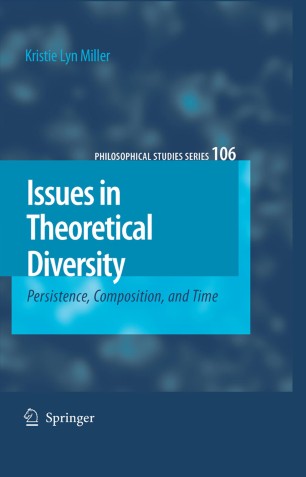
Issues in Theoretical Diversity : Persistence, Composition, and Time
Our world is full of composite objects that persist through time: dogs, persons, chairs and rocks. But in virtue of what do a bunch of little objects get to compose some bigger object, and how does that bigger object persist through time? This book aims to answer these questions, but it does so by looking at accounts of composition and persistence through a new methodological lens. It asks the question: what does it take for two theories to be genuinely different, and how can we know whether what seems like metaphysical disagreement is really just semantic disagreement

Ane's Encyclopedic Dictionary of General & Applied Entomology
Keeping the requirements of teachers and researchers in mind, this encyclopedic dictionary presents the terminology in entomology and pest management in the most authentic and comprehensive way. It also includes terms related to the close relatives of insects, such as mites and ticks and some other organisms which are pests of crops.

AI sign language translator
People with disabilities are facing a lot of difficulties every day. Whether it is in social life, work or education environment, or in communication. The effect of assistive technologies in enhancing people with disabilities was huge. Assistive technologies refer to the term of products or related systems that are used to help people with disabilities to maintain or improve functioning and thereby promote well-being. These technologies allow people with difficulties to be more productive in life. Assistive technologies could be in many forms such as wheelchairs, communication products or other forms. In the communication products, many efforts have been made to develop systems or devices that assist individuals who have difficulty understanding and producing speech.
