



الصفحة 1
الصفحة 1

Modern Genome Annotation : The Biosapiens Network
An accurate description of current scientific developments in the field of bioinformatics and computational implementation is presented by research of the BioSapiens Network of Excellence. Bioinformatics is essential for annotating the structure and function of genes, proteins and the analysis of complete genomes and to molecular biology and biochemistry. Included is an overview of bioinformatics, the full spectrum of genome annotation approaches including; genome analysis and gene prediction, gene regulation analysis and expression, genome variation and QTL analysis, large scale protein annotation of function and structure, annotation and prediction of protein interactions, and the organization and annotation of molecular networks and biochemical pathways. Also covered is a technical framework to organize and represent genome data using the DAS technology and work in the annotation of two large genomic sets: HIV/HCV viral genomes and splicing alternatives potentially encoded in 1% of the human genome.

Human-centered visualization environments : GI-Dagstuhl Research Seminar, Dagstuhl Castle, Germany, March 5-8, 2006, Revised Papers
This tutorial book features an augmented selection of the material presented at the GI-Dagstuhl Research Seminar on Human-Centered Visualization Environments, HCVE 2006, held in Dagstuhl Castle, Germany in March 2006. It presents eight tutorial lectures that are the thoroughly cross-reviewed and revised versions of the summaries and findings presented and discussed at the seminar.

Hepatitis C virus-host interactions and therapeutics : Current insights and future perspectives
The burden of hepatitis C virus (HCV) infection on the public health care system continues to remain significant despite the remarkable progress made in HCV therapeutics in the recent past. There are now almost a dozen oral interferon-free direct-acting antivirals available for the treatment of hepatitis C virus infection. Despite advances in the treatment of HCV, therapeutic gaps remain that are yet to be fully explored. Researchers and scientists still strive to understand virus-host interactions to map the disease’s progression along with extrahepatic manifestations and virus invasion strategies impacting the host’s immune system. This book briefly discusses the biology of HCV infection, virus-host interactions, molecular epidemiology of the infection, and the full spectrum of immune responses to hepatitis C. It also provides in-depth information about HCV, clinical diagnostics, and therapeutic knowledge to all stakeholders involved in HCV screening, diagnosis, treatment, and management.
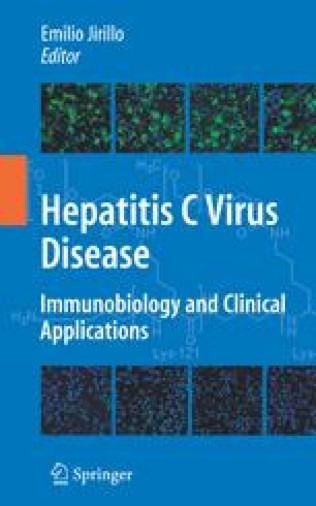
Hepatitis C Virus Disease
Emphasizes the most recent advances on the Hepatitis C virus infection (HCV) moving from basic research to clinical application. In spite of the numerous studies on HCV infection, its pathogenesis and medical treatment have not been fully explained. The first chapters of this volume analyize the full spectrum of immune responses to HCV taking into account either innate or adoptive immunity involvement. The volume also includes a series of contributions which explain the state of art of IFN-alpha treatment in HCV patients and the effectiveness of therapy also in relation to HCV genotypes. The use and applications of pegylated IFNs will also be discussed as well as the complicated HCV disease and its treatment. Hepatitis C Virus Disease: Immunobiology and Clinical Applications is an ideal volume for researchers, scientists, professionals, clinicians, physicians and graduate students in the fields of infectious disease, immunology, virology, microbiology, pharmacology and medicine.

Drug interactions in infectious diseases : Mechanisms and models of drug interactions
Provides a comprehensive review of basic clinical pharmacology with a focus on metabolism and transporter-mediated drug interactions. The chapters address materials that cannot be retrieved easily in the medical literature, including materials focused on the complex interrelationship of acute infection, inflammation, and the risk of drug interactions in the Drug-Cytokine chapter. The Food-Drug and Herb-Drug interactions chapters remain definitive resources. A new chapter on in vitro modeling of drug interactions is included along with updates on design and data analysis of clinical drug interaction studies. Authoritative discussion of models for regulatory decision-making on drug-drug interactions provides the necessary framework to aid antimicrobial drug development. This concise review of the mechanisms and models of drug interactions provides important insights to health care practitioners as well as scientists in drug development

Drug interactions in infectious diseases : Antimicrobial drug interactions
Delivers a quick clinical resource that distills relevant drug interactions by antimicrobial drug class. The book provides informative tables on specific drug-drug interactions that include the degree and severity of the expected interaction. A mechanistic basis for drug-drug interactions is also provided to link observed interactions to pharmacologic characteristics of key drug classes. This complete resource is organized by major antibacterial, antimycobacterial, antiviral, antifungal, antimalarial, and antiprotozoal class. In line with current innovations in antimicrobial drug development, a distinct chapter on the pharmacologic management of drug interactions in hepatitis B virus (HBV) and hepatitis C virus (HCV)-related infections is included. Two new chapters are dedicated to the management of human immunodeficiency virus (HIV) drug-drug interactions given the breadth of antiretroviral class-specific effects. This comprehensive review of known drug interactions and strategies to manage them is an invaluable resource to all health care practitioners.
Advances in Microbiology, Infectious Diseases and Public Health ; Vol.15
Focuses on current progress in the broad field of medical microbiology, and covers both basic and applied topics related to the study of microbes, their interactions with human and animals, and emerging issues relevant for public health. Original research and review articles present and discuss multidisciplinary findings and developments on various aspects of microbiology, infectious diseases, and their diagnosis, treatment and prevention.
