



الصفحة 1
الصفحة 1

Neighbourhoods in Transition : Brownfield Regeneration in European Metropolitan Areas
This book is focused on the intersection between urban brownfields and the sustainability transitions of metreopolitan areas, cities and neighbourhoods. It provides both a theoretical and practical approach to the topic, offering a thorough introduction to urban brownfields and regeneration projects as well as an operational monitoring tool.

Nanotechnology for Smart Concrete
Nanomaterials can markedly improve the mechanical properties of concrete, as well as reduce the porosity and enhance the durability of concrete. The application of nanotechnology in concrete is still in its infancy. However, an ever-growing demand for ultra-high-performance concrete and recurring environmental pollution caused by ordinary Portland cement has encouraged engineers to exploit nanotechnology in the construction industry. Nanotechnology for Smart Concrete discusses the advantages and applications of nanomaterials in the concrete industry, including high-strength performance, microstructural improvement, self-healing, energy storage, and coatings. The book: Analyses the linkage of concrete materials with nanomaterials and nanostructures / Discusses the applications of nanomaterials in the concrete industry, including energy storage in green buildings, anti-corrosive coatings, and inhibiting pathogens and viruses / Covers self-healing concrete / Explores safety considerations, sustainability, and environmental impact of nanoconcrete / Includes an appendix of solved questions

Fundamentals of Integrated Design for Sustainable Building
Introduces the technologies and processes of sustainable design and shows how to incorporate sustainable concepts at every design stage. This comprehensive primer takes an active learning approach that keeps students engaged. Includes: Expansive knowledge—from history and philosophy to technology and practice Fully updated international codes, like the CAL code, and current legislations Up-to-date global practices, such as the tools used for Life-Cycle Assessment Thorough coverage of critical issues such as climate change, resiliency, health, and net zero energy building Extensive design problems, research exercise, study questions, team projects, and discussion questions that get students truly involved with the material

Environmental Challenges in Civil Engineering II
Rports on findings concerning structural material behavior, and new methods and technologies in constructions. A special emphasis is given to sustainable constructions practices, including material recycling and reuse, renovation and restoration of historical building and to those fostering sustainable development of cities and rural areas, and a better integration of buildings with the environment. Offering a good balance of theory and practice, and covering both technical and organizational aspects in civil engineering and architectural projects, this book offers extensive information on solutions and current challenges in construction projects and structural interventions in the context of environmental protection and earthquake prevention.

Ecological and Health Effects of Building Materials
Deals with the present adverse effects of using precarious building materials on the ecology and human health. Also, the detailed discussions on the novel and greener construction materials and their utilization as an alternative to the conventional harmful existing methods and materials are also presented in the subsequent chapters. This book helps to fill the research gaps in the existing prior-art knowledge in the field of sustainable construction and green building materials and methods giving due importance to ecology and health, specifically to the fields of sustainable structural engineering, sustainable geotechnical engineering, sustainable road engineering, etc.

Designing sustainable cities
Emphasizes new ways of designing for a sustainable city and urban environment. From several angles the future of our urbanism is illuminated. From a philosophical point of view, the city is seen as an organism, following complex ecosystemic principles, shining light on indigenous perspectives to become beneficial for sustainable design and core questions are asked whether current architectural practice is really sustainable. Simultaneously concrete practices are presented for cities in transformation, focusing on green infrastructure, smart city principles and health.

Dense + Green cities : Architecture as urban ecosystem
In which ways does a "green building" contribute to the ecology of its surroundings? And how can ecologically designed urban districts, with their green and blue networks, link up with the elements and technologies of building design? All dimensions of "green building" are investigated in this book in an effort to understand and evaluate some of the most recent and innovative Dense+Green Cities in Asia, the Americas and Europe.

Creating Healthy and Sustainable Buildings : An Assessment of Health Risk Factors
The book discusses human health and wellbeing within the context of built environments. It provides a comprehensive overview of relevant sources of literature and user complaints that clearly demonstrate the consequences of lack of attention to health in current building design and planning. Current designing of energy-efficient buildings is mainly focused on looking at energy problems and not on addressing health. Therefore, even green buildings that place environmental aspects above health issues can be uncomfortable and unhealthy, and can lead to public health problems. They point to the need for public health specialists, engineers and planners to come together and review built environments for human wellbeing and environmental sustainability. The authors therefore present a tool for holistic decision-making processes, leading to short- and long-term benefits for people and their environment.
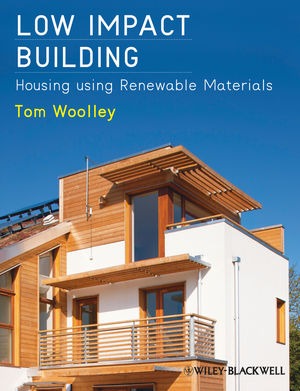
Low impact building : Housing using renewable materials
Guides to the designs, technologies and materials that really make green buildings work will help architects, specifiers and clients make informed choices, based on reliable technical information. Low Impact Building: Housing using Renewable Materials is about changing the way we build houses to reduce their 'carbon' footprint and to minimise environmental damage. One of the ways this can be done is by reducing the energy and environmental impact of the materials and resources used to construct buildings by choosing alternative products and systems. In particular, we need to recognise the potential for using natural and renewable construction materials as a way to reduce both carbon emissions but also build in a more benign and healthy way.
Building for well-being : Exploring health-focused rating systems for design and construction professionals
The first introduction to health-focused building standards for design and construction professionals. More than a summary of the state of the field, this practical resource guides designers, builders, developers, and owners through considerations for incorporating WELL®, Fitwel®, and other systems from the planning phase to ground-breaking and beyond.Drawing on the authors’ backgrounds in sustainable design and public health, chapters on the evolution of the green building movement and the relationship between health and the built environment provide vital context for understanding health-focused standards and certifications. The final chapter looks toward the future of health and the built environment.
Building construction illustrated
A leading visual guide to the principles of building construction. Filled with rich illustrations and in-depth content by renowned author Francis D.K. Ching, it offers students and practicing professionals the information needed to understand concepts in residential and commercial construction, architecture, and structural engineering. Includes all new sections on resilient design; diagrids; modular foundation systems; smart façade types and systems; lighting sources and systems; and mass timber materials, cross laminated timber (CLT) and nail laminated timber (NLT) Revised to reflect that latest updates in codes and standards requirements: 2018 International Building Code (IBC), LEED v4, and CSI MasterFormat 2018 Includes updated information on sustainability and green building; insulation materials; stair uses; stoves and inserts; and fire-rated wall and floor assemblies
Bio-based Building Skin
This book provides a compendium of material properties, demonstrates several successful examples of bio-based materials’ application in building facades, and offers ideas for new designs and novel solutions. It features a state-of-the-art review, addresses the latest trends in material selection, assembling systems, and innovative functions of facades in detail. Selected case studies on buildings from diverse locations are subsequently presented to demonstrate the successful implementation of various biomaterial solutions, which defines unique architectural styles and building functions. The structures, morphologies and aesthetic impressions related to bio-based building facades are discussed from the perspective of art and innovation; essential factors influencing the performance of materials with respect to functionality and safety are also presented. Special emphasis is placed on assessing the performance of a given facade throughout the service life of a building, and after its end.
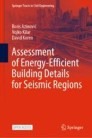
Assessment of Energy-Efficient Building Details for Seismic Regions
Presents a methodology for the assessment of structural building details, taking into account the contemporary guidelines for earthquake-resistant and energy-efficient buildings. A review of structural details for energy-efficient buildings revealed that in some cases the structural system is interrupted, leading to solutions which are not suitable for earthquake-prone regions. Such typical examples would be the use of thermal insulation under the building foundation and reduction of the load-bearing elements’ dimensions – also at the potential locations of plastic hinges which are crucial for the dissipation of seismic energy.
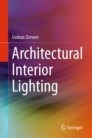
Architectural interior lighting
Essential guide to creating well-lit, visually appealing interior spaces. The book begins with an overview of light and color theory, lighting fundamentals, and design principles. It then covers artificial, natural, decorative, and professional lighting in interior design, as well as standards and regulations, controls and systems, sustainable lighting, energy efficiency, light pollution reduction, and the use of environmentally friendly materials. With a focus on practical applications and real-world examples, this book provides readers with the tools and knowledge necessary to achieve their design goals while considering the latest trends and techniques in the field. A valuable resource for professionals and students in architecture and lighting design, it will also appeal to anyone interested in creating visually stunning and functional interior spaces.

Advances in civil engineering materials : Selected articles from the 6th International Conference on architecture and civil engineering (ICACE 2022), August 2022, Kuala Lumpur, Malaysia
Presents selected articles from the 6th International Conference on Architecture and Civil Engineering 2022 (ICACE 2022), held in Malaysia. Written by leading researchers and industry professionals, the papers highlight recent advances and addresses current issues in the fields of civil engineering and architecture.
