



الصفحة 1
الصفحة 1

Mobile health technologies for ambient assisted living and healthcare
The use of telemedicine and mobile devices is growing, and sensors might aid in creating creative solutions. Developing these solutions is crucial for monitoring senior citizens, lifestyles, and medical procedures. The development of assistive technology for various users to follow sports and other activities is strongly tied to this study area. Data protection is crucial, and the development of these solutions for medical uses should be verified. The security and privacy of the information may be tied to other recognized research projects for their acceptability. ICT research has considerably improved quality of life and has fully assimilated all citizens into society through medical rehabilitation and assistive technology. The technologies and research fields that influence medical informatics include databases, networking, graphical user interfaces, data mining, machine learning, intelligent decision support systems, and specialized programming languages.

Introduction to Computational Biology : An Evolutionary Approach
Molecular biology has changed dramatically over the past two decades. Until the early 1990s genes were studied one at a time by small teams of researchers; today entire genomes are sequenced by internationally collaborating laboratories. In the bygone gene-centered era the accumulation of data was the rate-limiting step in research. Now that step is often data interpretation. This is increasingly dependent on computational methods and as a consequence, computational biology has emerged in the past decade as a new subdiscipline of biology. This introduction to computational biology is centered on the analysis of molecular sequence data. There are two closely connected aspects to biological sequences: (i) their relative position in the space of all other sequences, and (ii) their movement through this sequence space in evolutionary time. Accordingly, the first part of the book deals with classical methods of sequence analysis: pairwise alignment, exact string matching, multiple alignment, and hidden Markov models. In the second part evolutionary time takes center stage and phylogenetic reconstruction, the analysis of sequence variation, and the dynamics of genes in populations are explained in detail. In addition, the book contains a computer program with a graphical user interface that allows the reader to experiment with a number of key concepts developed by the authors.
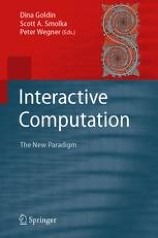
Interactive Computation : The New Paradigm
The interaction paradigm provides a new conceptualization of computational phenomena that emphasizes interaction rather than algorithms, thus reflecting the shift in technology from number-crunching on mainframes to distributed intelligent networks with graphical user interfaces.

Human-computer interaction : Interaction platforms and techniques ; 12th International Conference, HCI International 2007, Beijing, China, July 22-27, 2007, Proceedings, Part II
The 12th International Conference on Human-Computer Interaction, HCI Inter- tional 2007, was held in Beijing, P.R. This volume, edited by Julie A. Jacko, contains papers in the thematic area of Human-Computer Interaction, addressing the following major topics: • Graphical User Interfaces and Visualization • Mobile Devices and Mobile Interaction • Virtual Environments and 3D Interaction • Ubiquitous Interaction • Emerging Interactive Technologies.

Engineering Interactive Systems ; 2nd Conference on Human-Centered Software Engineering, HCSE 2008, and 7th International Workshop on Task Models and Diagrams, TAMODIA 2008, Pisa, Italy, September 25-26, 2008. Proceedings
This book constitutes the combined proceedings of the second working conference on Human-Centred Software Engineering (HCSE 2008) and the 6th International Workshop on TAsk MOdels and DIAgrams (TAMODIA 2008); jointly held as EIS 2008, the international event on Engineering Interactive Systems, in Pisa, Italy, in September 2008.
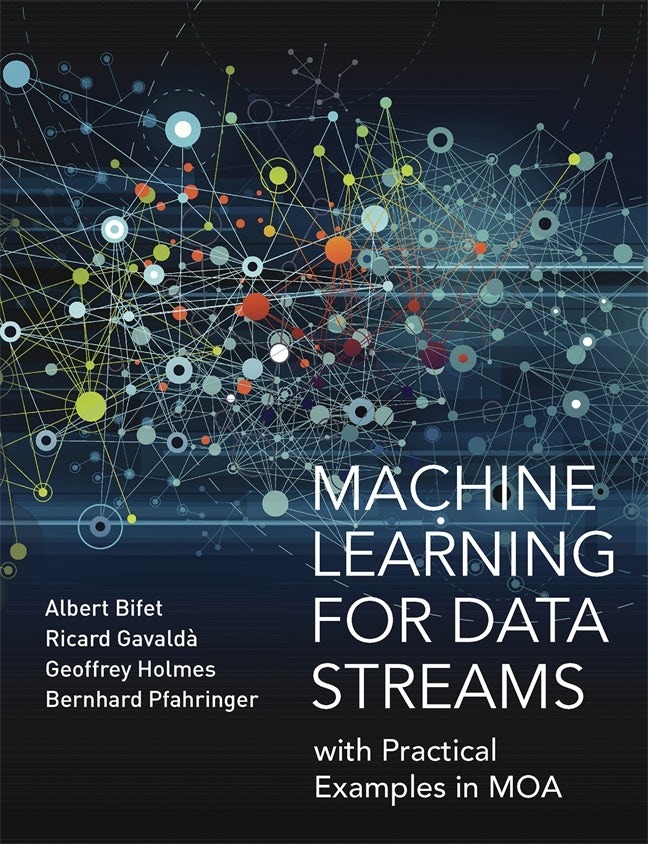
Machine learning for data streams : With practical examples in MOA
The book first offers a brief introduction to the topic, covering big data mining, basic methodologies for mining data streams, and a simple example of MOA. More detailed discussions follow, with chapters on sketching techniques, change, classification, ensemble methods, regression, clustering, and frequent pattern mining. Most of these chapters include exercises, an MOA-based lab session, or both. Finally, the book discusses the MOA software, covering the MOA graphical user interface, the command line, use of its API, and the development of new methods within MOA.

Java : how to program. Late objects : Introducing Jshell
Introduction to Computers, the Internet and Java / Introduction to Java Applications; Input/Output and Operators / Control Statements: Part 1; Assignment, ++ and Operators / Control Statements: Part 2; Logical Operators / Methods / Arrays and ArrayLists / Introduction to Classes and Objects / Classes and Objects: A Deeper Look / Object-Oriented Programming: Inheritance / Object-Oriented Programming: Polymorphism and Interfaces / Exception Handling: A Deeper Look / JavaFX Graphical User Interfaces / JavaFX GUI / Strings, Characters and Regular Expressions / Files, Input/Output Streams, NIO and XML Serialization / Generic Collections / Lambdas and Streams / Recursion / Searching, Sorting and Big O / Generic Classes and Methods: A Deeper Look / Custom Generic Data Structures / JavaFX Graphics and Multimedia / Concurrency / Accessing Databases with JDBC / Introduction to JShell: Java 9's REPL for Interactive Java

Beginning Object-Oriented Programming with VB 2005 : From novice to professional
Beginning Object-Oriented Programming with VB 2005 is a comprehensive resource of correct coding procedures. Author Daniel Clark takes you through all the stages of a programming project, including analysis, modeling, and development, all using object-oriented programming techniques and Visual Basic .NET. Clark explores the structure of classes and their hierarchies, as well as inheritance and interfaces. He also introduces the .NET Framework and the Visual Studio integrated development environment, or IDE. A real-world case study walks you through the design of a solution. You can then transform the design into a functional VB .NET application. The application includes a graphical user interface (GUI), a business logic class library, and integration with a back-end database. Throughout the book, you'll explore the fundamentals of software design, object-oriented programming, Visual Basic .NET 2.0, and the Unified Modeling Language (UML).
