



الصفحة 1
الصفحة 1

Neo-Liberalism, State Power and Global Governance
Part One explores the pattern of national differences in the exercise of state power in a variety of industrialized and developing economies, despite the pressure to converge towards the dominant neo-liberal paradigm. Part Two analyses a variety of trans-national policy prescriptions for neo-liberalism and state power. Part Three explores whether the governance of labour markets is a special case in the global economy. Part Four sets out the need for institutional reform of the neo-liberal order in trade and finance. The volume concludes that there is the prospect of a more plural approach to state power and global governance, and one that recognizes the importance of the public domain of citizenship for delivering the global public goods of security, prosperity and environmental sustainability in the twenty-first century.

Multinational Enterprises, Foreign Direct Investment and Growth in Africa : South African Perspectives
How can Africa, the world’s most lagging region, benefit from globalisation and achieve sustained economic growth? Africa needs greater investment by Multinational Enterprises (MNEs) to improve competitiveness and generate more growth through positive spill-over effects. Despite the fact that Africa’s returns on investment averaged 29% since 1990, Africa has gained merely 1% of global Foreign Direct Investment (FDI) flows. The challenge for African countries is how to be a more desirable destination for FDI. The study integrates three currents of economic research, namely from the literature on (endogenous) economic growth, convergence and regional integration, the explanations for Africa’s poor growth and the growing understanding of the role of MNEs in a global economy. The empirical side of the book is based on an econometric study of the determinants of FDI in Africa as well as a detailed firm-level survey conducted in 2000.

Measuring Globalisation : Gauging Its Consequences
Globalization a timely and controversial topic Presents comprehensive synthesis/overview of perspectives/approaches to "globalization", defines the term in more objective, scientific terms Presents rigorous empirical measures of globalization and its economic, political and social impact, w/implications for management and policy Authors represent different theoretical perspectives; are prolific and well-respected in the field

International business
Provides thorough coverage, delving into fundamental concepts and theory; the cultural, political, and economic environment; international business strategies; and even functional management areas. More comprehensive than competing books, this new edition of International Business includes: New chapter on the digitalization of the global economy and its implications for firm strategy and organizations New examinations of the forces of de-globalization, implications of rising trade protectionism, challenges of geopolitical conflicts, and a friction framework for understanding the effects of cultural differences Enriched and expanded discussions about potential reconfigurations of global value chains following the Covid-19 pandemic, changing perspectives on the role of the government with renewed attention to industrial policy, shifts in regional integration with the emergence of such new trade blocks as CPTPP and RCEP, and fresh insights on factors influencing a country's balance of payments Strengthened, expanded global cases, examples, and "industry" and "country" mini-cases that give students practical insight into the ways companies actually behave within a competitive, global environment.

Intelligent drugs : How AI is transforming healthcare
The progress of biotechnologies and artificial intelligence allowed the development of vaccines in less than a year, thus saving millions of human lives and preserving the global economy. The emergence of intelligent drugs is highlighted, with the promise of ultra-targeted, more effective, and safer treatments against a wide range of diseases. Personalized medicine then becomes realistic, with computer-designed drugs, perfectly adapted to each individual, tested on virtual patients before their real use. In the near future, thanks to AI, new drugs will improve physical performance, stimulate cognitive abilities, prevent diseases, and slow down aging.

Globalization from the Bottom Up : A Blueprint for Modern Capitalism
This book argues that concentration of wealth is not sustainable. It offers an alternative model, a philosophy of "social capitalism" that is grounded in a bottom-up approach to wealth creation and presents a view of a more inclusive and sustainable future.

Fundamentals and Methods of Machine and Deep Learning : Algorithms, Tools, and Applications
provides a practical approach by explaining the concepts of machine learning and deep learning algorithms, evaluation of methodology advances, and algorithm demonstrations with applications. In recent research studies, they are regarded as one of the disruptive technologies that will transform our future life, business, and the global economy. The recent explosion of digital data in a wide variety of domains, including science, engineering, Internet of Things, biomedical, healthcare, and many business sectors, has declared the era of big data, which cannot be analysed by classical statistics but by the more modern, robust machine learning and deep learning techniques. Since machine learning learns from data rather than by programming hard-coded decision rules, an attempt is being made to use machine learning to make computers that are able to solve problems like human experts in the field.

Financial crisis management and democracy : Lessons from Europe and Latin America
This book discusses financial crisis management and policy in Europe and Latin America, with a special focus on equity and democracy. Based on a three-year research project by the Jean Monnet Network, this volume takes an interdisciplinary, comparative approach, analyzing both the role and impact of the EU and regional organizations in Latin America on crisis management as well as the consequences of crisis on the process of European integration and on Latin America’s regionalism.

Europes Automotive Industry on the Move : Competitiveness in a Changing World
The automotive industry is a major pillar of the modern global economy and one of Europe’s key industries. There can hardly be any doubt about the important role of this sector as an engine for employment, growth and innovation in Europe, and there are crucial challenges and opportunities ahead. The authors shed light on a broad range of issues – globalisation and restructuring, trade and foreign direct investment, innovation, regulation, and industry policy – and put a special focus on the new member states. While change may be inevitable, progress is not. This book shall serve as a map to all stakeholders: business executives and policy makers, investors and scholars.

Emerging Threats to Energy Security and Stability; Proceedings of the NATO Advanced Research Workshop on Emerging Threats to Energy Security and Stability, London, United Kingdom, from 23 to 25 January 2004
In particular, it sought to assess emerging threats to energy security and stability and discuss new security strategies to protect global energy supplies from regional instability and terrorism. The format involved a wide-ranging international group of poli- formers and advisers from NATO, Partner and other countries, in a unique forum for intensive expert discussion. Background The international community is increasingly conscious of the need to develop new energy security strategies in order to protect global energy supplies from regional instability and terrorism. Energy security is a vital element in international stability. However, a variety of energy-related economic, technical, and military/political factors pose serious challenges to the international community’s pursuit of energy security and stability: The global economy is expected to continue to be largely dependent on oil and gas for the next twenty to thirty years.

Curriculum Reform in the European Schools : Towards a 21st Century Vision
Examines the modern role of the European School system within the European Union, at a time when the global economy demands a new vision for contemporary education. The European schools are currently in a state of crisis: their 60-year-old tradition of bilingual and multilingual education is being strained by rapid EU expansion and the removal of English speaking teachers as a result of Brexit. Their tried and tested model of mathematics and science education has rapidly been overtaken by new developments in pedagogy and assessment research, while recruitment and retention of students and teachers has become increasingly fraught as European member states review what they are, and what they are not, prepared to fund. The authors draw on original and empirical research to assess the European Schools’ place in a new Europe where the entire post-war European Project is potentially at risk. This well-researched volume will be of interest to practitioners working in European schools as well as students and scholars of EU politics and international education.
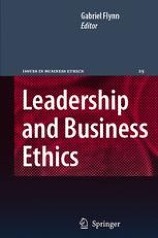
Leadership and Business Ethics ; 1st ed.
Seeks to contribute to a more adequate coalescence of ethics and business with innovative models for such coalescence, for the mutual benefit of business ethicists, professors teaching in the undergraduate and MBA classroom, corporate executives, and businesspeople. While each of the contributions in this collection is distinct, each invites us to examine our own mind sets about corporate responsibility and the future of free enterprise as Western multinational corporations expand into a global economy. This collection of essays helps to refocus our conceptual work about commerce and business practices in this new century of global enterprise.

Classification of covid-19 in lung images
The novel coronavirus 2019 (COVID-2019), which first appeared in Wuhan city of China in December 2019, spread rapidly around the world and became a pandemic. It has caused a devastating effect on both daily lives, public health, and the global economy. It is critical to detect the positive cases as early as possible so as to prevent the further spread of this epidemic and to quickly treat affected patients. The need for auxiliary diagnostic tools has increased as there are no accurate automated toolkits available. Recent findings obtained using radiology imaging techniques suggest that such images contain salient information about the COVID-19 virus. Application of advanced artificial intelligence (AI) techniques coupled with radiological imaging can be helpful for the accurate detection of this disease, and can also be assistive to overcome the problem of a lack of specialized physicians in remote villages.
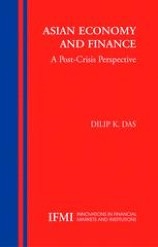
Asian economy and finance : A post-crisis perspective
Topicality of Asian economy has refused to fade for almost four decades; if anything it has been levitating. The Asian economy has changed markedly since the economic and financial crisis of 1997-1998 and is continuing to evolve. As a scholarly subject matter, Asian economy has not stopped attracting academicians, policy mandarins, decision makers in the arena of business and students of Asian economy. The Asian crisis was a cataclysmic event for the region and brought to the surface several systemic limitations, like those in the financial sector, corporate governance, regulatory oversight, legal framework, and exchange rate management. Managers of Asian economy need to get to the bottom of these acutely problematical systemic issues. Additionally, Asian economies need to change with the demands of time and devise their post-crisis development strategy. Asia’s growth model, that served it so well for four decades, is overdue for renewal so that it can re-strengthen its bonds with the ever-evolving regional and global economic reality. The old growth model is likely to be less relevant and effective in the post-crisis future of the Asian economies. It is sure to run into the wall of diminishing returns.
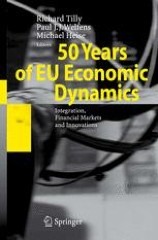
50 Years of EU Economic Dynamics : Integration, Financial Markets and Innovations
On the occasion of the 50th anniversary of the European Union experts present their analyses of historical developments and new economic challenges for the EU. After a reflection on historical dynamics, the contributors point out the dramatic economic shifts between Europe, Asia and the US. Representatives from major central banks (including the ECB), other leading banks, and academia analyze the dynamics of the Eurozone and financial market integration in the context of globalization and economic growth. Furthermore, the authors discuss the challenges of information and communication technologies by means of various country analyses. Moreover, the Schumpeterian prospects for Europe and the Lisbon Agenda, the long-term challenges of EU pension reforms, emission trading systems in the EU, and options for a new EU constitution are highlighted. At the bottom line of this EU analysis are major implications for investors, managers, policy-makers and the public at large in both the EU and the global economy.
