



الصفحة 1
الصفحة 1

On the move to meaningful internet systems 2005 : OTM 2005 Workshops ; OTM Confederated International Workshops and Posters, AWeSOMe, CAMS, GADA. MIOS+INTEROP, ORM, PhDS, SeBGIS. SWWS. and WOSE 2005, Agia Napa, Cyprus, October 31 - November 4, 2005, Proceedings
This book constitutes the joint refereed proceedings of nine international workshops held as part of OTM 2005 in Agia Napa, Cyprus in October/November 2005.The 145 revised full papers presented were carefully reviewed and selected from a total of 268 submissions. Topics addressed are agents, Web services and ontologies merging (AWeSOMe 2005), context-aware mobile systems (CAMS 2005), grid computing and its application to data analysis (GADA 2005), inter-organizational systems and interoperability of enterprise software and applications (MIOS+INTEROP 2005), object-role modeling (ORM 2005), a PHD symposium (PhDS 2005), semantic-based geographical information systems (SeBGIS 2005), Web semantics (SWWS 2005), and ontologies, semantics and e-learning (WOSE 2005)

Observing our Changing Earth ; Proceedings of the 2007 IAG General Assembly, Perugia, Italy, July 2 - 13, 2007
Contains a selection of 99 papers from the International Association of Geodesy (IAG) quadrennial General Assembly, held in Perugia, Italy, from July 2 to 13, 2007, in conjunction with the XXIV General Assembly of the International Union of Geodesy and Geophysics (IUGG).

Nearest Neighbor Search : A Database Perspective
Modern applications are both data and computationally intensive and require the storage and manipulation of voluminous traditional (alphanumeric) and nontraditional data sets (images, text, geometric objects, time-series). Examples of such emerging application domains are: Geographical Information Systems (GIS), Multimedia Information Systems, CAD/CAM, Time-Series Analysis, Medical Information Sstems, On-Line Analytical Processing (OLAP), and Data Mining. These applications pose diverse requirements with respect to the information and the operations that need to be supported. From the database perspective, new techniques and tools therefore need to be developed towards increased processing efficiency. This monograph explores the way spatial database management systems aim at supporting queries that involve the space characteristics of the underlying data, and discusses query processing techniques for nearest neighbor queries. It provides both basic concepts and state-of-the-art results in spatial databases and parallel processing research, and studies numerous applications of nearest neighbor queries.

Integration of Information for Environmental Security : Environmental Security - Information Security - Disaster Forecast and Prevention - Water Resources Management
Currently the necessary information exists in a multitude of forms and formats geographically and physically scattered over different countries, institutes and organisations, and are subject to widely different data policies and management schemes. Moreover, there is no complete and updated overview of the existing information, e.g. in the form of a metadata catalogue. As a result, integration of this information in case of emergencies has proven to be extremely difficult, if not impossible. Although in some cases, interesting and impressive "demonstrations" have been shown of the possibilities of the integration of information, for a number of reasons these have reached the "operational" stage.

Information Fusion and Geographic Information Systems ; Proceedings of the Third International Workshop
This volume contains the papers presented at the International Workshop “Inf- mation Fusion and Geographical Information Systems” (IF&GIS’07) held in St. Petersburg, Russia, 2007. Research in the Geosciences field interprets the concept of Information Fusion as a synonym of an approach that permits research into all the problems and issues which program-makers and scientific researchers are faced with. Thus, topics that are to be covered during the workshop relate to issues such as harmonization, - tegration and information fusion. At the same time the spectrum of problems - der discussion exceeds the current bounds of developing GIS applications. This is a significant modern trend since GIS technology is more often used as an interface in support and decision making systems. As a result, it is difficult to consider Geoinformation Science without considering related scientific directions such as Ontology, Artificial Intelligent Systems and Situation Management.

Headway in Spatial Data Handling ; 13th International Symposium on Spatial Data Handling
For sustainable development, climate change or more simply resource sharing and economic development, this information helps to - cilitate human activities and to foresee the impact of these activities in space as well as, inversely, the impact of space on our lives. The Inter- tional Symposium on Spatial Data Handing (SDH) is a primary research forum where questions related to spatial and temporal modelling and analysis, data integration, visual representation or semantics are raised.

Geospatial Vision : New Dimensions in Cartography
This book reflects the diverse nature of interests of contributors in the field. The GeoCart conferences are held every two years and attract attendees from Australasia and globally. They offer a forum for reflecting on past practices, exploring future possibilities and reporting on the findings of - search undertakings. They make valuable contributions to the theory and praxis of Geoinformation and Cartography.
Geospatial Technologies and Homeland Security : Research Frontiers and Future Challenges
This book presents an overview of the latest development of geospatial technologies (including, but not limited to, GIS, RS, GPS, LBS, spatial analysis and modelling etc.) and their applications in piecing together the complex puzzles facing the challenges of the homeland security research and education. A wide variety of topics, ranging from conceptual and methodological to technical and social/legal issues

GeoSpatial semantics ; 2nd International Conference, GeoS 2007, Mexico City, Mexico, November 29-30, 2007
This paper reports a simple case study of extracting the two types of such hierarchies from formal texts of traffic code. Problems of concurrent use of both hierarchies for ontology reasoning are dis-cussed, particularly, in context of the different views on geospatial ontologies.
Geological atlas of Africa : With notes on stratigraphy, tectonics, economic geology, geohazards, geosites and geoscientific education of each country
T is atlas is intended primarily for anybody who is in-some background for the arrangement of how the terested in basic geology of Africa. Its originality lies atlas was done. T e second chapter is devoted to the in the fact that the regional geology of each African history of geological mapping in Africa, necessary nation or territory is reviewed country-wise by maps for a fuller appreciation of why this work in Africa is and text, a view normally not presented in textbooks worth doing. Chapter 3 provides an executive s- of regional geology. It is my belief, that there has long mary on the stratigraphy and tectonics of Africa as a been a need in universities and geological surveys, whole, i. e. in the context of no political boundaries.

Geodetic and geophysical observations in Antarctica : An overview in the IPY perspective
This book is a collection of papers on various aspects of the scientific investigation and observation techniques of the polar regions at both temporary and permanent observatories. Most papers focus on regional models based on data acquired in polar regions. Geodetic satellite positions systems (GNSS: GPS, GLONASS, GALILEO) will also be discussed as well as other space techniques (DORIS, VLBI). Gravimetry, absolute gravimetry, and tidal gravimetry are also discussed, as well as seismology and meteorology.

Exploratory Analysis of Spatial and Temporal Data : A Systematic Approach
Exploratory data analysis (EDA) is about detecting and describing patterns, trends, and relations in data, motivated by certain purposes of investigation. As something relevant is detected in data, new questions arise, causing specific parts to be viewed in more detail. So EDA has a significant appeal: it involves hypothesis generation rather than mere hypothesis testing.

Earth Observation of Global Change : The Role of Satellite Remote Sensing in Monitoring the Global Environment
Global Change is increasingly considered a critical topic in environmental research. Remote sensing methods provide a relevant tool to monitor global variables, since they offer a systematic coverage of the Earth Surface, at different spatial, spectral and temporal resolutions. The data provided by Earth Observation Satellites are being operationally used for monitoring atmospheric conditions, ice sheets and glaciar movements, crop dynamism and land use changes, deforestation and desertification processes, as well as water conditions. The book includes an analysis of the leading missions in global Earth observation, and then reviews the main fields in which remote sensing methods are providing vital data for global change studies.

Cloud-Resolving Modeling of Convective Processes
Introduces the framework of cloud-resolving model, methodologies for analysis of modeling outputs, and validation of simulations with observations. The book details important scientific findings in the aspects of surface rainfall processes, precipitation efficiency, dynamic and thermodynamic processes associated with tropical convection, diurnal variations, radiative and cloud microphysical processes associated with development of cloud clusters, air-sea coupling on convective scales, climate equilibrium states, and remote sensing applications.
Maritime Spatial Planning : past, present, future
This book is the first comprehensive overview of maritime spatial planning. Situated at the intersection between theory and practice, the volume draws together several strands of interdisciplinary research, reflecting on the history of MSP as well as examining current practice and looking towards the future. The authors and contributors examine MSP from disciplines as diverse as geography, urban planning, political science, natural science, sociology and education; reflecting the growing critical engagement with MSP in many academic fields. This innovative and pioneering volume will be of interest and value to students and scholars of maritime spatial planning, as well as planners and practitioners.
Map-based Mobile Services : Design, Interaction and Usability
It addresses methods and techniques for topics that range from design and rendering, context modelling, personalisation, multimodal interaction to usability test. Instead of striving for a seamless coverage of all essential theoretical and technical issues with an equal depth and extent, we attempt to pinpoint a number of research highlights and representative development activities at universities, research institutions and so- ware industry. The operational prototypes and platforms reported in the book are on the one hand outcome and feasibility proof of various approaches. On the other hand, they serve as a new starting point for the refinement of user interfaces and iterative usability tests.
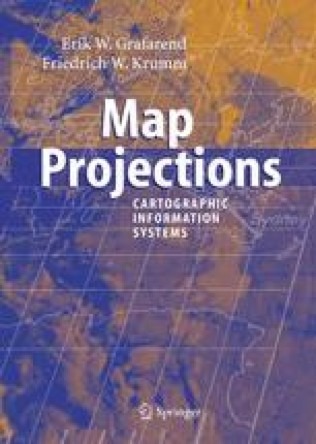
Map Projections : Cartographic Information Systems
In the context of Geographical Information Systems (GIS) the book offers a timely review of map projections (sphere, ellipsoid, rotational surfaces) and geodetic datum transformations. For the needs of photogrammetry, computer vision, and remote sensing space projective mappings are reviewed.

Light Scattering Reviews 3 : Light Scattering and Reflection
Ddevoted to modern knowledge and milestones in both experimental and theoretical techniques related to light scattering and radiative transport problems. It will consist of 3 parts comprising 11 contributions written by world leading experts in their respective fields. The general focus of the book will be on remote sensing of geophysical media. The first part will be devoted exclusively to studies of single light scattering by particles of different shapes and chemical compositions. The first chapter will review in situ measurements of cloud optical characteristics like cloud extinction and phase function, with the emphasis on ice clouds. Chapter 2 will cover opitcally soft particles common in marine environments and bio-suspensions while Chapter 3 will describe numerical techniques applicable not only to isotropic but also to chiral and anisotropic mdia. The final chapter in this part will deal with spatial symmetries in light scattering problems.
Landscape Analysis and Visualisation : Spatial Models for Natural Resource Management and Planning
This book presents a collection and synthesis of many of these perspectives — perhaps it could only be produced in a land urb- ised in the tiniest of pockets, and yet so daunting with respect to the way non-populated landscapes dwarf its cities. Many travel to Australia to its cities and never see the landscapes — but it is these that give the country its power and imagery. It is the landscapes that so impress on us the need to consider how our intervention, through activities ranging from resource exploitation and settled agriculture to climate change, poses one of the greatest crises facing the modern world. In this sense, Australia and its landscape provide a mirror through which we can glimpse the extent to which our intervention in the world threatens its very existence.
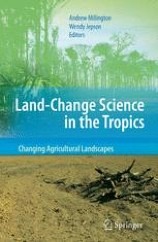
Land-Change Science in the Tropics : Changing Agricultural Landscapes
Land use and land-cover change research over the past decade has focused mainly on contemporary primary land-cover conversions in the tropics and sub-tropics, with considerable resources dedicated to the explanation and prediction of tropical deforestation and often ignoring the dynamism in the world’s agro-pastoral landscapes. This collection integrates cutting-edge research in the social, biogeophysical, and geographical information sciences to understand the human and environmental dynamics that change the type, magnitude and location of land uses and land covers in the changing countryside.This book describes the monitoring of land-cover changes, explains the processes through which land is altered, and describes the development of spatially-explicit models to predict land change. This book illustrates how practitioners have integrated knowledge from the three scientific realms - social, biophysical, and GIScience - that underpin land-change science.
