



الصفحة 1
الصفحة 1

Nonlinear Time Series Analysis in the Geosciences : Applications in Climatology, Geodynamics and Solar-Terrestrial Physics
This book presents recent developments in nonlinear time series which have been motivated by present day problems in geosciences. Modern methods of spatio-temporal data analysis, time-frequency analysis, dimension analysis, nonlinear correlation and synchronization analysis and other nonlinear concepts are used to study emerging questions in climatology, geophysics, solar-terrestrial physics and related scientific disciplines. This volume collects contributions of some of the world's leading experts in geoscientific time series analysis.

Mud volcanoes, geodynamics and seismicity ; Proceedings of the NATO Advanced Research Workshop on mud volcanism, geodynamics and seismicity, Baku, Azerbaijan, from 20 to 22 May 2003
PURPOSE OF PRESENT BOOK During the period May 19-26, 2003 the NATO Advanced Research Workshop (ARW) “Mud volcanism, Geodynamics and Seismicity” was held in Baku. Participants iscussed about different geodynamic features of mud volcanism and participated to field trips oriented to a better knowledge of mud volcanic features. The Meeting focused on many features of mud volcanism occurrence and related geodynamic topics. The purpose of present book is to collect contributions discussed during the Meeting and to fill a marked editorial gap on mud volcanism.

Methods of Celestial Mechanics ; Vol. II : Application to Planetary System, Geodynamics and Satellite Geodesy
G. Beutler's Methods of Celestial Mechanics is a coherent textbook for students as well as an excellent reference for practitioners. Volume II is devoted to the applications and to the presentation of the program system CelestialMechanics. Three major areas of applications are covered: (1) Orbital and rotational motion of extended celestial bodies. The properties of the Earth-Moon system are developed from the simplest case (rigid bodies) to more general cases, including the rotation of an elastic Earth, the rotation of an Earth partly covered by oceans and surrounded by an atmosphere, and the rotation of an Earth composed of a liquid core and a rigid shell (Poincaré model). (2) Artificial Earth Satellites. The oblateness perturbation acting on a satellite and the exploitation of its properties in practice is discussed using simulation methods (CelestialMechanics) and (simplified) first order perturbation methods. The perturbations due to the higher-order terms of the Earth's gravitational potential and resonant perturbations are considered thereafter. Special attention is paid to satellites of the Global Navigation Satellite Systems and to geostationary satellites. The characteristics of and models for the two most important non-gravitational forces, atmospheric drag and radiation pressure, are presented as well as the most relevant forces acting on high- and low-orbiting satellites. (3) Evolution of the Planetary System. The outer planetary system consisting of the planets Jupiter to Pluto is studied over long time intervals using simulation methods and spectral analysis (CelestialMechanics). The properties of the inner systems, in particular of the Earth's orbit, are made visible by integrating the entire system over long time intervals relevant for climate change. The distribution of minor planets and their orbital properties, regular orbits, and chaotic orbits are easily generated and analyzed using CelestialMechanics. The volume concludes with the discussion of important mathematical tools of the program system and of the principles of spectral analysis.

Iceland Geodynamics : Crustal Deformation and Divergent Plate Tectonics
This book provides a summary of geodynamic results from Iceland that presently are found in a great number of scientific articles, but have not been collected before in a book. The ever increasing number of scientists interested in geology and geophysics of Iceland should find the book a "must" to gain knowledge about previous work and the status of knowledge about Iceland.

Geodynamics of the Lithosphere : An Introduction
This second edition of the important introductory text for earth scientists has been thoroughly revised and extended. It contains chapters on heat flow, sedimentary basin modeling, the mechanics of continental deformation, PT path modeling, geomorphology, mass transfer and more.

Continental Scientific Drilling : A Decade of Progress, and Challenges for the Future
Scientific drilling is an indispensable tool of modern Earth science - search, as it provides the only means of obtaining direct information on processes operating at depth. Drilling allows for the determination of - situ properties of solid materials and fluids and permits testing of hypot- ses and models derived from surface observations. In addition, drill holes may be used as a natural laboratory for experiments and as observatories for long-term monitoring of on-going active processes. Earth drilling, therefore, plays a critical role in scientific research directed towards - proved understanding of the workings of our planet and has a key role in solving urgent socio-economic problems. As a rule, drilling projects are an integral component of major geosci- tific research programs, comprising comprehensive pre-site investigations, accompanying laboratory studies, the drilling phase itself, and consecutive measurements and tests in the drill hole. Such drilling programs are costly and thus only realizable to a limited extent. International cost sharing, the optimal utilization of all available resources, the incorporation of inter- tional leading experts, and the application of the existing know-how, as well as the selection of an optimal drilling location (“World Geological Site”), are thus essential elements of an international scientific drilling p- gram.
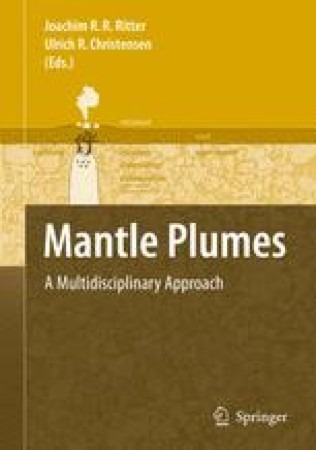
Mantle Plumes : A Multidisciplinary Approach
In this book, a group of experts review these advances in plume research and present a general overview on recent plume studies.
A window on the future of geodesy ; Proceedings of the International Association of Geodesy. IAG General Assembly, Sapporo, Japan June 30 - July 11, 2003
These proceedings represent the worldwide picture of the state of the art of geodesy. The volume comprehensively covers the most recent results and supplies a good review of the new ideas developing in the field, opening a window to the future of geodesy.
