



الصفحة 1
الصفحة 1

Introduction to Relativistic Continuum Mechanics
This mathematically-oriented introduction takes the point of view that students should become familiar, at an early stage, with the physics of relativistic continua and thermodynamics within the framework of special relativity. Therefore, in addition to standard textbook topics such as relativistic kinematics and vacuum electrodynamics, the reader will be thoroughly introduced to relativistic continuum and fluid mechanics. Emphasis in the presentation is on the 3+1 splitting technique, widely used in general relativity for introducing the relative observers point of view.

Gravity, Black Holes, and the Very Early Universe : An Introduction to General Relativity and Cosmology
In the early 1900s, Albert Einstein formulated two theories that would forever change the landscape of physics: the Special Theory of Relativity and the General Theory of Relativity. By 1925, quantum mechanics had been born out of the dissection of these two theories, and shortly after that, relativistic quantum field theory. We now had in place some important ties between the laws of physics and the types of particle interactions the new physics was uncovering. Gravity is one of the four types of forces that are found throughout the universe. In fact, although it is a relatively weak force, it operates at huge distances, and so must be accounted for in any cosmological system. Unfortunately, gravity continues to defy our neat categorization of how all the forces in nature work together.

Gravitation and Experiment : Poincaré Seminar 2006
This book is the sixth in a series of lectures of the S´ eminaire Poincar´ e,whichis directed towards a large audience of physicists and of mathematicians. The goal of this seminar is to provide up-to-date information about general topics of great interest in physics. Both the theoretical and experimental aspects are covered, with some historical background.

General Relativity
this book is a short and concise exposition of the central ideas of general relativity. Although the original audience was made up of mathematics students, the focus is on the chain of reasoning that leads to the relativistic theory from the analysis of distance and time measurements in the presence of gravity, rather than on the underlying mathematical structure. The geometric ideas - which are central to the understanding of the nature of gravity - are introduced in parallel with the development of the theory, the emphasis being on laying bare how one is led to pseudo-Riemannian geometry through a natural process of reconciliation of special relativity with the equivalence principle.

General Relativity
This book offers an alternative to other textbooks on the subject, providing a more specific discussion of numerous general relativistic effects for readers who have knowledge of classical mechanics and electrodynamics, including special relativity. Coverage includes gravitational lensing, signal retardation in the gravitational field of the Sun, the Reissner-Nordström solution, selected spin effects, the resonance transformation of an electromagnetic wave into a gravitational one, and the entropy and temperature of black holes. The book includes numerous problems at various levels of difficulty, making it ideal also for independent study by a broad readership of advanced students and researchers.

Fuchsian Reduction : Applications to Geometry, Cosmology, and Mathematical Physics
Fuchsian reduction is a method for representing solutions of nonlinear PDEs near singularities. The technique has multiple applications including soliton theory, Einstein's equations and cosmology, stellar models, laser collapse, conformal geometry and combustion. Developed in the 1990s for semilinear wave equations, Fuchsian reduction research has grown in response to those problems in pure and applied mathematics where numerical computations fail.

Fluctuations, Information, Gravity and the Quantum Potential
A main theme of the book outlines the role of the quantum potential in quantum mechanics and general relativity and one of its origins via fluctuations formulated in terms of Fisher information. Another theme is the description of various approaches to Bohmian mechanics and their role in quantum mechanics and general relativity. Along the way various approaches to, for instance, the Dirac equation, the Einstein equations, the Klein-Gordon equation, the Maxwell equations and the Schr?dinger equations are described. Statistics and geometry are intertwined in various ways and, among other matters, the aether, cosmology, entropy, fractals, quantum Kaehler geometry, the vacuum and the zero point field are discussed. There is also some speculative material and some original work along with material extracted from over 1000 references and the work is current up to April 2005.

Explorations in Mathematical Physics : The Concepts Behind an Elegant Language
This book takes you on a tour of the main ideas forming the language of modern mathematical physics. Here you will meet novel approaches to concepts such as determinants and geometry, wave function evolution, statistics, signal processing, and three-dimensional rotations. You'll see how the accelerated frames of special relativity tell us about gravity. On the journey, you'll discover how tensor notation relates to vector calculus, how differential geometry is built on intuitive concepts, and how variational calculus leads to field theory. You will meet quantum measurement theory, along with Green functions and the art of complex integration, and finally general relativity and cosmology.

Ernst Equation and Riemann Surfaces : Analytical and Numerical Methods
Exact solutions to Einstein`s equations have been useful for the understanding of general relativity in many respects. They have led to physical concepts as black holes and event horizons and helped to visualize interesting features of the theory. In addition they have been used to test the quality of various approximation methods and numerical codes. The most powerful solution generation methods are due to the theory of Integrable Systems. In the case of axisymmetric stationary spacetimes the Einstein equations are equivalent to the completely integrable Ernst equation. In this volume the solutions to the Ernst equation associated to Riemann surfaces are studied in detail and physical and mathematical aspects of this class are discussed both analytically and numerically.

Einsteins Spacetime : An Introduction to Special and General Relativity
Einstein's Space-Time: An Introduction to Special and General Relativity is a textbook addressed to students in physics and other people interested in Relativity and a history of physics. The book contains a complete account of Special Relativity that begins with the historical analysis of the reasons that led to a change in our manner of regarding the space and time.

Einsteins General Theory of Relativity : With Modern Applications in Cosmology
Einstein’s General Theory of Relativity: With Modern Applications in Cosmology by Oyvind Gron and Sigbjorn Hervik is about gravity and the concept of gravity as Albert Einstein saw it- curved spaces, four-dimensional manifolds and geodesics. The book starts with the 1st principals of relativity and an introduction to Einstein’s field equations. Next up are the three classical tests of the relativity theory and an introduction to black holes.

Einsteins Enigma or Black Holes in My Bubble Bath
Einstein's Enigma or Black Holes in My Bubble Bath tells the story of gravitation theory from the early historic origins to the latest developments in astrophysics, focusing on Albert Einstein's theory of general relativity and black-hole physics. Through engaging conversations and napkin-scribbled diagrams come tumbling the rudiments of relativity, spacetime and much of modern physics, narrated with high didactic and literary talent, and each embedded in casual lessons given by a worldly astrophysicist to his friend Alfie, a freelance organiser of proposals. Join the intellectual fun and exalt in the frothy ideas while vicariously taking relaxing baths in this magical bathtub.
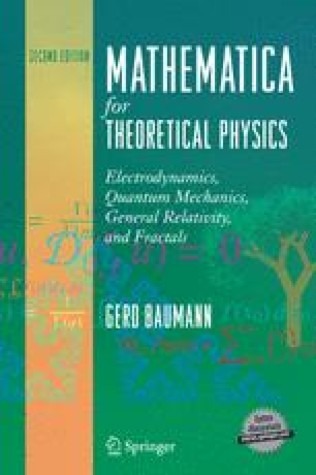
Mathematica for Theoretical Physics : Electrodynamics, Quantum Mechanics, General Relativity, and Fractals
Mathematica for Theoretical Physics: Electrodynamics, Quantum Mechanics, General Relativity, and Fractals This second edition of Baumann's Mathematica® in Theoretical Physics shows readers how to solve physical problems and deal with their underlying theoretical concepts while using Mathematica® to derive numeric and symbolic solutions. Each example and calculation can be evaluated by the reader, and the reader can change the example calculations and adopt the given code to related or similar problems. The second edition has been completely revised and expanded into two volumes: The first volume covers classical mechanics and nonlinear dynamics. Both topics are the basis of a regular mechanics course. The second volume covers electrodynamics, quantum mechanics, relativity, and fractals and fractional calculus. New examples have been added and the representation has been reworked to provide a more interactive problem-solving presentation. This book can be used as a textbook or as a reference work, by students and researchers alike. A brief glossary of terms and functions is contained in the appendices.
Lasers, Clocks and Drag-Free Control : Exploration of Relativistic Gravity in Space
Over the next decade the gravitational physics community will benefit from dramatic improvements in many technologies critical to testing gravity. Highly accurate deep space navigation, interplanetary laser communication, interferometry and metrology, high precision frequency standards, precise pointing and attitude control, together with drag-free technologies, will revolutionize the field of experimental gravitational physics. The centennial of the general theory of relativity in 2015 will motivate a significant number of experiments designed to test this theory with unprecedented accuracy.
Compact objects in astrophysics : White dwarfs, neutron stars and Black Holes
Camenzind's Compact Objects in Astrophysics gives a comprehensive introduction and up-to-date overview about the physical processes behind these objects, covering the field from the beginning to most recent results, including all relevant observations.

Buchi neri nel mio bagno di schiuma : L’enigma di Einstein = Black holes in my bubble bath : Einstein's riddle
Einstein's Enigma, or black holes in my foam bath, tells the story of the theory of gravitation, from its beginnings to the latest developments in astrophysics, focusing on Albert Einstein's theory of general relativity and the physics of black holes. Through engaging conversations and diagrams scribbled on paper napkins, the rudiments of relativity, space-time and many aspects of modern physics follow one another. In skits narrated with pedagogical skill and remarkable literary talent, the reader will come across the informal lessons that a cosmopolitan astrophysicist gives to his friend Alfie, a free lance organizer of research projects. Join in the intellectual fun and get excited with sparkling ideas, while with your imagination you enjoy a relaxing soak in this magical tub!
Approaches to Fundamental Physics : An Assessment of Current Theoretical Ideas
This book presents contributions on particle theory, quantum field theory, general relativity, quantum gravity, string theory and cosmology. These represent the outcome of numerous discussions, taking place among the authors over a period of several years, about the research landscape of present-day fundamental theoretical physics. Indeed, the resultant book documents their attempt, out of their respective and highly specialized scientific positions, to find a way of communicating about methods, achievements and promises of the different approaches which shape the development of this field. It is therefore also an attempt to elucidate the connections between these approaches, and present them not as disjoint ventures but rather as facets of a common quest for understanding. Readers interested in fundamental approaches of theoretical physics will find this book highly stimulating and enlightening.
Analytical and Numerical Approaches to Mathematical Relativity
This book contains a representative collection of surveys by experts in mathematical relativity writing about the current status of, and problems in, their fields. There are four contributions for each of the following mathematical areas: differential geometry and differential topology, analytical methods and differential equations, and numerical methods. This book addresses graduate students and specialist researchers alike.
An Introduction to the Relativistic Theory of Gravitation
The geometric interpretation of gravitation is one of the major foundations of modern theoretical physics. This primer introduces classical general relativity with emphasis on the clarity of conceptual structure and on the basic mathematical methods to build up systematically application skills. The wealth of physical phenomena entailed by the Einstein‘s equations is revealed with the help of specific models describing gravitomagnetism, gravitational waves, cosmology, gravitational collapse and black holes. End-of-chapter exercises complete the main text.
An Introduction to Manifolds
Manifolds, the higher-dimensional analogs of smooth curves and surfaces, are fundamental objects in modern mathematics. Combining aspects of algebra, topology, and analysis, manifolds have also been applied to classical mechanics, general relativity, and quantum field theory. In this streamlined introduction to the subject, the theory of manifolds is presented with the aim of helping the reader achieve a rapid mastery of the essential topics. By the end of the book the reader should be able to compute, at least for simple spaces, one of the most basic topological invariants of a manifold, its de Rham cohomology. Along the way the reader acquires the knowledge and skills necessary for further study of geometry and topology.
