



الصفحة 1
الصفحة 1

International law ; 5th ed.
An authoritative and comprehensive introduction to the subject for students and practitioners alike. Latest developments in the field are incorporated, including a new chapter on Inter-state Courts and Tribunals as well as fully updated information on international laws and institutions.

Global antitrust and sustainability : Law, economics, enforcement
Investigates how competition law and competition authorities around the world deal with sustainability. It covers, economics, law, and enforcement matters. The book also sets out the basics of the concept of sustainability that are necessary for competition lawyers to work with such matters. It explores what economics has to say about the relationship between sustainability and competition.

General principles of law : the role of the judiciary
Examines the role played by domestic and international judges in the “flexibilization” of legal systems through general principles. It features revised papers that were presented at the Annual Conference of the European-American Consortium for Legal Education, held at the University of Parma.The second section contains studies on the role of general principles in selected legal systems, including International Law, European Union Law as well as Common Law systems.

Examples & explanations for criminal law
Offers hypothetical questions complemented by detailed explanations that allow you to test your knowledge of the topics in your courses and compare your own analysis. Here's why you need an E & E to help you study throughout the semester: Clear explanations of each class topic.

Courts, politics and constitutional law : judicialization of politics and politicization of the judiciary
Examines how the judicialization of politics, and the politicization of courts, affect representative democracy, rule of law and separation of powers. This volume critically assesses the phenomena of judicialization of politics and politicization of the judiciary. It explores the rising impact of courts on key constitutional principles, such as democracy and separation of powers, which is paralleled by increasing criticism of this influence from both liberal and illiberal perspectives. The book also addresses the challenges to rule of law as a principle, preconditioned on independent and powerful courts, which are triggered by both democratic backsliding and the mushrooming of populist constitutionalism and illiberal constitutional regimes.
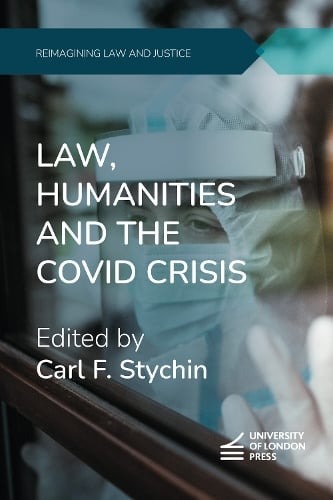
Law, Humanities and the COVID Crisis
Seeks to address the immediacy of COVID-19 by focusing on the implications of the virus in a wider interdisciplinary context Law, Humanities and the COVID Crisis</i> sets out a framework for understanding the COVID-19 virus beyond its epidemiological constraints, asking us to question the very definition of what it means to be human. Researchers from around the world offer their critical reflections on the past, present, and future of this period of sociocultural upheaval and the tremendous suffering that has laid bare fundamental imbalances in our society.
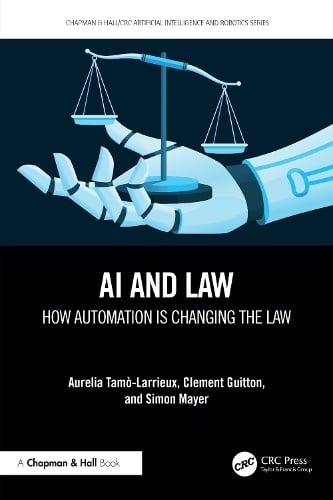
AI and law : How automation is changing the law
Provides insights into how AI is changing legal practice, government processes, and individuals’ access to those processes, encouraging each of us to consider how technological advances are changing the legal system. Particularly, and distinct from current debates on how to regulate AI, this books focuses on how the progressive merger between computational methods and legal rules changes the very structure and application of the law itself.
