



الصفحة 1
الصفحة 1

Nicotine addiction and its treatment = إدمان النيكوتين وكيفية علاجه
Nicotine is the main cause of smoking addiction, and the custom of preparation for smoking itself and smell of cigarettes create addictive behavior among smokers. Today, nicotine is socially most widely accepted legal drug in the world, and its uptake into the organism through the respiratory tract is 10 times stronger than heroin. Addiction and necessity for cigarettes are constant and intense, and the treatment for smoking addicts is long and difficult. Smoking is a worldwide epidemic, which is closely connected to other addictions such as coffee, alcohol, drugs, and gambling. Smoking cessation is associated with clear health benefits. Cigarette smoking is the leading preventable cause of death in worldwide. In this project we will discuss the nicotine, the mechanism of its addiction and medications used for smoking cessation

In the Pursuit of Winning : Problem Gambling Theory, Research and Treatment
Poker websites. State lotteries. Sports betting. As gambling outlets become easier to find, more—and younger—people are risking their finances, family lives, and health. In the Pursuit of Winning brings together an international panel of 35 experts to present theoretical, clinical, sociological, historical, and spiritual perspectives on problem gambling, and test popular addiction and disease models in the field. Early chapters examine the general psychology of gambling, before moving on to the irrational ideas associated with compulsive wagering, from belief in luck to illusions of control. The seven chapters in the second half are devoted to evidence-based interventions from a variety of clinical orientations. Case examples, Q&A sections, and a glossary add extra readability to the coverage.

Games Without Frontiers? : Socio-historical Perspectives at the Gaming/Gambling Intersection
This book focuses on how and why digital games and gambling are increasingly intertwined and asks “does this matter?” Looking at how “loot boxes” became the poster child for the convergence of gambling and gaming, Wardle traces how we got here. She argues that the intersection between gambling and gaming cultures has a long lineage, one that can be traced back throughout the 20th century but also incorporates more recent trends like the poker boom of the 1990s, the development of social media gambling products and the development of skin betting markets.

Gambling Problems in Youth : Theoretical and Applied Perspectives
Howard J. Shaffer, Ph. D. More than 20 years ago, I first noted that young people in North America were growing up in a context of legalized gambling for their entire lifetime. By the 1980s, for young people, gambling had become an average and expectable part of the social landscape. Amid legal opportunities to gamble in all but two of the United States and with illicit opportunities to gamble in every state, gambling is now ubiquitous in America. With few social sa- tions to limit a young person’s interest in gambling—like their adult co- terparts—young people now gamble in larger numbers and for seemingly higher stakes

Fragmented Intimacy : Addiction in a Social World
Fragmented Intimacy transcends familiar concepts of addiction by focusing not on addicts in isolation but on the social contexts that are disrupted and on the struggle that affects all those involved as they attempt to regroup and initiate change. Applicable to drugs, alcohol, and gambling, this engagingly written book offers both innovative theory and practice-strengthening interventions.

Cybercrimes and financial crimes in the global era
Presents the latest and most relevant studies, surveys, and succinct reviews in the field of financial crimes and cybercrime, conducted and gathered by a group of top professionals, scholars, and researchers from China, India, Spain, Italy, Poland, Germany, and Russia. Focusing on the threats posed by and corresponding approaches to controlling financial crime and cybercrime, management.
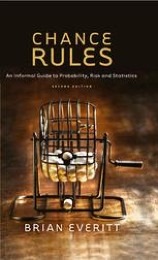
Chance Rules : An informal guide to probability, risk and statistics
This second edition of Chance Rules again recounts the story of chance through history and the various ways it impacts on our lives. Here you can read about the earliest gamblers who thought that the fall of the dice was controlled by the gods, as well as the modern geneticist and quantum theory researcher trying to integrate aspects of probability into their chosen speciality. Example included in the first addition such as the infamous Monty Hall problem, tossing coins, coincidences, horse racing, birthdays and babies remain, often with an expanded discussion, in this edition. Additional material in the second edition includes, a probabilistic explanation of why things were better when you were younger, consideration of whether you can use probability to prove the existence of God, how long you may have to wait to win the lottery, some court room dramas, predicting the future, and how evolution scores over creationism. Chance Rules lets you learn about probability without complex mathematics.
