



الصفحة 1
الصفحة 1

Io After Galileo : A New View of Jupiter’s Volcanic Moon
A New View of Jupiter’s Volcanic Moon is the first book dedicated to this unique satellite, and it does justice to Io’s dubious charms.a thoughtful collection of articles ranging from the history of Io exploration through the satellite’s remarkable and hostile surface geology to its interaction with the harsh Jovian environment.

Intel® Galileo and Intel® Galileo Gen 2 : API Features and Arduino Projects for Linux Programmers
ntel® Galileo and Intel® Galileo Gen 2: API Features and Arduino Projects for Linux Programmers provides detailed information about Intel® Galileo and Intel® Galileo Gen 2 boards for all software developers interested in Arduino and the Linux platform. The book covers the new Arduino APIs and is an introduction for developers on natively using Linux.

Geodetic and geophysical observations in Antarctica : An overview in the IPY perspective
This book is a collection of papers on various aspects of the scientific investigation and observation techniques of the polar regions at both temporary and permanent observatories. Most papers focus on regional models based on data acquired in polar regions. Geodetic satellite positions systems (GNSS: GPS, GLONASS, GALILEO) will also be discussed as well as other space techniques (DORIS, VLBI). Gravimetry, absolute gravimetry, and tidal gravimetry are also discussed, as well as seismology and meteorology.

Galileo Galilei - When the World Stood Still
"I, Galileo, son of the late Vincenzio Galilei, Florentine, aged seventy years ...kneeling before you Most Eminent and Reverend Lord Cardinals ...I abjure, curse, detest the aforesaid errors and heresies."The mathematician and physicist Galileo Galilei is one of the most famous scientists of all times. The story of his life and times, of his epoch-making experiments and discoveries, of his stubbornness and pride, of his patrons in the house of Medici, of his enemies and friends in their struggle for truth - all is brought vividly to life in this book. Atle Næss has written a gripping account of one of the great figures in European history.

Experiment and Natural Philosophy in Seventeenth-Century Tuscany : The History of the Accademia del Cimento
This work is to counter historiographies that search for the origins of modern science within the experimental practices of Europe’s first scientific institutions, such as the Cimento. It proposes that we should look beyond the experimental rhetoric found in published works, to find that the Cimento academicians were participants in a culture of natural philosophical theorising that existed throughout Europe.

Einsteins Enigma or Black Holes in My Bubble Bath
Einstein's Enigma or Black Holes in My Bubble Bath tells the story of gravitation theory from the early historic origins to the latest developments in astrophysics, focusing on Albert Einstein's theory of general relativity and black-hole physics. Through engaging conversations and napkin-scribbled diagrams come tumbling the rudiments of relativity, spacetime and much of modern physics, narrated with high didactic and literary talent, and each embedded in casual lessons given by a worldly astrophysicist to his friend Alfie, a freelance organiser of proposals. Join the intellectual fun and exalt in the frothy ideas while vicariously taking relaxing baths in this magical bathtub.
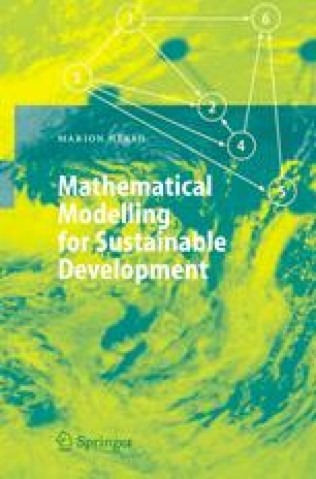
Mathematical Modelling for Sustainable Development
Mathematics needs Sustainable Development. When science was gradually reinvented in European medieval societies, it was legitimised as contributing to the disclosure of God’s divine creation. The conflicts that emerged became well known as a result of the clash between Galileo and the Church. Science found a new legitimacy through recognition that it was a powerful force against superstition. In the Enlightenment the argument was pushed forward by attributing Progress to the advancement of science: science could produce a better world by promoting rationality. In our modern society, science has become intimately linked to technology. Science for its own sake unfortunately rarely has positive outcomes in terms of research grant applications. Meanwhile, science and technology, and the progress they are supposed to produce, meet with wide scale scepticism. We all know of the current global problems: climate change, resource depletion, a thinning ozone layer, space debris, declining biodiversity, malnutrition, dying ecosystems, global inequity, and the risk of unprecedented nuclear wars
A Software-Defined GPS and Galileo Receiver : A Single-Frequency Approach
Satellite navigation receivers are used to receive, process, and decode space-based navigation signals, such as those provided by the GPS constellation of satellites. There is an increasing need for a unified open platform that will enable enhanced receiver development and design, as well as cost-effective testing procedures for various applications. This book provide hands-on exploration of new technologies in this rapidly growing field. One of the unique features of the work is the interactive approach used, giving readers the ability to construct their own Global Navigation Satellite Systems (GNSS) receivers. To construct such a reconfigurable receiver with a wide range of applications, the authors discuss receiver architecture based on software-defined radio (SDR) techniques. The presentation unfolds in a systematic, user-friendly style and goes from the basics to cutting-edge research.
A Comprehensible Universe : The Interplay of Science and Theology
Why is our world comprehensible? This question seems so trivial that few people have dared to ask it. In this book we explore the deep roots of the mystery of rationality. The inquiry into the rationality of the world began over two-and-a-half-thousand years ago, when a few courageous people tried to understand the world with the help of reason alone, rejecting the comforting fabric of myth and legend.
