



الصفحة 1
الصفحة 1

Observation of the Earth System from Space
A special highlight is the - termination of seasonal gravity variations caused by changes in continental water masses. For GOCE, to be launched in 2006, new gravity field analysis methods are under development and integrated into the ESA processing s- tem. 200,000 GPS radio occultation pro?les, observed by CHAMP, have been processed on an operational basis. They represent new and excellent inf- mation on atmospheric refractivity, temperature and water vapor. These new developments require geodetic space techniques (such as VLBI, SLR, LLR, GPS) to be combined and synchronized as if being one global instrument.

Mathematics and Technology
Mathematics and Technology presents technological applications of mathematics making use of elegant mathematical concepts. The selected subjects consist of: public key cryptography, error correcting codes, the global positioning system (GPS) and cartography, image compression using fractals and the JPEG format, digital recording, robot movement, DNA computing, Google's PageRank algorithm, savings and loans, gamma ray surgery and random number generators. The authors highlight how mathematical modeling, together with the power of mathematical tools, have been crucial for innovation in technology. The exposition is clear, straightforward, motivated by excellent examples, and user-friendly. Numerous exercises at the end of every chapter reinforce the material. An engaging quality is the various historical notes accompanying the mathematical development.

Interactive storytelling ; 1st Joint International Conference on interactive digital storytelling, ICIDS 2008 Erfurt, Germany, November 26-29, 2008 Proceedings
This book constitutes the refereed proceedings of the First Joint International Conference on Interactive Digital Storytelling, ICIDS 2008, held in Erfurt, Germany, in November 2008.The 19 revised full papers, 5 revised short papers, and 5 poster papers presented together with 3 invited lectures and 8 demo papers were carefully reviewed and selected from 62 submission. The papers are organized in topical sections on future perspectives on interactive digital storytelling, interactive storytelling applications, virtual characters and agents, user experience and dramatic immersion, architectures for story generation, models for drama management and interacting with stories, as well as authoring and creation of interactive narrative.

Highway
Our idea was generated as a result of the technical and technological shift in almost all industries and its endorsements in reducing costs, increasing efficiency, and serving a wider range of targeted beneficiaries. Three words this business was built on: TRUST, VALUE, and ETHICS. These words are far more endorsed than what the project might explain in terms of business methods, implementations, and processes, but the real aim whether internally or externally is to share the responsibility of improving our industries with creative, competitive ,and relabel business models that could put companies on the wheel of quality improvement and potentially wider the range of the jobs market.

GPS : Theory, algorithms and applications
This reference and handbook describes Global Positioning System (GPS) theory, algorithms and applications. It is primarily based upon source-code descriptions of the KSGSoft program developed by author at the GFZ in Potsdam. The theory and algorithms are revised and extended for a new development of a multiple functional GPS software. New concepts such as the unified GPS data processing method and ambiguity-ionospheric algorithm, as well as general ambiguity search criteria, are reported for the first time. Mathematically rigorous, the book begins with the basics of coordinate and time systems and satellite orbits, as well as GPS observables, and deals with topics such as physical influences, observation equations, adjustment and filtering, ambiguity resolution, data processing, kinematic positioning, and the determination of perturbed orbits.
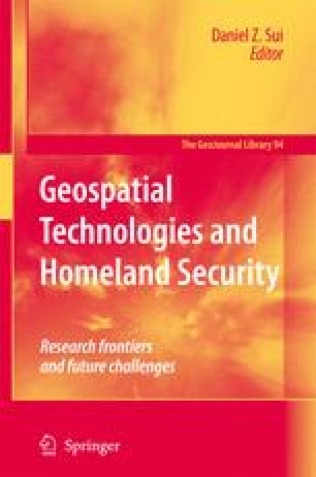
Geospatial Technologies and Homeland Security : Research Frontiers and Future Challenges
This book presents an overview of the latest development of geospatial technologies (including, but not limited to, GIS, RS, GPS, LBS, spatial analysis and modelling etc.) and their applications in piecing together the complex puzzles facing the challenges of the homeland security research and education. A wide variety of topics, ranging from conceptual and methodological to technical and social/legal issues

Geodetic Deformation Monitoring : From Geophysical to Engineering Roles ; IAG Symposium Jaén, Spain, March 7-19,2005
Geodesy is the science dealing with the determination of the position of points in space, the shape and gravity field of the Earth and with their time variations. A consequence is that geodesists feel as a permanent subject of research, the detection, analysis and interpretation of spatial deformation as well as gravity field variation. This book collects 36 selected papers from the International Symposium on Geodetic Deformation Monitoring held in Jaén (Spain) from 17th to 19th March 2005. The main topics covered in the symposium were: mathematical and statistical models for crustal deformation analysis, deformation monitoring from GPS and InSAR data: analysis and geophysical interpretation, geodetic monitoring of movements in civil engineering, integration of spatial and terrestrial techniques in deformation studies, geodynamical applications of gravimetric observations and present-day geodetic instrumentation for deformation monitoring. This volume is a good overview of theoretical matters, models and results.

Geodetic and geophysical observations in Antarctica : An overview in the IPY perspective
This book is a collection of papers on various aspects of the scientific investigation and observation techniques of the polar regions at both temporary and permanent observatories. Most papers focus on regional models based on data acquired in polar regions. Geodetic satellite positions systems (GNSS: GPS, GLONASS, GALILEO) will also be discussed as well as other space techniques (DORIS, VLBI). Gravimetry, absolute gravimetry, and tidal gravimetry are also discussed, as well as seismology and meteorology.

Embedded Computer Systems : Architectures, Modeling, and Simulation ; 8th International Workshop, SAMOS 2008, Samos, Greece, July 21-24, 2008. Proceedings
This book constitutes the refereed proceedings of the 8th International Workshop on Systems, Architectures, Modeling, and Simulation, SAMOS 2008, held in Samos, Greece, in July 2008.

Earth Observation with CHAMP : Results from Three Years in Orbit
In the summer of 2000 the German geo-research satellite CHAMP was launched into orbit. Its innovative payload arrangement and the low initial orbit allow CHAMP to simultaneously collect and almost continuously analyse precise data relating to gravity and magnetic fields at low altitude. In addition, CHAMP also measures the neutral atmosphere and ionosphere using GPS techniques. Three years after launch, more than 200 CHAMP investigators and co-investigators from all over the world met at the GeoForschungsZentrum in Potsdam to present and discuss the results derived from the extensive data sets of the mission. The main outcome of this expert meeting is summarized in this volume. The book offers a comprehensive insight into the present status of the exploitation of CHAMP data for Earth system research and practical applications in geodesy, geophysics and meteorology.

Designing Ubiquitous Information Environments : Socio-Technical Issues and Challenges; IFIP TC8 WG 8.2 International Working Conference, August 1-3, 2005, Cleveland, Ohio, U.S.A.
The book brings in diverse perspectives on ubiquitous information environments, from computer-supported collaborative work, institutional perspective, diffusion of innovation, management, sociology, individual cognition, and software engineering. It also covers a variety of technologies that make up ubiquitous information environments including RFID, wireless grid, GPS, mobile phones, and wireless local area network. The papers cover many contexts of ubiquitous computing including personal use, library, automobile, healthcare, police, professional knowledge work, remote diagnostics of machines, and marketing, attesting to the wide range of potential of ubiquitous information environments.

Computational earthquake physics ; Part II
Exciting developments in earthquake science have benefited from new observations, improved computational technologies, and improved modeling capabilities. Designing realistic supercomputer simulation models for the complete earthquake generation process is a grand scientific challenge due to the complexity of phenomena and range of scales involved from microscopic to global. The present volume - Part II - incorporates computational environment and algorithms, data assimilation and understanding, model applications and iSERVO. Topics covered range from iSERVO and QuakeSim: implementing the international solid earth research virtual observatory by integrating computational grid and geographical information web services; LURR (Load-Unload Response Ratio) described in six papers involving this promising earthquake forecasting model; pattern informatics and phase dynamics and their applications, which was also a highlight in the Workshop; computational algorithms, including continuum damage models and visualization and analysis of geophysical datasets; evolution of mantle material; the state vector approach; and assimilation of data such as geodetic data, GPS data, and seismicity and laboratory experimental data.

Location- and Context-Awareness ; Vol. 3479 ; First International Workshop, LoCA 2005, Oberpfaffenhofen, Germany, May 12-13, 2005, Proceedings
The workshop was organized by the Institute of Communications and Navigation of the German Aerospace Center (DLR) in Oberpfa?enhofen, and the Mobile and Distributed Systems Group of the University of Munich. During the workshop, novel positioning algorithms and location sensing techniques were discussed, comprising not only enhancements of singular systems, like positioning in GSM or WLAN, but also hybrid technologies, such as the integration of global satellite systems with inertial positioning. Furthermore, improvements in sensor technology, as well as the integration and fusion of sensors, were addressed both on a theoretical and on an implementation level. Personal and confidential data, such as location data of users, have p- found implications for personal information privacy. Thus privacy protection, privacy-oriented location-aware systems, and how privacy aspects the feasibility and usefulness of systems were also addressed in the workshop.

Carpooling optimization
The aim of this project is to collect and use the GPS data from mobile devices to get geolocations and translate this data to paths, starting points and destinations to detect patterns out of each individual trajectories that have stochastic nature on the close sight and find representations of those patterns. The second half of the artificial intelligence algorithms has the task of finding the optimal matching of the patterns that were detected in a computation efficient way that achieve the most efficient way of transportation.

Ambient Intelligence ; European Conference, AmI 2008, Nuremberg, Germany, November 19-22, 2008. Proceedings
This book constitutes the refereed proceedings of the Second European Conference on Ambient Intelligence, AmI 2008, held in Nuremberg, Germany, in November 2008.
A Software-Defined GPS and Galileo Receiver : A Single-Frequency Approach
Satellite navigation receivers are used to receive, process, and decode space-based navigation signals, such as those provided by the GPS constellation of satellites. There is an increasing need for a unified open platform that will enable enhanced receiver development and design, as well as cost-effective testing procedures for various applications. This book provide hands-on exploration of new technologies in this rapidly growing field. One of the unique features of the work is the interactive approach used, giving readers the ability to construct their own Global Navigation Satellite Systems (GNSS) receivers. To construct such a reconfigurable receiver with a wide range of applications, the authors discuss receiver architecture based on software-defined radio (SDR) techniques. The presentation unfolds in a systematic, user-friendly style and goes from the basics to cutting-edge research.
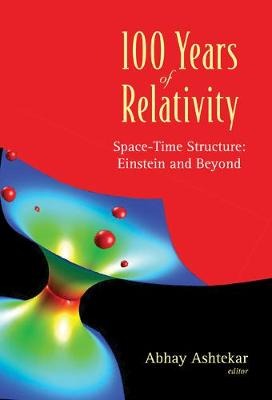
100 years of relativity : Space-time structure - Einstein and beyond
Contains contributions from leading researchers, worldwide, who have thought deeply about the nature and consequences of this interplay. The articles take a long-range view of the subject and distill the most important advances in broad terms, making them easily accessible to non-specialists. The first part is devoted to a summary of how relativity theories were born (J Stachel). The second part discusses the most dramatic ramifications of general relativity, such as black holes (P Chrusciel and R Price), space-time singularities (H Nicolai and A Rendall), gravitational waves (P Laguna and P Saulson), the large scale structure of the cosmos (T Padmanabhan); experimental status of this theory (C Will) as well as its practical application to the GPS system (N Ashby). The last part looks beyond Einstein and provides glimpses into what is in store for us in the 21st century.
