



الصفحة 1
الصفحة 1

New and Old Routes of Portuguese Emigration : Uncertain Futures at the Periphery of Europe
This book offers a comparative overview on Portuguese emigration in Europe and outside the EU in times of recession. In addition to the dynamics of movement, the book provides an in-depth analysis of the heterogeneity of this emigration. It deepens the multifaceted identities concerning social and professional pathways among highly skilled and less skilled emigrants. The labour market continues to be the main regulatory force of Portuguese emigration, which helps to explain the outflow and the processes of settlement and return. Nonetheless, this book demonstrates that non-economic factors have likewise been of great importance in the decision to emigrate.

Mathematics of Financial Markets
This book presents the mathematics that underpins pricing models for derivative securities, such as options, futures and swaps, in modern financial markets. The idealized continuous-time models built upon the famous Black-Scholes theory require sophisticated mathematical tools drawn from modern stochastic calculus. However, many of the underlying ideas can be explained more simply within a discrete-time framework. This is developed extensively in this substantially revised second edition to motivate the technically more demanding continuous-time theory, which includes a detailed analysis of the Black-Scholes model and its generalizations, American put options, term structure models and consumption-investment problems. The mathematics of martingales and stochastic calculus is developed where it is needed.

Informing Digital Futures : Strategies for Citizen Engagement
In the present digital revolution we often seem trapped in a Kafkaesque world of technological advances, some desired, some disliked or even feared, which we cannot influence but must accept. This book discusses the urgent need to redress this situation. The authors argue that technologies succeed or fail according to their relevance and value to people, who need to be actively engaged in order to create shared visions and influence their implementation. Strategies for citizen engagement and empowerment will enable citizens to influence and shape desirable digital futures. The book reviews the currently accepted ways of thinking about the design of systems and the reasons why these methods are no longer adequate. From an academically rigorous analysis of case histories across a wide variety of sectors, knowledge and best practice are captured in a rich, descriptive model of the contributions of citizen engagement to the design process. Finally, it provides specific practical guidance, based on sound academic research, for policy makers, administrators and ICT professionals on the strategies, methodologies, tools and techniques needed to change design practice.

Indian Agriculture Towards 2030 : Pathways for Enhancing Farmers’ Income, Nutritional Security and Sustainable Food and Farm Systems
The book comprises of ten contributions. Apart from the overview chapter on transformational change and the concluding chapter on pathways for 2030, there are eight thematic chapters on topics such as transforming Indian agriculture, dietary diversity for nutritive and safe food; climate crisis and risk management; water in agriculture; pests, pandemics, preparedness and biosecurity natural farming; agroecology and biodiverse futures; science, technology and innovation in agriculture; and structural reforms and governance.

How to Future : Leading and Sense-making in an Age of Hyperchange
Provides clear, practical and easy to understand tools that will help you spot trends and patterns, strategically evaluate different futures and guide your strategy Depicts a strategic framework to understand the uncertain nature of the current business world that crucially allows you to embrace hyperchange and adapt and plan for it Delivers a common language to engage stakeholders and teams with innovation practices and strategy foresight

High Frequency Financial Econometrics : Recent Developments
This exciting volume presents cutting-edge developments in high frequency financial econometrics, spanning a diverse range of topics: market microstructure, tick-by-tick data, bond and foreign exchange markets and large dimensional volatility modelling. The chapters on market microstructure deal with liquidity, asymmetries of information, and limit order aggressiveness in pure limit order book markets. The chapters on tick-by-tick data present statistical techniques for the analysis of the discrete nature of price movements, the intraday seasonal patterns of financial durations, and the joint probability law of prices, volume and durations. Bond markets are brought into focus through the analysis of macroeconomic announcements in the future bond market as a function of the business cycle.

Globalization and Environmental Challenges : Reconceptualizing Security in the 21st Century
This book contiants chapters address the theoretical, philosophical, ethical and religious and spatial context of security; discuss the relationship between security, peace, development and environment; review the reconceptualization of security in philosophy, international law, economics and political science and for the political, military, economic, social and environmental security dimension and the adaptation of the institutional security concepts of the UN, EU and NATO; analyze the reconceptualization of regional security and alternative security futures and draw conclusions for future research and action.

Freshwater Governance for the 21st Century
The objective of this book is to broadly illustrate the key aspects of water governance, mapping the spectrum of decision-making from techno-centric and eco-centric approaches, to hybrid concepts and people-centric approaches. Topics covered include the challenges for water-governance models, the polycentric model, the integration challenge, water in the decision-making hierarchy, and the rise of water-sensitive design, while also taking into account interdependencies between stakeholders, as well as the issue of scale.

Foresight and Design: Composing Future Places
Every plan, pro-forma, design, building contract, and construction schedule is a proposal about future places. To help improve such proposals, Foresight and Design: Composing Future Places presents conceptual tools to inform design and outline the need for designers to rigorously think about potential futures. Our built compositions are constantly transforming due to continuing urbanization, demographic shifts, climate change, the evolution of virtual worlds, economic and health disparities, and other unforeseen trends. Five brief case studies interspersed between the chapters serve as examples of practitioners exercising foresight through these practices. Contributions include a description of a regional design process in Afghanistan by Anthony Fettes of Sasaki Architects, and an exploration into the Indigenous Futurism model-making competition by Anjelica Gallegos.

European Oncology Leaders : The CancerFutures Collection 2001-2004
CancerFutures was launched in 2001 with the aim of increasing knowledge about the complex world of cancer care through people and facts. Cover Story and Masterpiece are two key sections of the magazine that have featured in-depth interviews with some of Europe’s most influential oncology leaders – people who have been pioneers of the art and science of oncology over the past 30 years. These interviews comprise a unique collection of stories that give insight into the many personal and professional challenges these leaders have faced in building their careers and pushing forward the boundaries of oncology practice. The European School of Oncology is pleased to launch the CancerFutures Collection which will be of interest to all members of the European oncology community, both today and in the future. This collection acknowledges the tremendous contribution that these leaders have made to cancer care and pays tribute to their dedication and drive. It will provide encouragement for all those confronted with difficulties in building their careers, and will give some inspiration for future leaders.

European Energy Futures 2030 : Technology and Social Visions from the European Energy Delphi Survey
The book summarizes the results of the first Europe-wide Delphi study on future developments in the energy sector. With a time horizon of 2030, this expert survey not only provides a useful perspective on long-term developments of energy technologies, but also evaluates these technologies against different sets of social values or "visions". In the comprehensive analysis following the Delphi survey itself, special attention was given to faithfully translating the trends and needs identified by the survey participants into recommendations for R&D and energy policies.

Essentials of Excel VBA, Python, and R Vol. I : Financial statistics and portfolio analysis
Teaches statistical analyses and research methods utilizing business case studies and financial data, with the applications of Excel VBA, Python and R. Each chapter engages the reader with sample data drawn from individual stocks, stock indices, options, and futures. Now in its second edition, it has been expanded into two volumes, each of which is devoted to specific parts of the business analytics curriculum. To reflect the current age of data science and machine learning, the used applications have been updated from Minitab and SAS to Python and R.

Energy and Sustainable Futures : Proceedings of 2nd ICESF 2020
This book presents papers displayed in the 2nd International Conference on Energy and Sustainable Futures (ICESF 2020), co-organised by the University of Hertfordshire and the University Alliance DTA for Energy.

Encyclopedia of chart patterns
Within the pages of this book, you’ll learn how to identify chart patterns, supported by easy-to-understand performance statistics describing how well a pattern works, what the failure rate is, and what special quirks suggest better future performance. You’ll discover how often a stop loss order will trigger at various locations within a chart pattern, how the chart pattern’s performance has evolved over the past three decades, and how to profit from failure by trading busted patterns.

Dynamic Asset Allocation with Forwards and Futures
DYNAMIC ASSET ALLOCATION WITH FORWARD AND FUTURES is an advanced text on the theory of forward and futures markets which aims at providing readers with a comprehensive knowledge of how prices are established and evolve over time, what optimal strategies one can expect from the participants, what characterizes such markets, and what major theoretical and practical differences distinguish futures from forward contracts. The book proposes an approach of these markets from the perspective of dynamic asset allocation and asset pricing theory within an inter-temporal framework. The main ingredients that are used are the assumed absence of frictions and arbitrage opportunities in financial and real markets, the uniqueness of the economic general equilibrium, when such an equilibrium is required and the tools of continuous time finance, namely martingale theory and stochastic dynamic programming. The scope of DYNAMIC ASSET ALLOCATION WITH FORWARD AND FUTURES is essentially theoretical, with emphasis on economic meaning and financial interpretation. Regarding investment and/or hedging, focus is on optimal strategies rather than on actual practice. Simulations, however, are performed when important insights can be delivered as to the practical relevance of some theoretical results. Also, optimal strategies using futures are shown to differ markedly from those using forwards. The following issues are examined: pure hedging, investment and hedging in complete or incomplete markets, currency risk, optimal spreading, presence of stochastic dividend or convenience yields, pricing of non-redundant futures or forwards by means of general equilibrium analysis, and revisiting of existing Capital Asset Pricing Models.
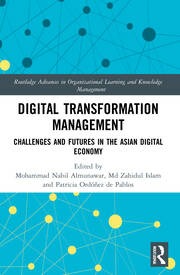
Digital transformation management : Challenges and futures in the Asian digital economy
Addresses key topics related to organization design and knowledge management in the digital economy with organizational context, particularly in Asia. the book conceptualizes organization design into three dimensions, people, information, and technology, and offers readers a unique valued insight, bringing new perspectives to understanding emerging business opportunities and challenges in Asia. it presents a valuable collection of 14 chapters with empirical studies from leading researchers. the book addresses digital transformation in companies and organizations in Asia, analysing how disruptive technologies can help them to have more efficient organization processes, create innovative products and services, be more resilient and achieve sustainable goals in post-pandemic time.

Designing landscape architectural education : Studio ecologies for unpredictable futures
Asks designers and academic practitioners to describe their own work through an ecological lens, and then to articulate design approaches for developing new practices in landscape architecture teaching. Designing Landscape Architectural Education: Studio Ecologies for Unpredictable Futures, the Landscape Architecture Design Studio Companion serves as a resource for academic practitioners in the preparation and delivery of 'design-research studios' and students seeking guidance for design methodologies as a part of their landscape architectural education. It draws on the manifold issues of the climate crisis as a set of drivers to examine the utilisation of a range of innovative design approaches to address the current and future priorities of the discipline.

Designing Inclusive Futures
Designing Inclusive Futures reflects the need to explore, in a coherent way, the issues and practicalities that lie behind design that is intended to extend our active future lives. This encompasses design for inclusion in daily life at home but also extends to the workplace and for products within these contexts.

Derivatives
Derivatives is the definitive guide to derivatives and derivative markets. Written by experts working with CFA Institute, this book is an authoritative reference for students and investment professionals interested in the role of derivatives within comprehensive portfolio management. General discussion of the types of derivatives and their characteristics gives way to detailed examination of each market and its contracts, including forwards, futures, options, and swaps, followed by a look at credit derivative markets and their instruments.

Creating Resilient Futures : Integrating Disaster Risk Reduction, Sustainable Development Goals and Climate Change Adaptation Agendas
This excellent text recognises that efforts towards improving development outcomes must work in concert with strategies which promote planetary health and support the transition to a sustainable and climate-resilient future.
