



الصفحة 1
الصفحة 1

Ocean-atmosphere interactions of gases and particles
The oceans and atmosphere interact through various processes, including the transfer of momentum, heat, gases and particles. In this book leading international experts come together to provide a state-of-the-art account of these exchanges and their role in the Earth-system, with particular focus on gases and particles. Chapters in the book cover: i) the ocean-atmosphere exchange of short-lived trace gases; ii) mechanisms and models of interfacial exchange (including transfer velocity parameterisations); iii) ocean-atmosphere exchange of the greenhouse gases carbon dioxide, methane and nitrous oxide; iv) ocean atmosphere exchange of particles and v) current and future data collection and synthesis efforts.

Modelling community structure in freshwater ecosystems
"The book presents approaches and methodologies for predicting the structure and diversity of key aquatic communities (namely diatoms, benthic macroinvertebrates and fish), under natural conditions and under man-made disturbance. Such an approach will make it possible to: 1) set up procedures for robust and sensitive ecosystem evaluation, based on the prediction of the excepted community structure; 2) model community structure in disturbed ecosystems, taking into account all the relevant ecological variables; 3) test ecosystem sensitivity to natural and anthropic disturbance; and 4) explore specific actions to be taken for the restoration of ecosystem integrity."--Jacket.
Modelling and Monitoring of Coastal Marine Processes
Although numerous books have been written on both monitoring and modelling of coastal oceans, there is a practical need for an introductory multi-disciplinary volume to non-specialists in this field. The articles commisioned for this book, organized into four major themes, are written by experts in their disciplines while the text is intended for scientists who do not have extensive training in marine sciences and coastal zone management. As such, the articles in this monograph can be a valuable reference for practicing professionals.

Methods to study litter decomposition : A practical guide
Decomposition of organic matter is a major ecosystem process involving an array of different organisms, including bacteria, fungi and invertebrates. The main objective of this book is to provide students and laboratory instructors at universities and professional ecologists with a broad range of established methods to study plant litter decomposition. Detailed protocols for direct use in the field or laboratory are presented in an easy to follow step-by-step format. A short introduction to each protocol reviews the ecological significance and principles of the technique and points to key references. Although most methods are described for freshwater ecosystems, many will work equally well in the presented or slightly modified form for studies in marine and terrestrial environments.

Handbook of Pathogens and Diseases in Cephalopods
The aim of this book is to facilitate the identification and description of the different organs as well as pathogens and diseases affecting the most representative species of cephalopods focussed on Sepia officinalis, Loligo vulgaris and Octopus vulgaris. These species are valuable ‘morphotype’ models and belong to the taxonomic groups Sepioidea, Myopsida and Octopoda, which include most of the species with a high market value and aquaculture potential. The study is based on photographs at macroscopic and histological level in order to illustrate the role of the most important pathogens and related diseases from the view of a pathological diagnosis. The reader is able to familiarize with functional anatomy, necropsy and general histology of adults and paralarvae, as well as with the identification of different pathogens and pathologies. This work is thus an invaluable guide for the diagnosis of cephalopod diseases. Besides including pathogens for non-European cephalopod species, it also provides a useful contribution encouraging marine pathologists, parasitologists, veterinarians and those involved in fishery sanitary assessments, aquarium maintenance and aquaculture practices aiming to increase their knowledge about the pathology of cephalopods.

Habitats and Biota of the Gulf of Mexico : Before the deepwater horizon oil spill ; Vol.2 : Fish resources, fisheries, sea turtles, avian resources, marine mammals, diseases and mortalities
The Gulf of Mexico is an open and dynamic marine ecosystem rich in natural resources but heavily impacted by human activities, including agricultural, industrial, commercial and coastal development. Nutrients and pollutants from coastal communities and dozens of rivers flow into the Gulf, including material from the Mississippi River watershed, which drains over one third of continental United States. The Gulf of Mexico has been continuously exposed to petroleum hydrocarbons for millions of years from natural oil and gas seeps on the sea floor, and more recently from oil drilling and production activities located in the water near and far from shore. Major accidental oil spills in the Gulf are infrequent; two of the most significant include the Ixtoc I blowout in the Bay of Campeche in 1979 and the Deepwater Horizon Oil Spill in 2010.

Habitats and Biota of the Gulf of Mexico : Before the deepwater horizon oil spill ; Vol.1 : Water quality, sediments, sediment contaminants, oil and gas Seeps, coastal habitats, offshore plankton and benthos, and shellfish
The Gulf of Mexico is an open and dynamic marine ecosystem rich in natural resources but heavily impacted by human activities, including agricultural, industrial, commercial and coastal development. Nutrients and pollutants from coastal communities and dozens of rivers flow into the Gulf, including material from the Mississippi River watershed, which drains over one third of continental United States. The Gulf of Mexico has been continuously exposed to petroleum hydrocarbons for millions of years from natural oil and gas seeps on the sea floor, and more recently from oil drilling and production activities located in the water near and far from shore. Major accidental oil spills in the Gulf are infrequent; two of the most significant include the Ixtoc I blowout in the Bay of Campeche in 1979 and the Deepwater Horizon Oil Spill in 2010.
Governance of Arctic Shipping : Rethinking Risk, Human Impacts and Regulation
This is a result of the Dalhousie-led research project Safe Navigation and Environment Protection, supported by a grant from the Ocean Frontier Institute’s the Canada First Research Excellent Fund (CFREF).

Freshwater Microplastics : Emerging Environmental Contaminants?
Focuses on microscopic plastic debris, also referred to as microplastics, which have been detected in aquatic environments around the globe and have accordingly raised serious concerns. The book explores whether microplastics represent emerging contaminants in freshwater systems, an area that remains underrepresented to date.Given the complexity of the issue, the book covers the current state-of-research on microplastics in rivers and lakes, including analytical aspects, environmental concentrations and sources, modelling approaches, interactions with biota, and ecological implications. To provide a broader perspective, the book also discusses lessons learned from nanomaterials and the implications of plastic debris for regulation, politics, economy, and society. In a research field that is rapidly evolving, it offers a solid overview for environmental chemists, engineers, and toxicologists, as well as water managers and policy-makers.

Freshwater Governance for the 21st Century
The objective of this book is to broadly illustrate the key aspects of water governance, mapping the spectrum of decision-making from techno-centric and eco-centric approaches, to hybrid concepts and people-centric approaches. Topics covered include the challenges for water-governance models, the polycentric model, the integration challenge, water in the decision-making hierarchy, and the rise of water-sensitive design, while also taking into account interdependencies between stakeholders, as well as the issue of scale.

Freshwater Animal Diversity Assessment
The Freshwater Animal Diversity Assessment gives a state of the art assessment of the diversity and distribution of Metazoa in the continental waters of the world. The project deals with all major animal groups plus the macrophytes, and encompasses the complete array of terrestrial aquatic ecosystems. It is the most comprehensive study of species- and genus-level diversity and chorology of the global freshwater fauna to date, and is the first to present comparable data on the different faunal groups concerned. The project draws from the collected expertise of numerous world-renowned taxonomic experts that have bundled efforts to produce this outstanding volume. The result is invaluable to all scientists, managers and conservationists interested in non-marine aquatic animals.

Eutrophication in the Baltic Sea : Present Situation, Nutrient Transport Processes, Remedial Strategies
This book takes a holistic process-based ecosystem perspective on the eutrophication in the Baltic Sea, with a focus on the factors regulating how the system would respond to changes in nutrient loading. This includes a very special process for the Baltic Sea: land uplift. After being depressed by the glacial ice, the land is now slowly rising adding vast amounts of previously deposited nutrients and clay particles to the system.
Environmental Governance of the Baltic Sea
This edited volume presents a comprehensive and coherent interdisciplinary analysis of challenges and possibilities for sustainable governance of the Baltic Sea ecosystem by combining knowledge and approaches from natural and social sciences. Focusing on the Ecosystem Approach to Management (EAM) and associated multi-level, multi-sector and multi-actor challenges, the book provides up-to-date descriptions and analyses of environmental governance structures and processes at the macro-regional Baltic Sea level.

Ecosystem-Based Management, Ecosystem Services and Aquatic Biodiversity : Theory, Tools and Applications
Aquatic ecosystems are rich in biodiversity and home to a diverse array of species and habitats, providing a wide variety of benefits to human beings. Many of these valuable ecosystems are at risk of being irreversibly damaged by human activities and pressures, including pollution, contamination, invasive species, overfishing and climate change. Such pressures threaten the sustainability of these ecosystems, their provision of ecosystem services and ultimately human well-being.

Ecophysiology of High Salinity Tolerant Plants
Halophytes get increasing attention today because of the steady increase of the salinity in irrigation systems in the arid and semi-arid regions where the increasing population reaches the limits of freshwater availability.

Ecology of Tidal Freshwater Swamps of the Southeastern United States
This book draws together the latest findings from investigators focusing on the hydrological processes, community organization, and stress physiology of freshwater, tidally influenced land-margin forests of the southeastern United States. It describes the land use history that led to the restricted distribution of these wetlands, and provides descriptions of the hydrology, soils, biogeochemistry, and physiological ecology of these systems, highlighting the similarities shared among tidal freshwater forested wetlands.
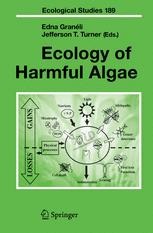
Ecology of Harmful Algae
Harmful algal blooms are one of the consequences of the human impact on aquatic ecosystems, particularly the process of eutrophication. They can cause a variety of deleterious effects, including the poisoning of fish and shellfish, habitat disruptions for many organisms, water discolouration, beach fouling, and even toxic effects for humans. This volume is a comprehensive synthesis of the latest research achievements concerning harmful algae (HA) ecology. International experts provide an in-depth analysis of HA topics including: global distribution, ecology of major HA groups, ecology and physiology of HA, HA and the food web, studying and mitigating HA, the human impact on HA and HA impact on human activity. This volume is an invaluable source of information for researchers in HA ecology as well as for advanced students, lecturers, and environmental managers.
Developments in Fish Telemetry ; Proceedings of the Sixt Conference on Fish Telemetry held in Europe
This volume includes 33 peer-reviewed papers presented at the Sixth Conference on Fish Telemetry held in Europe (Sesimbra, Portugal, 5-11 June 2005). The papers focus on the application of aquatic telemetry techniques by scientists to investigate fundamental aspects of animal biology in order to conserve and manage natural resources. The topics addressed in this issue are human impacts and fisheries, migration and behaviour, species conservation and habitat rehabilitation, and methodology and new technology. This book is aimed at scientists and engineers actively involved in aquatic telemetry projects, aquatic biologists (marine and freshwater), fisheries biologist and managers.

Decolonising blue spaces in the anthropocene : Freshwater management in Aotearoa New Zealand
This book crosses disciplinary boundaries to connect theories of environmental justice with Indigenous people’s experiences of freshwater management and governance.
Coral Reefs of the USA
This book will therefore be of broad general interest. For the first time, complete scholarly reviews are given for the geology, geomorphology and the biology of reefs encompassing a vast area stretching from the Mariana Islands in the west, Samoa in the south, Hawaii in the north and the Virgin Islands in the east.
