



الصفحة 1
الصفحة 1
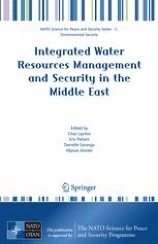
Integrated Water Resources Management and Security in the Middle East
Integrated Water Resources Management and Security in the Middle East brings together diverse voices relating to the critical issue of water management in one of the world’s most politically volatile areas: the Middle East. The book brings together Palestinian, Israeli, Jordanian and international expert opinions on creating a holistic and comprehensive view of water management challenges and strategies in an area of conflict and resource scarcity.The book takes security studies to the next level beyond military preparedness to address the security implications of the most fundamental of resources, that of water. Indeed, the book delves deeply into the underlying ideological underpinnings of various water regimes and possible opportunities for new decision-making models and regional cooperation.This book serves an important place in the scholarly literature on this topic for its breadth of participants and perspectives and its concrete steps forward. It moves the academic discourse beyond pointing fingers and toward constructive solutions and dialogue.

Groundwater and Ecosystems
Groundwater Dependent Ecosystems (GDEs) frequently exhibit rich biological diversity and can provide enormous economic wealth. In recent years, GDEs in many industrialized countries have shown signs of serious degradation, primarily the result of groundwater abstraction and pollution. Many such systems, including a number of well documented cases in Eastern Europe, are no longer sustainable. As a consequence, the conservation and sustainable management of GDEs has emerged as one of the most urgent environmental research priorities of our time. A large percentage of the world’s population lives in cities and either depends on, or is affected in some way, by groundwater. Moreover, groundwater has become a very important and complex issue that attracts the interest of many diverse stakeholders. Many problems related to groundwater and ecosystems are shared by countries throughout the world and there is growing recognition that much can be gained by co-operation on an international scale.

Environmental Security in Harbors and Coastal Areas : Management Using Comparative Risk Assessment and Multi-Criteria Decision Analysis
This book explores the challenges facing coastal areas during the next few decades and the difficult decisions needed to prevent a repeat of the past. Establishing, maintaining or enhancing a sense of environmental security in different coastal regions and improving the management of critical infrastructure will require (i) matching human demands with available environmental resources; (ii) recognition of environmental security threats and infrastructure vulnerabilities; and, (iii) identification of the range of available options for preventing and/or minimizing natural disasters, technological failures, and/or terror actions. This book emphasizes beliefs that the convergence of seemingly disparate viewpoints and often uncertain and limited information is possible only by using one or more available risk assessment methodologies and decision-making tools such as multi-criteria decision analysis (MCDA).
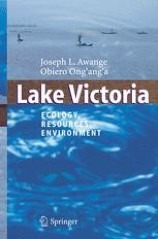
Lake Victoria : Ecology, Resources, Environment
Recently, there has been, and continues to be, a tremendous interest on Lake Victoria and its environs, both locally and internationally. A casual browsing on the Internet indicates that the entries on the Lake have been rising phenomenally. At the same time, the issues discussed are as diverse as they are varied in their treatment of the subject, both in terms of depth and comprehensiveness. The information on Lake Victoria and its environ is scattered, isolated, and sometimes confusing even though documentation on the subject are available. Despite this situation, the fact remains that various people (e. g. , secondary and universitystudents,researchers,practitioners,etc. ,)wouldliketoaccess and know more about the Lake and its environs. Aware of the existing information gap about this world’s second largest fresh water Lake, this book is intended to provide readers with up-to-date information pertaining the Lake. The book gives an in-depth coverage of environmental issues, - source endowment, poverty amidst plenty, development opportunities, challenges and other related issues facing the Lake and its environs. It aims at providing information on the above variables, which hopefully will address the needs of various users.
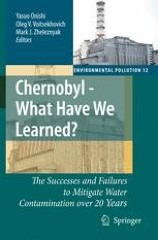
Chernobyl - What Have We Learned? : The Successes and Failures to Mitigate Water Contamination Over 20 Years
Twenty million people have been exposed to Chernobyl radionuclides through the Dnieper River aquatic pathways. This book presents a 20-year historical overview and comprehensive study results of the aquatic environment affected by the 1986 Chernobyl nuclear accident. During this time, many water quality management practices and countermeasures were enacted. The book presents in-depth analyses of these water remediation actions, using current science and mathematical modeling, and discusses why some were successful, but many others failed. The chapter entitled Where Do We Go From Here? incorporates a comprehensive discussion of the planned New Safe Confinement (NSC) structure to cover the Chernobyl plant. The book closes with a summary and conclusions drawn from these analyses, making it a valuable reference tool for the future. This book will be of interest to engineers, scientists, decision-makers, and those involved in radiation protection and radioecology, environmental protection and risk assessment, water remediation and mitigation measures, and radioactive waste disposal. In addition, the detailed, almost day-to-day, emergency responses to the Chernobyl accident described in this book will also be useful to people developing emergency and long-term responses to accidental or intentional (by terrorists) releases of radionuclides, toxic chemicals and biological agents.
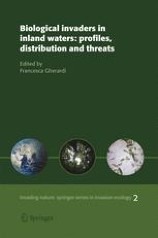
Biological invaders in inland waters : Profiles, distribution, and threats
The book examines the identity, distribution, and impact of freshwater non-indigenous species and the dynamics of their invasion. Rather than providing a broad and comprehensive review of the issue, Biological invaders in inland waters focuses on old and new invaders and also raises questions and opens perspectives that provide a starting point for further research. The ultimate purpose of this book is to help define a more general framework for our knowledge of invasions in fresh waters. Such a framework will be indispensable to the planning of a science-based management program.
