



الصفحة 1
الصفحة 1

New Frontiers in Regenerative Medicine
Rapid advances in stem cell biology have raised exciting possibilities of replacing damaged or lost tissues and cells by activation of in vitro-expanded stem cells or their progeny. This book examines many of the unresolved problems as well as future applications of regenerative medicine. Areas of focus include the nervous system and hippocampal neurogenesis, along with the functional significance of pro-inflammatory cytokines, and the production of free radicals after brain ischemia; the digestive and integumentary systems, dealing with hepatocyte transplantation, pancreatic regeneration, and skin and hair regeneration; and the cardiovascular system, with repair and remodeling of the lung and heart, and arterial remodeling with bone marrow-derived progenitor cells. In addition to animal experiments, results of research on human tissues and organs are included.

Natural anti-aging skin care
Ageing is a natural phenomenon which is a fold, ridge and crease in the skin that occurs due to loss of body mass, poor hydration, disintegration of dermis and epidermis junction. The Skin ageing process involves many changes that occur due to the combination of both endogenous factors and exogenous factors. The ageing of the skin occurs due to various mechanisms like glycation, free radical, cell cycle, and cellular and molecular mechanism of skin ageing. In this review article, we have discussed the treatment, worldwide newer therapies and marketed formulation that are currently available for the reduction of skin ageing.

Mitochondrial Medicine : Mitochondrial Metabolism, Diseases, Diagnosis and Therapy
Mitochondrial Medicine is a relatively new area where several disciplines from basic science to clinical medicine converge. Mitochondrial medicine deals with diseases that are related to mitochondrial dysfunction due to a number of causes from free radical damage to genetic mutation.

Hormones and the brain
Peripheral hormones have a major impact on the brain: they are able to interfere with its development, to affect release of neurotransmitters and concentrations of receptors, to trigger growth factors involved in lesion repair. These multiple actions account for their capacity to modulate a number of physiological parameters, from reproductive functions to memory, behaviour and aging. Depending upon intensity and duration of exposure, they can be either neuroprotective or neurotoxic, for instance by affecting production of free radicals. This book, based on contributions of pioneer investigators in the field, outlines the ambiguous actions of gonadal steroids (estradiol, progesterone, testosterone, inhibin and activin) and of neurosteroids, related moieties produced in the brain itself. After summarizing their multiple mechanisms of action, which involve both direct effects on neuronal membranes and activation of genes coding for specific proteins in neurons or glial cells, the book outlines the role of hormones in pathogenic processes such as mental disturbances or neurodegenerative diseases.

Fungi as an Alternative Source of Anticancer and Antioxidant
Fungi are an " excellent but underexplored source " for new therapeutic compounds. The limited availability of bioactive principles in plant sources could be surpassed by exploiting the chemical entities in the endophytes fungi . fungi represent a rich source of bioactive metabolite that can manipulated to produce desirable novel analogs. In addition to the active substances that can be extracted from the fungi, so that they are useful in several mechanisms. Exploring and exploiting of metabolites from endophytic in terrestrial, mangrove and marine habitats may provide an avenue for discovery of drug candidates against deadly human disease. This review focuses on the production of antioxidant and anticancer from severa fungi habitats.

Free-Radical-Induced DNA Damage and Its Repair : A Chemical Perspective
Understanding of the molecular basis of DNA damage and its repair has increased dramatically in recent years, and substantial knowledge now exists concerning the products arising from free-radical attack on DNA. Free-radical DNA damage may lead to mutations, cancer, and cell death. Free radicals have various sources, notably ionizing radiation and oxidative stress. In radiotherapy for cancer and with some anticancer drugs, use is made of cell death by excessive DNA damage. The mechanisms leading to products of free-radical attack which have been studied in models and with small double-stranded DNA fragments are discussed in detail, and the basics of the underlying free-radical chemistry are dealt with in separate chapters.

Effect of antioxidants in plant extracts and free radicals on blood sample
Antioxidants are substances that inhibit and regulate the formation of free radicals, and prevent or slow down the damage to cells caused by free radicals. There is a balance between antioxidants and free radicals throughout the body, and free radicals become dangerous when the balance is disturbed Free radicals play a key role in many physiological decisions in cells. Since free radicals are toxic to cellular components, it is known that they cause DNA damage, contribute to DNA instability and mutation and thus favor carcinogenesis.Low levels of free radicals and steady state levels of antioxidant enzymes are responsible for the fine tuning of redox status inside cells. A change in redox state is a way to modify the physiological status of the cell.Many healthful foods contain antioxidants. If a person consumes some or all of these foods regularly, they may increase their antioxidant levels, potentially helping them prevent the damage that doctors associate with oxidative stress.

Cigarette Smoke and Oxidative Stress
From a public health point of view, there is little doubt that one of the most important preventable causes of disease worldwide is tobacco smoking. From a scientifc point of view, we found it of interest to make a comprehensive ov- view of what we presently know about oxidative stress and tobacco smoke, because sm- ing is presently the best-known common condition associated with oxidative stress, and it may serve as a model for others. To this end, we have asked distinguished researchers from the public and the private sectors to evaluate the present scientifc status in their particular area. Authors were selected purely because of their scientifc merits.
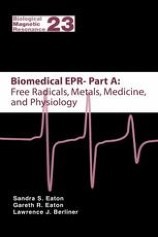
Biomedical EPR ; Part A : Free Radicals, Metals, Medicine and Physiology
Biomedical EPR – Part A focuses on applications of EPR spectroscopy in the areas of free radicals, metals, medicine, and physiology. The book celebrates the 70th birthday of Prof. James S. Hyde, Medical College of Wisconsin, and his contributions to this field. Chapters are written to provide introductory material for new-comers to the field which lead into up-to-date reviews that provide perspective on the wide range of questions that can be addressed by EPR.
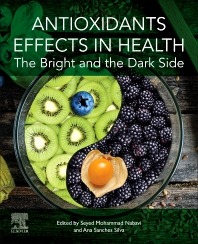
Antioxidants effects in health : The bright and the dark side ; 1st ed.
Examines the role that antioxidants play in a variety of health and disease situations. The book discusses antioxidants’ historical evolution, their oxidative stress, and contains a detailed approach of 1) endogenous antioxidants, including endogenous sources, mechanisms of action, beneficial and detrimental effects on health, in vitro evidence, animal studies and clinical studies; 2) synthetic antioxidants, including sources, chemistry, bioavailability, legal status, mechanisms of action, beneficial and detrimental effects on health, in vitro evidence, animal studies and clinical studies; and 3) natural antioxidants, including sources, chemistry, bioavailability, mechanisms of action, possible prooxidant activity; beneficial and detrimental effects on health, in vitro evidence, animal studies and clinical studies. Throughout the boo, the relationship of antioxidants with different beneficial and detrimental effects are examined, and the current controversies and future perspectives are addressed and explored. Antioxidants Effects in Health: The Bright and the Dark Side evaluates the current scientific evidence on antioxidant topics, focusing on endogenous antioxidants, naturally occurring antioxidants and synthetic antioxidants. It will be a helpful resource for pharmaceutical scientists, health professionals, those studying natural chemistry, phytochemistry, pharmacognosy, natural product synthesis, and experts in formulation of herbal and natural pharmaceuticals.
