



الصفحة 1
الصفحة 1

Neurotransmitter Interactions and Cognitive Function
Cognitive function involves the participation of many different neurotransmitter systems in a variety of brain areas. The centerpiece of investigation regarding cognitive function has classically been the cholinergic system, but it has become increasingly clear that other transmitter systems interact with cholinergic systems to provide the neural basis for cognitive function. This book brings together cutting edge research to determine how the transmitter interactions form the mechanistic bases for attention, learning and memory. This research on transmitter interactions not only provides a more accurate, though complex, picture of how the brain works to provide cognitive function, it also provides important new levels of understanding about the mechanisms of cognitive dysfunction and novel avenues for therapeutic treatment. The researchers who contributed to this volume both reviewed the latest findings but also point to the directions of advancement of the field of neurotransmitter interactions and cognitive function.

Molecular Neurosurgery with Targeted Toxins
Focuses on the highly successful use of the immunotoxins, 192 IgG-saporin and ME20.4-saporin, to lesion the cholinergic basal forebrain in order to model the behavior, anatomy, physiology, and pharmacology of Alzheimer's disease in animals. Also discussed are the uses of anti-DBH-saporin immunotoxin to make remarkably selective lesions of catecholaminergic neurons, hypocretin-saporin that can produce narcoleptic animals, and other saporin conjugates, such as neuropeptide-saporin conjugates for pain research and cholera toxin B chain-saporin to produce a model of central nervous system demyelination. Overview perspectives and, in some cases, more practical details are provided that allow the reader to appreciate exactly what is involved in using these agents. Both practical and theoretical, Molecular Neurosurgery With Targeted Toxins provides readers with not only the background to understand these techniques, but also numerous real-life examples that can be readily adapted to new purposes and an ever-increasing number of new targeted toxins.

Distribution and phenotype of proliferating cells in the Forebrain of adult macaque monkeys after transient global cerebral ischemia
The authors' results show that ischemia differentially activates endogenous neural precursors residing in diverse locations of the adult primate central nervous system. A limited endogenous potential for postischemic neuronal repair exists in neocortex and striatum, but not in the hippocampus proper of the adult macaque monkey brain. The presence of putative parenchymal progenitors and of sustained progenitors in germinative centers opens novel possibilities for precursor cell recruitment.

Development and Plasticity in Sensory Thalamus and Cortex
This book intends to bring together systems and molecular approaches on various fundamental issues on thalamocortical development and plasticity. Functional cortical circuits cannot be appreciated without thalamocortical circuits and cortical development cannot be considered without thalamocortical pathway development. The 16 chapters address key questions with diversity of techniques; ranging from molecular genetics, in vitro and in vivo methods to classical anatomical, electrophysiological and imaging procedures. The conceptual approaches formulated in these chapters should be a rich source for future research in this area.

Mammalian Subventricular Zones : Their Roles in Brain Development, Cell Replacement, and Disease
This text provides a comprehensive summary of research and findings that have lead to the current understanding of the subventricular zones. It provides an overview of the roles of subventricular zones in normal development and in disease and a foundation from which current and future studies can be evaluated.
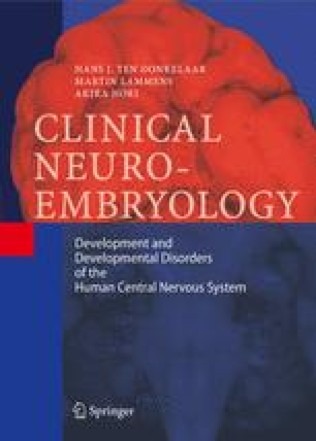
Clinical Neuroembryology : Development and Developmental Disorders of the Human Central Nervous System
Combines data from human embryology, animal research and developmental neuropathology. This book provides an overview of the development of the human Central Nervous System (CNS) in the context of its many developmental disorders due to genetic, environmental and hypoxic causes. It highlights numerous clinical cases and contains over 400 figures.

Brain Control of Wakefulness and Sleep
The book is rich in references and leaves no aspect of the problem untouched. The morphological, pharmacological, physiological and mathematical modeling aspects of different components of the subject are treated to exhaustion...the book is richly illustrated and down-right comprehensive. It will delight those interested in the field, will inform those who need a context for their research efforts and is a must for graduate and medical libraries.

Atlas of Regional Anatomy of the Brain Using MRI : with functional correlations
The volume provides a unique review of the essential topographical anatomy of the brain from an MRI perspective, correlating high-quality anatomical plates with the corresponding high-resolution MRI images. The book includes a historical review of brain mapping and an analysis of the essential reference planes used for the study of the human brain. Subsequent chapters provide a detailed review of the sulcal and the gyral anatomy of the human cortex, guiding the reader through an interpretation of the individual brain atlas provided by high-resolution MRI.
