



الصفحة 1
الصفحة 1

Nutrition, chemistry, and health effects of sugar, salt, and milkfat
Covers sugar, salt and milk fat from a chemical perspective, and presents an overview of the role of these ingredients in our food, focusing on their flavors, satiety-inducing properties, nutritional impact, and health effects. The book begins with a chapter devoted to the chemical composition of these taste enhancers and satiety-inducing components, followed by a chapter that sheds light on the persuasive tactics employed by the food industry and their impact on consumer behavior, ultimately discussing the complex relationship between marketing strategies and public health. In Chapter 3, the author presents case studies and explores the nutritional requirements of these ingredients, while considering their physiological effects ad potential implications for human health. In Chapter 4, the author evaluates current consumption patterns and their implications, analyzing trends, policies, and opportunities to shape healthier dietary choices.

Growing Food : A guide to food production
This specialist handbook is intended as a quick and easy reference guide for individuals and organisations that are involved with the production of food, from both agriculture and horticulture. It is designed to be used as a reference book that answers basic questions about how food is produced from plants, and aims to demystify the subject of growing food as far as possible. The focus is firmly on the technical aspects of food crops; animal husbandry, agrochemicals and genetic engineering are only briefly mentioned. The book is divided into three sections: 1. Principles and Practices used in Agriculture and Horticulture; 2. Description and Characteristics of the Main Food Crops; 3. Naming and Classification of Plants, Seed Purchase Procedures, Conversion Tables and Statistics, Planning and Assessing Agricultural Projects.

Genome Mapping and Genomics in Arthropods
Mapping of animal genomes has generated huge databases and several new concepts and strategies, which are useful to elucidate origin, evolution and phylogeny. Genetic and physical maps of genomes further provide precise details on chromosomal location, function, expression and regulation of academically and economically important genes. The series "Genome Mapping and Genomics in Animals" provides comprehensive and up-to-date reviews on genomic research on a large variety of selected animal systems, contributed by leading scientists from around the world.Insects and other arthropods, the largest group of animals in number of species, have global impact on agriculture, industry, human health and environment. They are of particular economic importance for food production as pollinators, for natural products like silk and also as pests and parasites. Arthropods covered in this volume include honeybee, bumblebee, the parasitic Jewel Wasp, silkworm, pea aphid, mosquito, Hessian fly and tick.

Food Safety Culture : Creating a Behavior-Based Food Safety Management System
Food safety awareness is at an all time high, new and emerging threats to the food supply are being recognized, and consumers are eating more and more meals prepared outside of the home. Accordingly, retail and foodservice establishments, as well as food producers at all levels of the food production chain, have a growing responsibility to ensure that proper food safety and sanitation practices are followed, thereby, safeguarding the health of their guests and customers. Achieving food safety success in this changing environment requires going beyond traditional training, testing, and inspectional approaches to managing risks. It requires a better understanding of organizational culture and the human dimensions of food safety. To improve the food safety performance of a retail or foodservice establishment, an organization with thousands of employees, or a local community, you must change the way people do things. You must change their behavior. In fact, simply put, food safety equals behavior.

Food preservation and safety of natural products
Food Preservation and Safety of Natural Products addresses the most common causes of food spoilage that create significant loss to global food production while also discussing how food serves as a vehicle for the transmission of pathogenic microorganisms responsible for mild to debilitating health conditions in humans. The book provides essential information for food safety professionals on issues relating to foodborne diseases and offers potential solutions by presenting various methods of incorporating natural products in food production to prevent the spread of foodborne pathogenic organisms. The demand for green consumerism and consumers general distaste for synthetic food additives poses a serious challenge to food safety and preservation. Natural products are used as green and sustainable source of bioactive compounds that can be applied in various fields including food. The use of plant and other natural products in food preservation is on the rise, hence this book reviews microbial mediated food spoilage, foodborne pathogens and food contamination and offers applications of natural products in food preservation.

Essentials in Food Science
Knowledge of food science is applicable to all persons, in diverse college majors. This text is designed with a user-friendly approach to Food Science for the non-major. This text reviews an Introduction to Food Components – quality and water. Next it addresses carbohydrates – including starches, pectins and gums, breads and pasta, vegetables and fruits. Then proteins – meats, poultry, fish, beans, eggs, milk and milk products are presented. Following proteins are fats and emulsions. Then sugars and sweeteners, and baked products, the latter of which builds upon basic food component knowledge. Various aspects of Food Production are examined, including food safety, preservation and processing, food additives and packaging. Government regulation and labeling complete the chapter information.

Encyclopedia of Human Nutrition
Provides updated information on the foundations of nutrition science, along with the biology and functions of vitamins and other essential nutrients present in the human diet. The book's content offers a modern understanding of the links between diet and health effects, including diseases of recognized nutritional etiology. This overview of the genetic and molecular aspects of nutrient-health interrelationships includes important content on topics like nutrigenomics, metabolomics and the microbiome. In addition, the book provides global context, particularly on the issue of food production, sustainability and climate change.

Consumer perception of food attributes
Objectives of this book is to summarize recent empirical findings from scholarly works on how consumers value food credence attributes. Such knowledge would benefit producers, processors, retailers, and policy makers. Another objective of this book is to discuss the effectiveness of the programs that have been introduced to strengthen the relationship between producers and consumers. Many programs have been developed to more effectively inform consumers regarding food production processes.
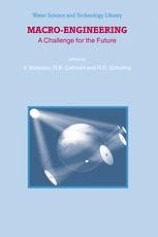
Macro-Engineering : A Challenge for the Future
Macro-engineering involves the large-scale modification and manipulation of natural systems for the benefit of mankind. The primary goals of some Earth-based macroprojects described in this book are power production, land reclamation, food production, climate change, environment, water, transport and coastal protection. Other Earth or space projects considered here have a more futuristic ring, but our present-day technical skill makes their realization possible. Earth-based macroprojects usually combine different aspects and aims. They have a major impact on the ecology of a region and the inhabitants' means of living (like tourism, fishing, shipping). Its effects may be felt worldwide, like the rise in global sea level after the damming and evaporation of large ocean gulfs for power production, or the change in climate following the regional reduction of solar insolation.
Lactic acid bacteria : Methods and protocols
This updated volume presents experimentation-based approaches to lactic acid bacteria (LAB) research. Split into three parts, the book explores techniques for analyzing lactic acid bacteria metabolism and characteristics, applications for food-related industries, such as yogurt production, beer, and wine making, and functions of LAB in human health. Written for the highly successful Methods in Molecular Biology series, chapters include introduction to their respective topic, lists of the necessary materials and reagents, step-by-step and readily reproducible laboratory protocols, and tips on troubleshooting and avoiding known pitfalls.
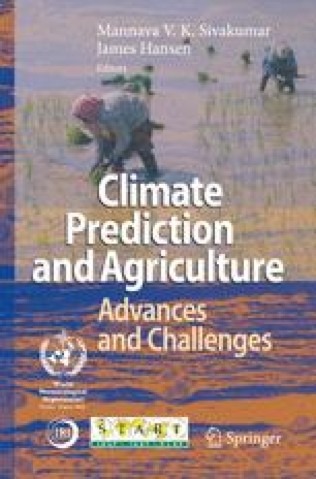
Climate prediction and agriculture : Advances and challenges
Improved adaptation of food production, particularly in areas where climate variability is large, holds the key to improving food security for human populations. Increasing climate knowledge and improved prediction capabilities facilitate the development of relevant climate information and prediction products for applications in agriculture to reduce the negative impacts due to climate variations and to enhance planning activities based on the developing capacity of climate science. This book, based on an International Workshop held in Geneva in 2005, reviews the advances made so far in seasonal climate predictions and their applications for management and decision-making in agriculture and identifies the challenges to be addressed in the next 5 to 10 years to further enhance operational applications of climate predictions in agriculture, especially in the developing countries.

Chia seeds : Tiny superfood, big impact
Chia (Salvia hispanica) is an annual herbaceous plant, the seeds of which were consumed already thousands of years ago. Current research results indicate a high nutritive value for chia seeds and confirm their extensive health-promoting properties. Research indicates that components of chia seeds are ascribed a beneficial effect on the improvement of the blood lipid profile, through their hypotensive, hypoglycemic, antimicrobial and immunostimulatory effects. This article provides a review of the most important information concerning the potential application of chia seeds in food production. The chemical composition of chia seeds is presented and the effect of their consumption on human health is discussed.
Aquaponics Food Production Systems : Combined Aquaculture and Hydroponic Production Technologies for the Future
This book, written by world experts in aquaponics and related technologies, provides the authoritative and comprehensive overview of the key aquaculture and hydroponic and other integrated systems, socio-economic and environmental aspects. Aquaponic systems, which combine aquaculture and vegetable food production offer alternative technology solutions for a world that is increasingly under stress through population growth, urbanisation, water shortages, land and soil degradation, environmental pollution, world hunger and climate change.

Advances in wheat genetics : From genome to field : Proceedings of the 12th International wheat genetics symposium
Provides a comprehensive review of the forefront of wheat research, across various important topics such as germplasm and genetic diversity, cytogenetics and allopolyploid evolution, genome sequencing, structural and functional genomics, gene function and molecular biology, biotic stress, abiotic stress, grain quality, and classical and molecular breeding. Following an introduction, 9 parts of the book are dedicated to each of these topics. A final, 11th part entitled “Toward Sustainable Wheat Production” contains 7 excellent papers that were presented in the 12th IWGS Special Session supported by the OECD.
