



الصفحة 1
الصفحة 1

Islamic FinTech : Insights and Solutions
Addresses the effects and implications of rapid technological changes within the financial services industry on Islamic finance and Islamic banks. Exploring current challenges, opportunities and threats, the authors provide an overview of how FinTech can operate within an Islamic context, under the Shari’ah principles or the Halal framework, for example. Examining the potential opportunities of Islamic FinTech from a socio-economic perspective, this edited collection will be of use to anyone researching FinTech or Islamic Finance as well as practitioners and policy-makers involved in banking and financial services.

Financial Technology : Case Studies in Fintech Innovation
Combines theoretical and commercial perspectives informed by the author's professional experience and academic research Thoroughly explains key technologies and emerging business models in a clear and accessible manner for those with no technological background Includes a mix of international case studies from large financial services organizations and smaller start-ups, including Lloyds Bank, TransferWise, Generali, Starling and Stocktwits Covers the topics required for postgraduate and undergraduate Financial Technology courses and includes learning objectives and discussion questions based on case studies

Financial markets and institutions
A practical introduction to the workings of today's financial markets and institutions. Moving beyond the descriptions and definitions provided by other textbooks in the field, Financial Markets and Institutions encourages students to understand the connection between the theoretical concepts and their real-world applications. By enhancing students' analytical abilities and concrete problem-solving skills, this textbook prepares students for successful careers in the financial services industry or successful interactions with financial institutions, whatever their jobs

Enterprise Applications and Services in the Finance Industry ; 3rd International Workshop, FinanceCom 2007, Montreal, Canada, December 8, 2007. Revised Papers
This book constitutes the proceedings of the 4th International Workshop on Enterprise Applications and Services in the Finance Industry, FinanceCom2008, held in Paris, France, on December 13, 2008. The workshop spans multiple disciplines, including technical, economic, sociological and behavioral sciences. The guiding theme of this workshop was concerned with innovations in the financial services industry, driven by either new business models or changed regulations.

Embedded finance : When payments become an experience
In Embedded Finance: When Payments Become An Experience, veteran growth strategists, entrepreneurs, and fintech disruptors Scarlett Sieber and Sophie Guibaud deliver a thought-provoking and page-turning discussion on the most impactful and exciting trend of fintech yet: embedded finance. In the book, you’ll explore the past, present, and future of fintech, from how embedded finance is being leveraged today by industry heavyweights like Google and Amazon to supercharge their customers’ experience to the offerings of smaller, niche players who stand poised to dominate their own corners of the market as their answer unmet customers’ needs.
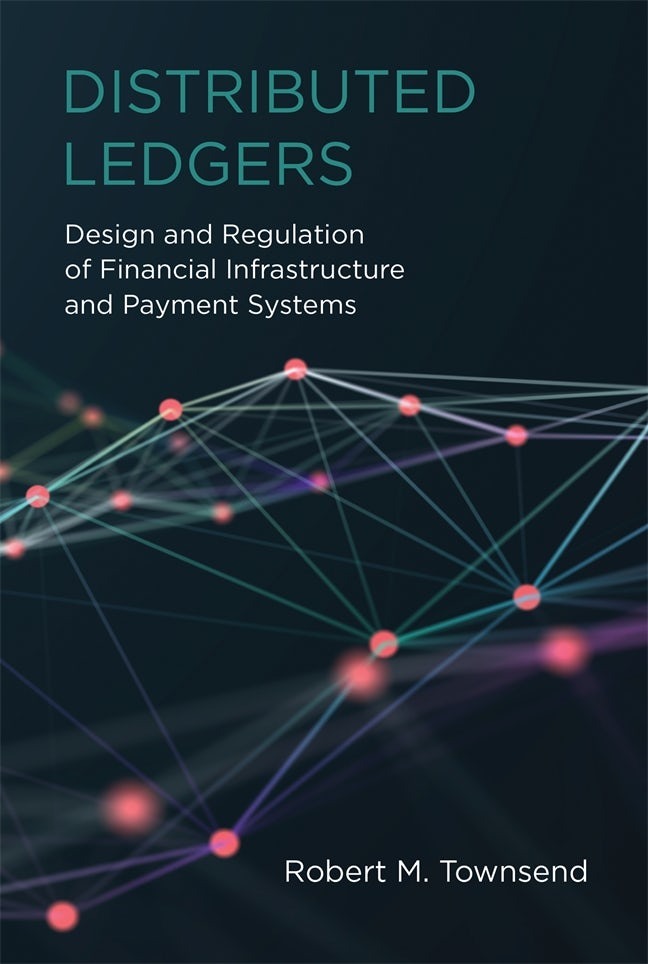
Distributed Ledgers : Design and Regulation of Financial Infrastructure and Payment Systems
In this book, Robert Townsend steps back from the hype and controversy surrounding DLT (and the related, but not synonymous, innovations of blockchain and Bitcoin) to offer an economic analysis of what distributed ledgers can do and a blueprint for the optimal design and regulation of financial systems. He analyzes four crucial components of distributed ledgers—ledgers as accounts, e-messages and e-value transfers, cryptography, and contracts—assessing each in terms of both economics and computer science, and forges some middle ground. Relatedly, Townsend highlights hybrid systems in which some of these components allow useful innovation while legacy or alternative pieces deal with the problem of scale.

Digital Finance : Security Tokens and Unlocking the Real Potential of Blockchain
In Digital Finance: Security Tokens and Unlocking the Real Potential Blockchain, readers will realize why security tokens are creating huge excitement in the financial industry. By combining the latest in technology and the potential for automated world-class investor protections, regulatory compliance and customer service, security tokens offer a plethora of benefits that will drive cost reductions, enhance flexibility and open up opportunities for new business models and revenue streams. Digital Finance thoroughly examines how this powerful technology can overhaul our current financial infrastructure in a way that will increase efficiency, transparency, and security.

Contemporary Reflections on Business Ethics
Ronald F. Duska, who began his career as a philosopher, has, over the last 30 years, established himself as one of the leading scholars in the field of business ethics. In the past decade, he has concentrated on ethics in the financial services industry because of his affiliation with The American College in Bryn Mawr, Pennsylvania, an institution that specializes in educating financial services professionals. This affiliation gives Duska regular interaction with producers, managers, and top executives in the financial services industry. This book includes a selection of the articles Duska has written throughout the years on ethics, business ethics, teaching ethics, agency theory, postmodernism, employee rights, and ethics in accounting and the financial services industry. The articles reflect Duska’s underlying philosophical concerns and their application to the real-world challenges of practitioners—an overarching method that might be called an Aristotelian common-sense approach to ethical decision making.
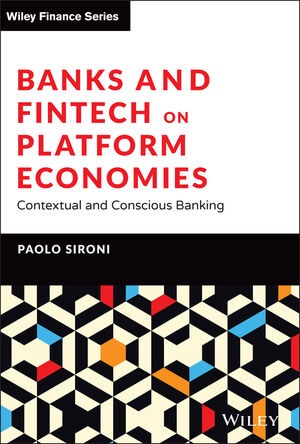
Banks and fintech on platform economies : Contextual and conscious banking
In Banks and Fintech on Platform Economies: Contextual and Conscious Banking, accomplished fintech professional and author Paolo Sironi delivers an insightful examination of how platform theory, born outside of financial services, will make its way inside banking and financial markets to radically transform the way firms do business.
Banking on (artificial) intelligence : Navigating the realities of ai in financial services
Provides a tailored overview of what AI specifically means for financial services, a highly regulated yet also disrupted industry. it investigates the current state of AI applications in financial services today along with the state of funding and partnerships between tech and banking industries. it also examines the key pillars of responsible AI and the importance of keeping humans in the loop. the book takes a deep dive into the use cases in the financial services industry, the challenges and opportunities, and the fragmented regulatory landscape. how can we effectively assess risks, and balance innovation and customer centricity with trust in AI in financial services? can smaller organizations reap the benefits of the technology? how can institutions deploy AI responsibly and securely, and promote a fairer and more equitable future for more people?
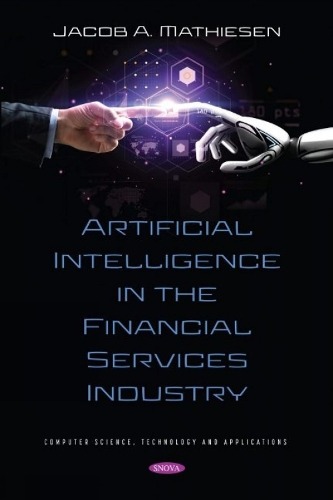
Artificial intelligence in the financial services industry
Today, the financial services sector is facing a period of rapid disruption and innovation, and artificial intelligence (AI) is at the heart of these changes. Artificial intelligence can be used to gather enormous amounts of data, detect abnormalities, and solve complex problems. Financial institutions are already experimenting extensively with AI strategies to enhance and streamline financial institutions, BSA and AML compliance, CRA requirements, fraud detection, and real estate valuations, all while reducing cost levels. This book looks at how artificial intelligence is affecting the financial services industry.
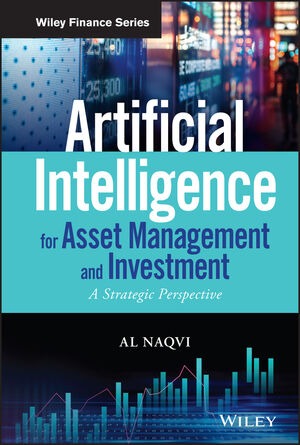
Artificial intelligence for asset management and investment : A strategic perspective
The rise of artificial intelligence is nothing short of a technological revolution. AI is poised to completely transform asset management and investment banking, yet its current application within the financial sector is limited and fragmented. Existing AI implementations tend to solve very narrow business issues, rather than serving as a powerful tech framework for next-generation finance. Artificial Intelligence for Asset Management and Investment provides a strategic viewpoint on how AI can be comprehensively integrated within investment finance, leading to evolved performance in compliance, management, customer service, and beyond.
