



الصفحة 1
الصفحة 1

New Frontiers in Banking Services : Emerging Needs and Tailored Products for Untapped Markets
This book is devoted to an issue that is the subject of growing interest amongst policy makers, financial providers and academics. That issue is the problem of unbanking or underbanking in developed countries. The issue has arisen because, faced with an ever more sophisticated and efficient financial system, an increasing number of people have found themselves in danger of being excluded from it. The goal of the papers that follow is to draw attention, both through a theoretical framework and through field study, to the need for banks, financial institutions, public authorities and non profit associations to increase their efforts to understand the process of financial exclusion, so that they can develop approaches to help people on low to moderate incomes to gain access to the whole range of financial services, from payment to savings, and from loans to investment.

Contemporary issues in sustainable finance : Exploring performance, impact measurement and financial inclusion
This book sheds light on contemporary challenges in sustainable finance, addressing two key perspectives: measurement and performance, and products and business models. In particular, the volume examines theoretically and empirically the relations between business models and non-financial impact, both environmental and social.
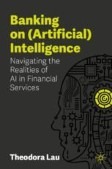
Banking on (artificial) intelligence : Navigating the realities of ai in financial services
Provides a tailored overview of what AI specifically means for financial services, a highly regulated yet also disrupted industry. it investigates the current state of AI applications in financial services today along with the state of funding and partnerships between tech and banking industries. it also examines the key pillars of responsible AI and the importance of keeping humans in the loop. the book takes a deep dive into the use cases in the financial services industry, the challenges and opportunities, and the fragmented regulatory landscape. how can we effectively assess risks, and balance innovation and customer centricity with trust in AI in financial services? can smaller organizations reap the benefits of the technology? how can institutions deploy AI responsibly and securely, and promote a fairer and more equitable future for more people?

Analyzing the availability of fin tech and its role in enhancing the strategic : Performance of Syrian banks using the balanced scorecard
Aims to examine the role of financial technology (FinTech) in enhancing the strategic performance of Syrian banks by analyzing its impact on the four dimensions of the balanced scorecard : financial performance, customer satisfaction, internal process quality, and learning and growth. Amid economic and technological challenges, integrating fintech emerges as a strategic tool to boost operational efficiency, reduce costs, and promote financial inclusion. The study explores the experiences of several Syrian banks in implementing modern financial technologies, such as digital banking and smart payment systems, while evaluating key financial indicators like return on assets (ROA) and return on equity (ROE).
