



الصفحة 1
الصفحة 1

Numerical methods in computational finance : A partial differential equation (PDE/FDM) approach
This book is a detailed and step-by-step introduction to the mathematical foundations of ordinary and partial differential equations, their approximation by the finite difference method and applications to computational finance.

Mathematical Models of Financial Derivatives
Mathematical Models of Financial Derivatives is a textbook on the theory behind modeling derivatives using the financial engineering approach, focussing on the martingale pricing principles that are common to most derivative securities. A wide range of financial derivatives commonly traded in the equity and fixed income markets are analyzed, emphasizing on the aspects of pricing, hedging and their risk management. Starting from the renowned Black-Scholes-Merton formulation of option pricing model, readers are guided through the text on the new advances on the state-of-the-art derivative pricing models and interest rate models. Both analytic techniques and numerical methods for solving various types of derivative pricing models are emphasized.

Intelligent data engineering and automated Learning - IDEAL 2008 ; 9th International Conference Daejeon, South Korea, November 2-5, 2008 Proceedings
This book constitutes the refereed proceedings of the 9th International Conference on Intelligent Data Engineering and Automated Learning, IDEAL 2008, held in Daejeon, Korea, in November 2008.The 56 revised full papers presented together with 10 invited papers were carefully reviewed and selected from numerous submissions for inclusion in the book. The papers are organized in topical sections on learning and information processing, data mining and information management, bioinformatics and neuroinformatics, agents and distributed systems, as well as financial engineering and modeling.

Intelligent data engineering and automated Learning - IDEAL 2007 ; 8th International Conference, Birmingham, UK, December 16-19, 2007, Proceedings
This book constitutes the refereed proceedings of the 8th International Conference on Intelligent Data Engineering and Automated Learning, IDEAL 2007. The papers are organized in topical sections on learning and information processing, data mining and information management, bioinformatics and neuroinformatics, agents and distributed systems, financial engineering and modeling, agent-based approach to service sciences, as well as neural-evolutionary fusion algorithms and their applications.

Innovations in Derivatives Markets : Fixed Income Modeling, Valuation Adjustments, Risk Management, and Regulation
This book presents 20 peer-reviewed chapters on current aspects of derivatives markets and derivative pricing. The contributions, written by leading researchers in the field as well as experienced authors from the financial industry, present the state of the art in: • Modeling counterparty credit risk: credit valuation adjustment, debit valuation adjustment, funding valuation adjustment, and wrong way risk. • Pricing and hedging in fixed-income markets and multi-curve interest-rate modeling. • Recent developments concerning contingent convertible bonds, the measuring of basis spreads, and the modeling of implied correlations.

Implementing Models in Quantitative Finance : Methods and Cases
This book puts numerical methods into action for the purpose of solving concrete problems arising in quantitative finance. Part one develops a comprehensive toolkit including Monte Carlo simulation, numerical schemes for partial differential equations, stochastic optimization in discrete time, copula functions, transform-based methods and quadrature techniques. The content originates from class notes written for courses on numerical methods for finance and exotic derivative pricing held by the authors at Bocconi University since the year 2000. Part two proposes eighteen self-contained cases covering model simulation, derivative valuation, dynamic hedging, portfolio selection, risk management, statistical estimation and model calibration. It encompasses a wide variety of problems arising in markets for equity, interest rates, credit risk, energy and exotic derivatives.

Financial mathematics, derivatives and structured products
Introduces readers to the financial markets, derivatives, structured products and how the products are modelled and implemented by practitioners. In addition, it equips readers with the necessary knowledge of financial markets needed in order to work as product structurers, traders, sales or risk managers. As the book seeks to unify the derivatives modelling and the financial engineering practice in the market, it will be of interest to financial practitioners and academic researchers alike. Further, it takes a different route from the existing financial mathematics books, and will appeal to students and practitioners with or without a scientific background. The book can also be used as a textbook for the following courses: Financial Mathematics (undergraduate level) Stochastic Modelling in Finance (postgraduate level) Financial Markets and Derivatives (undergraduate level) Structured Products and Solutions (undergraduate/postgraduate level)

Finance 4.0 - towards a socio-ecological finance system : A participatory framework to promote sustainability
The first is Bitcoin that infamously pursues a state-independent, decentralized conception of money. The second is Finance 4.0, a system that proposes a participatory multi-dimensional money system with built-in incentives for sustainable behavior

Discrete-Time Markov Chains : Two-Time-Scale Methods and Applications
The motivation stems from existing and emerging applications in optimization and control of complex hybrid Markovian systems in manufacturing, wireless communication, and financial engineering. Much effort in this book is devoted to designing system models arising from these applications, analyzing them via analytic and probabilistic techniques, and developing feasible computational algorithms so as to reduce the inherent complexity. This book presents results including asymptotic expansions of probability vectors, structural properties of occupation measures, exponential bounds, aggregation and decomposition and associated limit processes, and interface of discrete-time and continuous-time systems. One of the salient features is that it contains a diverse range of applications on filtering, estimation, control, optimization, and Markov decision processes, and financial engineering.

Computational Methods in Financial Engineering : Essays in Honour of Manfred Gilli
The focus of this book is the development of computational methods and analytical models in financial engineering that rely on computation. The book contains eighteen chapters written by leading researchers in the area on portfolio optimization and option pricing; estimation and classification; banking; risk and macroeconomic modelling. It explores and brings together current research tools and will be of interest to researchers, analysts and practitioners in policy and investment decisions in economics and finance. "This book collects frontier work by researchers in computational economics in a tribute to Manfred Gilli, a leading member of this community. Contributions cover many of the topics researched by Gilli during his career: portfolio optimization and option pricing, estimation and classification, as well as banking, risk and macroeconomic modeling. The editors have put together a remarkable panorama of the rapidly growing and diversifying field of computational economics and finance
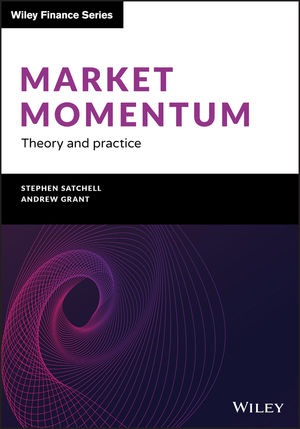
Market Momentum : Theory and Practice
Market Momentum: It examines the behavioral and statistical causes of market momentum while also exploring the practical side of implementing related strategies. The phenomenon of momentum in finance occurs when past high returns are followed by subsequent high returns, and past low returns are followed by subsequent low returns. Market Momentum provides a detailed introduction to the financial topic, while examining existing literature.
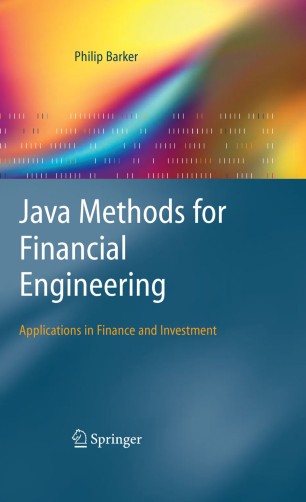
Java Methods for Financial Engineering : Applications in Finance and Investment
This book is structured around the main theories and models used by practitioners to engineer finance and investment tools. The methods developed and implemented in the text are organized as chapters which cover the core areas.
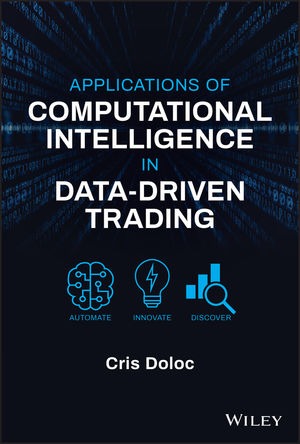
Applications of computational intelligence in data-driven trading
The main purpose of this book is pedagogical in nature, and it is specifically aimed at defining an adequate level of engineering and scientific clarity when it comes to the usage of the term “Artificial Intelligence,” especially as it relates to the financial industry.
Advances in Mathematical Finance
This volume brings together a collection of chapters by some of the most distinguished researchers and practitioners in the fields of mathematical finance and financial engineering. Presenting state-of-the-art developments in theory and practice.
