



الصفحة 1
الصفحة 1

Global Comparability of Financial Reporting Under IFRS : Does Comparability Enhance Value Relevance of Earnings Across Countries?
This book reviews research studies on the comparability of financial reporting at a global level as well as highlights empirical analyses that demonstrate the extent to which global comparability has been achieved, and how it enhances value relevance of earnings across countries. It also looks at the cross-country investors’ perspectives by shaping the empirical analysis to provide further insights on the role of the "Big Four" auditing services in enhancing the comparability of earnings.

Financial statements : Analysis, reporting and valuation
Through a mixture of concepts and examples, the second edition of this book demystifies the variety of elements of financial accounting and uncovers the need-to-know information for certification in this field. This book covers the two aspects of financial statement analysis, namely quantitative and non-quantitative analysis. Unique to the second edition, the book will also cover Non-GAA- metrics and valuation accounting.

Financial Analysis of Mergers and Acquisitions : Understanding Financial Statements and accounting Rules with Case Studies
Helps its readers better analyze M&A transactions using information provided in financial statements. Covering accounting and reporting of consolidations, goodwill, non-controlling interests, step acquisitions, spin-offs, equity carve-outs, joint ventures, leveraged buyouts, disposal of subsidiaries, special purpose entities, and taxes, it focuses on the link between underlying economic events and the information in financial statements and how this link affects the assessment of corporate performance. The first part of the book provides description of the accounting rules governing M&A transactions, while the second part includes cases of M&A transactions. Each case focuses on a different element of an M&A transaction, and it is followed by a detailed solution with a complete analysis. Unlike other books in this field, this textbook focuses exclusively on accounting and financial analysis for graduate and upper undergraduate level courses in financial analysis, corporate finance, and financial accounting.

Financial accounting for decision makers ; 10th ed.
Financial Accounting for Decision Makers, 10th edition is an accessible introduction to the subject, focusing on the ways in which financial statements and information improve the quality of decision-making.

Financial accounting
Financial Accounting 11e successfully implements a real-world, single focus company approach in every chapter. The companies chosen are engaging and the decision-making focus shows the relevance of financial accounting regardless of if a student has chosen to major in accounting. Libby/Libby/Hodge believes in the building-block approach to teaching transaction analysis.

Enterprise Risk Management : Modern Approaches to Balancing Risk and Reward
Demonstrates how Enterprise Risk Management creates value in strategic- and decision-making-processes. The author introduces modern approaches to balancing risk and reward based on many examples of medium-sized and large companies from different industries. Since traditional risk management in practice is often an independent stand-alone process with no impact on decision-making processes, it is unable to create value and ties up resources in the company unnecessarily. Herewith, he serves students as well as practitioners with modern approaches that promote a connection between ERM and corporate management. The author demonstrates in a didactically appropriate manner how companies can use ERM in a concrete way to achieve better risk-reward decisions under uncertainty. Furthermore, theoretical and psychological findings relevant to entrepreneurial decision-making situations are incorporated.

Corporate financial accounting
This book clearly presents core financial accounting concepts within a meaningful business context, using engaging learning features that ensure a relevant, innovative learning experience. Updated content addresses the latest development and tools in corporate accounting today -- from using data analytics effectively to understanding the impact of discounts and sales in retail accounting. CNOWv2 online resources work with practice opportunities to ensure you understand and can apply key accounting principles.
Blockchain, artificial intelligence and financial services : Implications and applications for finance and accounting professionals
Blockchain technology and artificial intelligence (AI) have the potential to transform how the accounting and financial services industries engage with the business, stakeholder and consumer communities. Presenting a blend of technical analysis with current and future applications, this book provides professionals with an action plan to embrace and move forward with these new technologies in financial and accounting organizations.
Artificial Intelligence and COVID Effect on Accounting
This book considers the effects of COVID-19 on accounting, particularly with regard to the role of artificial intelligence in accounting in the post-pandemic business environment. The contributions in the book consider a variety of sectors that have been affected by the pandemic, such as the stock market, forensic accounting, Bitcoin, as well as the economic and educational responses to the pandemic and the aftermath felt by both developing and developed countries.

Anti-Money Laundering : A Practical Guide to Reducing Organizational Risk
Addresses the needs of the non-specialist compliance professional from a range of industries, backgrounds and experience Outlines the different elements of anti-money laundering (AML) practice to support compliance professionals at any stage of their career to put effective controls in place in their own organisations Presents readers with the global oversight needed to align activity to a cohesive plan, sharing case studies and examples of good and bad practice from around the world

Advanced Financial Accounting
An up-to-date, comprehensive, and highly illustrated presentation of the accounting and reporting principles and procedures used in a variety of business entities.
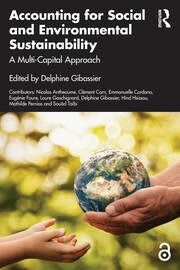
Accounting for social and environmental sustainability : A multi-capital approach
Offers an in‑depth examination of multi‑capital accounting, which has already been integrated within the corporate sustainability reporting directive and will follow on from sustainability reporting. the LIFTS model (limits and foundations towards sustainability accounting model) used in this book combines various scientific and practical contributions to develop budgets for environmental impacts and social obligations on an organisational scale. it proposes an accounting mechanism that enables an organization to manage each of its budgets and measure variances between forecast and actual. it provides an introduction to the principles of this model and its conditions of application and describes its implementation in numerous companies.
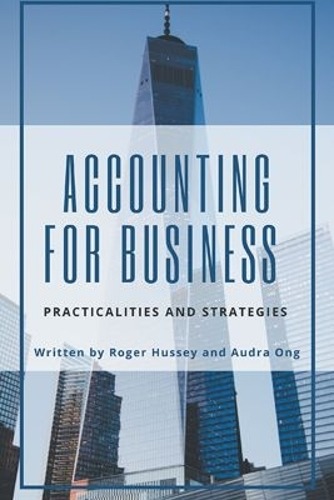
Accounting for business : Practicalities and strategies
Identifies the types of organizations that generate financial information and explains how you can use it for your benefit. The early chapters focus on the information that is publicly available for large companies and demonstrate how to select and analyze the figures for decision making. The later chapters concentrate on the detailed management accounting information that is available internally for managers so that they can make decisions, investigate problems, and set performance targets. The final chapter, explores emerging and very pertinent issues such as "Can the organization obtain the basic resources to stay in business?" and "Are its activities harmful to the environment??
Accounting and auditing small and medium-sized practices : Transformative capabilities in a rapidly changing society
Addresses recent trends, developments, and future of accounting and auditing of small and medium-sized practices (AASMPs) in the public and private sectors.the book has three main objectives: firstly, to provide an analysis of how different societal trends, including digitalization, impact AASMPs and what role education and training play in proactive adaptation to those trends; secondly, to outline major scenarios for global AASMP development by 2035; and thirdly, to offer a conceptual framework for better understanding of AASMPs' dynamic and transformative capabilities that are necessary to create sustained competitive advantage in a rapidly changing society. beyond presenting a conceptual framework, this book also offers a discussion of future scenarios for AASMPs' development and their role in the global economic development.
