



الصفحة 1
الصفحة 1
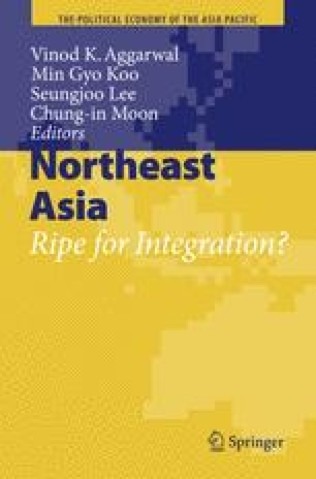
Northeast Asia : Ripe for Integration?
Can regional mechanisms better institutionalize the increasing complexity of economic and security ties among the countries in Northeast Asia? As the international state system undergoes dramatic changes in both security and economic relations in the wake of the end of the Cold War, the Asian financial crisis, and the attack of 9/11, this question is now at the forefront of the minds of both academics and policymakers. Still, little research has been done to integrate the analysis of security and economic analysis of changes in the region within a broader context that will give us theoretically-informed policy insights. Against this backdrop, this book investigates the origins and evolution of Northeast Asia's new institutional architecture in trade, finance, and security from both a theoretical and empirical perspective.

Introduction to Central Banking
This book gives a concise introduction to the practical implementation of monetary policy by modern central banks. It describes the conventional instruments used in advanced economies and the unconventional instruments that have been widely adopted since the financial crisis of 2007–2008. Illuminating the role of central banks in ensuring financial stability and as last resort lenders, it also offers an overview of the international monetary framework. A flow-of-funds framework is used throughout to capture this essential dimension in a consistent and unifying manner, providing a unique and accessible resource on central banking and monetary policy, and its integration with financial stability.

Financial crisis management and democracy : Lessons from Europe and Latin America
This book discusses financial crisis management and policy in Europe and Latin America, with a special focus on equity and democracy. Based on a three-year research project by the Jean Monnet Network, this volume takes an interdisciplinary, comparative approach, analyzing both the role and impact of the EU and regional organizations in Latin America on crisis management as well as the consequences of crisis on the process of European integration and on Latin America’s regionalism.

Extreme Events in Nature and Society
Significant, and usually unwelcome, surprises, such as floods, financial crisis, epileptic seizures, or material rupture, are the topics of Extreme Events in Nature and Society. The book, authored by foremost experts in these fields, reveals unifying and distinguishing features of extreme events, including problems of understanding and modelling their origin, spatial and temporal extension, and potential impact. The chapters converge towards the difficult problem of anticipation: forecasting the event and proposing measures to moderate or prevent it. Extreme Events in Nature and Society will interest not only specialists, but also the general reader eager to learn how the multifaceted field of extreme events can be viewed as a coherent whole.

East Asian Economic Regionalism: Feasibilities and Challenges
Economic regionalism has become a worldwide phenomenon. Since the Asian financial crisis, East Asian countries are accelerating the ongoing market-driven economic integration as well as institutional economic integration. The question is whether East Asia can reach an East Asian FTA (EAFTA), which is the first step towards institutional economic integration. East Asian Economic Regionalism attempts to analyze the feasibilities of economic integration in East Asia and to discuss emerging economic integration efforts in East Asia with special reference to an East Asian FTA. Although economic integration is desirable economically, positions and approaches of each regional economy toward East Asian economic integration may differ depending on the circumstances of the countries concerned. East Asian Economic Regionalism provides diverse positions on East Asian economic integration by ASEAN countries, as well as the Northeastern countries of China, Japan and Korea. The volume also provides economic assessment of EAFTA and evaluates East Asian economic integration.
Challenges at the bank for international settlements : An economist's (Re)View
This book reveals, next to monetary policy and financial crisis, less well known topics such as insolvency, collective action clauses, international mediation and management of central banks.
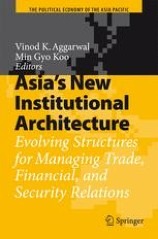
Asias New Institutional Architecture : Evolving Structures for Managing Trade, Financial, and Security Relations
This book investigates the origins and evolution of Asia’s new institutional architecture in trade, finance, and security from both a theoretical and empirical perspective. The traditional institutional equilibrium in Asia has come under heavy strain in the "post triple shocks period" - the post-Cold War, the post-financial crisis of 1997-98, and the post-9-11 attacks. The new dynamics of rivalry and cooperation among states at both the intraregional and transregional levels is now shaping a new institutional architecture. Political and business leaders from Northeast and Southeast Asia interact with each other more frequently. South Asia’s participation in the rest of Asia in recent years is truly impressive. As we show, the future institutional trajectory of Asia is still open, but we believe that the book provides a timely examination of key shifts in the region. In doing so, our hope is to provide policymakers and analysts with an institutional road map for the future.
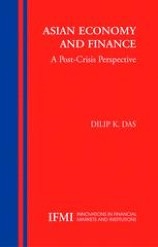
Asian economy and finance : A post-crisis perspective
Topicality of Asian economy has refused to fade for almost four decades; if anything it has been levitating. The Asian economy has changed markedly since the economic and financial crisis of 1997-1998 and is continuing to evolve. As a scholarly subject matter, Asian economy has not stopped attracting academicians, policy mandarins, decision makers in the arena of business and students of Asian economy. The Asian crisis was a cataclysmic event for the region and brought to the surface several systemic limitations, like those in the financial sector, corporate governance, regulatory oversight, legal framework, and exchange rate management. Managers of Asian economy need to get to the bottom of these acutely problematical systemic issues. Additionally, Asian economies need to change with the demands of time and devise their post-crisis development strategy. Asia’s growth model, that served it so well for four decades, is overdue for renewal so that it can re-strengthen its bonds with the ever-evolving regional and global economic reality. The old growth model is likely to be less relevant and effective in the post-crisis future of the Asian economies. It is sure to run into the wall of diminishing returns.
